Aurangabad to Shirdi Day Trip Guide 2026 – Distance, Route & Tips
Aurangabad to Shirdi used to be a question with a complicated answer — a long drive through Vaijapur and Kopargaon that made a same-day round trip genuinely demanding. The Samruddhi Mahamarg expressway has changed that calculation completely. This guide gives you the current, 2026 reality of the route, the timing, and exactly how to plan a Shirdi visit that actually fits into your Aurangabad itinerary.
The Distance and Route Reality — Post-Samruddhi Expressway
The opening of the Samruddhi Mahamarg (Mumbai-Nagpur Expressway) has fundamentally changed the Chhatrapati Sambhajinagar (Aurangabad) to Shirdi journey. Where the older route via Vaijapur and Kopargaon took 2.5 to 3 hours each way on a standard two-lane highway, the expressway route now gets you from Chhatrapati Sambhajinagar (Aurangabad) to the Shirdi interchange in approximately 1 to 1.5 hours.
This is not a minor improvement — it roughly halves the travel time and changes Shirdi from a demanding full-day round trip into a genuinely manageable half-day excursion. The expressway does carry a higher toll than the older route, but the time and comfort savings make it the route most travelers and drivers default to now.
💡 Tip: If you are arranging your own transport, specifically confirm with your driver that they are taking the Samruddhi Expressway route rather than the older Vaijapur road. Some drivers, particularly older or budget operators, may default to the familiar route out of habit even though the expressway is faster and now the standard choice for this journey.

What Shirdi Actually Is
Shirdi is one of Maharashtra’s — and India’s — most visited pilgrimage destinations, centered on the Samadhi (final resting place) of Sai Baba, the revered spiritual figure who lived in Shirdi for several decades until his passing in 1918. Sai Baba’s teachings emphasized a syncretic spirituality that drew from both Hindu and Islamic traditions, and his following today spans across religious lines in a way that is relatively distinctive among Indian pilgrimage figures.
Sai Baba Samadhi Mandir:
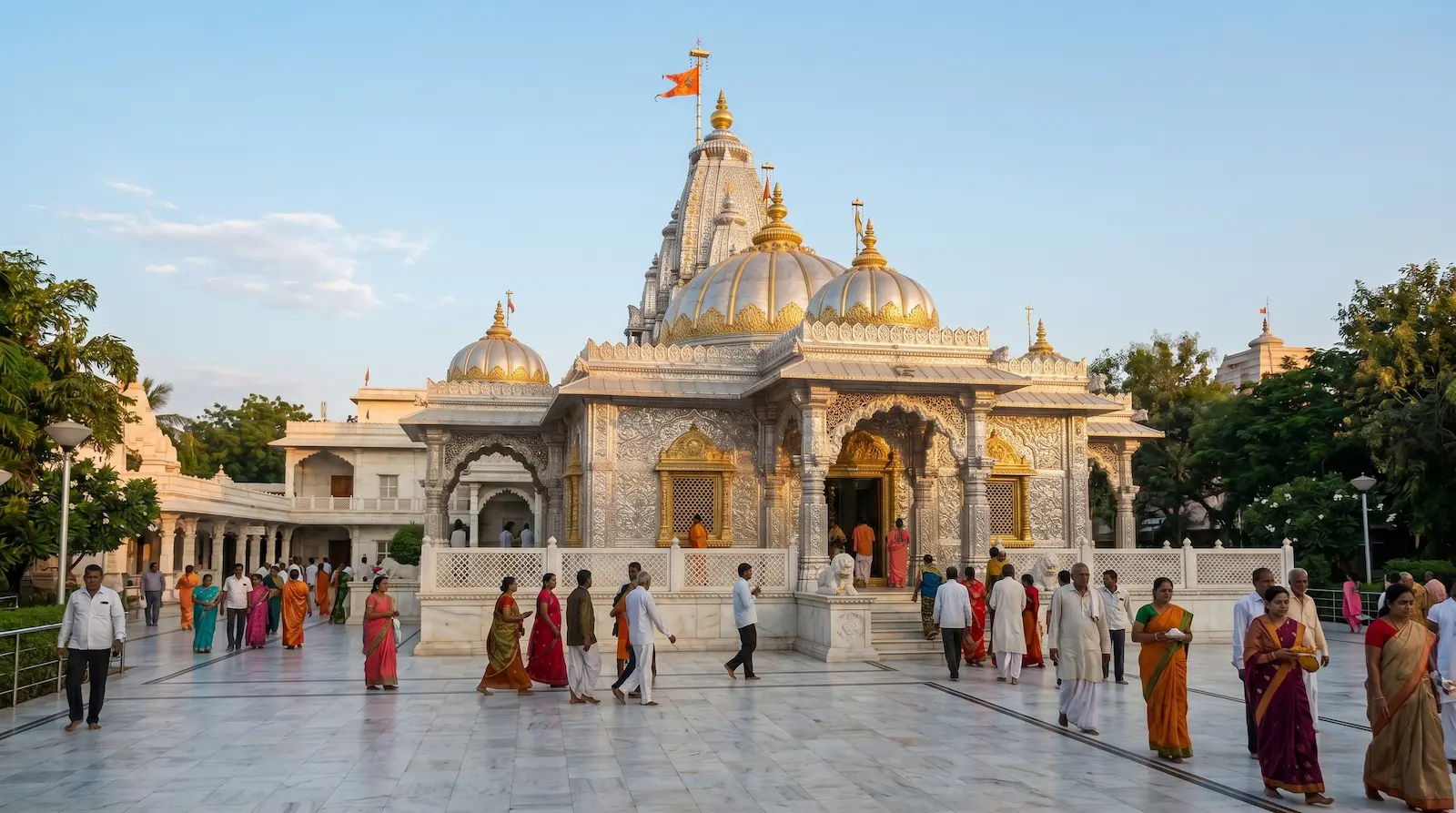
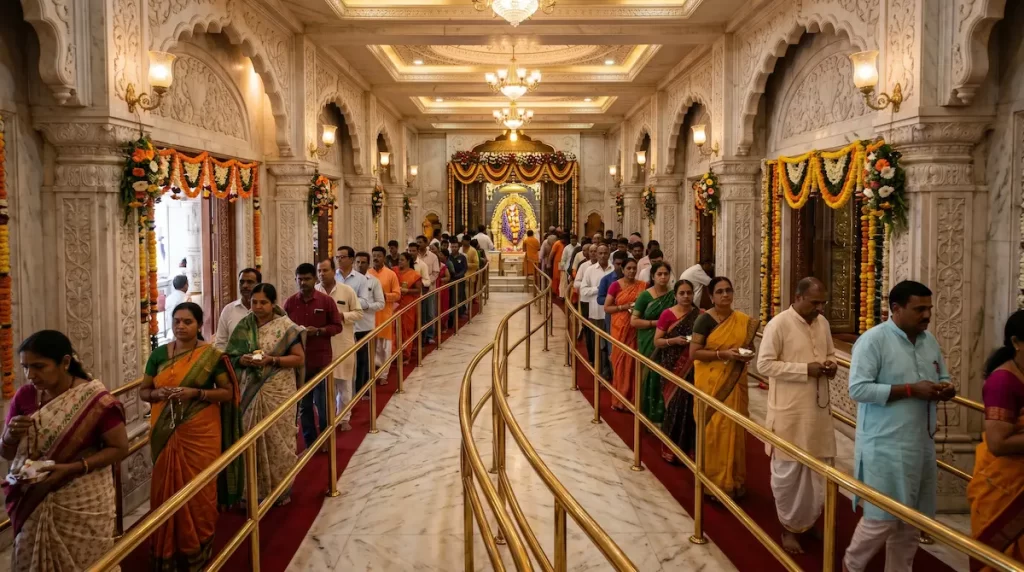
The central temple complex, built around Sai Baba’s Samadhi, receives a substantial volume of daily pilgrims and is the primary destination for any Shirdi visit. The marble structure and the atmosphere of devotion around the Samadhi itself is the core experience most pilgrims come for.
The broader complex:
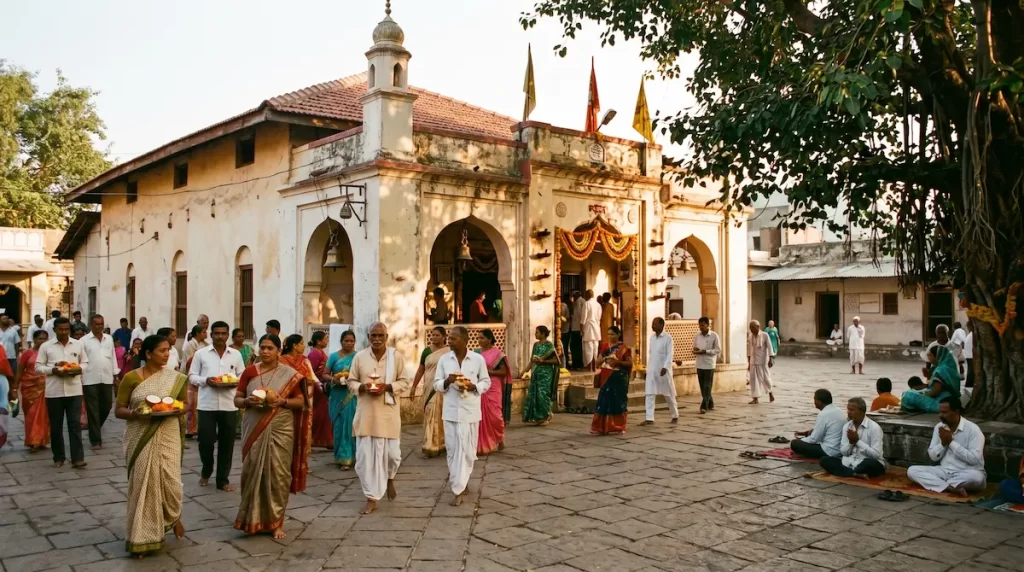
Beyond the Samadhi Mandir, Shirdi includes several other sites associated with Sai Baba’s life — Dwarkamai (the mosque where he lived and held court), Chavadi (where he would alternately spend nights), and Gurusthan (associated with his arrival in Shirdi as a young man) — each carrying its own devotional significance for pilgrims following the complete circuit.
💡 Tip: A meaningful Shirdi visit involves more than just the Samadhi Mandir — pilgrims who only visit the main temple and skip Dwarkamai and Chavadi miss a significant part of the devotional and historical narrative around Sai Baba’s life in the town.
Day Trip Is Now the Easy Default — Here’s the Calculation
Day trip from Chhatrapati Sambhajinagar (Aurangabad), via Samruddhi Expressway:
With the expressway route, a Shirdi day trip is now genuinely comfortable. A 6:30–7:00 AM departure gets you to Shirdi by approximately 8:00–8:30 AM, giving you the full morning for darshan and the temple complex circuit, with a return departure by early afternoon comfortably getting you back to Chhatrapati Sambhajinagar (Aurangabad) by mid-afternoon — leaving the rest of the day free.
Combined with another destination:
Shirdi still sits reasonably between Chhatrapati Sambhajinagar (Aurangabad) and the Mumbai-Pune corridor, and remains a sensible waypoint for travelers continuing onward rather than returning to Aurangabad. But with the expressway, this is now a genuine choice rather than the only practical option — a round-trip day visit is equally viable.
Overnight in Shirdi:
Still worthwhile for travelers with a deeper pilgrimage focus who want both an evening and a morning darshan without time pressure, but no longer a necessity the way it was on the older route.
💡 Tip: With the Samruddhi Expressway, Shirdi has shifted from “plan your whole day around this” to “this fits comfortably alongside other plans.” If you are building a 3-day Aurangabad itinerary, a Shirdi morning trip can now realistically be combined with a lighter afternoon activity back in the city — something that was not practical on the old route.
Practical Information for the Shirdi Visit
Aarti timings — plan around these:
The temple follows four main Aartis daily: Kakad Aarti (4:30 AM), Madhyan Aarti (12:00 PM), Dhoop Aarti (evening, around sunset), and Shej Aarti (10:30 PM, after which the temple closes for the night). The general darshan queue is paused during each Aarti, which can add meaningful waiting time if your visit overlaps with one.
For day-trippers specifically: Aim to complete your darshan before 12:00 PM. The Madhyan Aarti at noon causes a significant queue pause, and arriving in the 9:00–10:00 AM window after an early expressway departure avoids this entirely.
Mobile phones and electronics — strictly banned inside:
Mobile phones, smartwatches, cameras, and all electronic gadgets are strictly prohibited inside the Samadhi Mandir. Lockers are available outside, but the locker queue itself can be long, particularly on busy days.
Crowd levels:
Shirdi receives very high pilgrim volumes year-round, with particularly heavy crowds on Thursdays (considered especially significant for Sai Baba devotion), during major Hindu festivals, and around Ram Navami and Guru Purnima specifically. Weekday visits outside these periods are meaningfully less crowded.
Dress code:
Modest dress is expected. Indian-style or conservative Western clothing covering shoulders and knees is appropriate. Footwear is removed before entering the temple complex — designated stands are available.
Darshan queue system — book online in advance:
Given the volume of pilgrims, the Shri Saibaba Sansthan Trust (SSST) offers paid darshan booking through its official website (online.sai.org.in), at a standard rate of approximately ₹200. Booking online in advance is the most reliable and safest approach — offline VIP passes are limited in number and sell out quickly on busy days. Avoid any local tout or unofficial agent offering “VIP darshan” arrangements outside the official channel.
💡 Pro tip: Leave your phone in your car rather than carrying it to the temple and joining the locker queue. For a day trip with a tight schedule, the locker line can genuinely eat up more time than the darshan itself.
Combining Shirdi With Other Regional Sites
Shirdi does not combine naturally with Ajanta or Ellora in a single day given the distances and different directions involved, but with the expressway making it a half-day rather than full-day commitment, it fits more easily into a broader Aurangabad itinerary than before.
Shirdi + onward travel to Mumbai or Pune:
Still an efficient routing option for travelers continuing past Aurangabad rather than returning.
Shirdi + Shani Shingnapur:
Shani Shingnapur, another significant Maharashtra pilgrimage site known for its temple to Shani (Saturn deity) and a local tradition of houses without doors, is approximately 70 km from Shirdi and is commonly combined with a Shirdi visit by pilgrims continuing on the same regional circuit.
Shirdi as a half-day add-on:
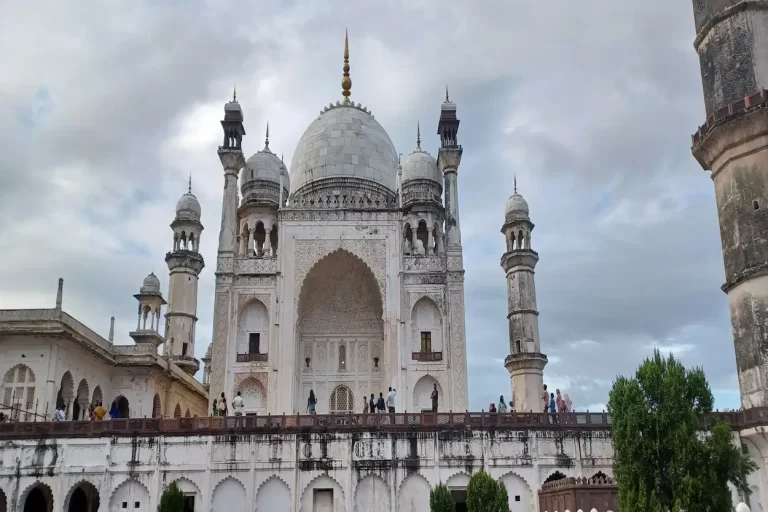
With the expressway, a Shirdi morning trip combined with a lighter Chhatrapati Sambhajinagar (Aurangabad) city activity in the afternoon — Bibi ka Maqbara, for example — is now a realistic single-day plan, something that was impractical before the expressway opened.
The Alternative — Shirdi Sorted Without the Planning
Even with the expressway making Shirdi easier, getting the Aarti timing right, booking darshan through the correct official channel, and fitting it cleanly alongside your Ajanta-Ellora itinerary still benefits from someone who plans this route regularly.
👉 See Aurangabad 4-Day Mega Tour Details & Book — Ajanta, Ellora, and a properly timed Shirdi extension via the expressway route, planned as part of one itinerary.
FAQ
Q1: What is the distance and travel time from Aurangabad to Shirdi in 2026?
Shirdi is approximately 110 km from Chhatrapati Sambhajinagar (Aurangabad). Via the Samruddhi Mahamarg expressway, the journey now takes approximately 1 to 1.5 hours each way — roughly half the time of the older route via Vaijapur and Kopargaon, which took 2.5 to 3 hours.
Q2: Can I visit Shirdi as a day trip from Aurangabad?
Yes, and with the Samruddhi Expressway, this is now genuinely comfortable rather than demanding. A 6:30–7:00 AM departure allows a full morning at the temple complex with a return to Chhatrapati Sambhajinagar (Aurangabad) by mid-afternoon, leaving time for other activities the same day.
Q3: What is the best day and time to visit Shirdi to avoid crowds and queue pauses?
Avoid Thursdays, major festival periods, and dates around Ram Navami and Guru Purnima. Within a single day, try to complete darshan before 12:00 PM to avoid the queue pause during the Madhyan Aarti — an early expressway departure makes a 9:00–10:00 AM darshan window realistic.
Q4: How do I book darshan at Shirdi in advance?
Book paid darshan through the official Shri Saibaba Sansthan Trust website (online.sai.org.in), at a standard rate of approximately ₹200. This is the safest and most reliable method — avoid local touts or unofficial agents offering VIP darshan arrangements outside this official channel.
Q5: Are mobile phones allowed inside Shirdi Samadhi Mandir?
No — mobile phones, smartwatches, cameras, and all electronic gadgets are strictly prohibited inside the temple. Lockers are available outside but can have long queues. For day-trippers, leaving your phone in your car rather than joining the locker line saves meaningful time.
👉 Related Posts You Might Like:
- Aurangabad to Lonar Crater – Day Trip Guide
- How Many Days in Aurangabad – 1, 2 or 3?
- Grishneshwar Temple + Ellora Caves – Half Day Combo Guide
- Aurangabad Travel Tips – What No One Tells You
- Top 10 Tourist Places in Aurangabad