Ajanta Caves in Monsoon – Is It Really Worth Visiting? (Honest Local Guide)
Visiting Ajanta Caves in monsoon is one of those questions I get every July and August from travelers who have already booked their flights and are now wondering if they made a mistake. The short answer: you did not make a mistake. But visiting Ajanta in monsoon requires knowing exactly what you are walking into — and that is what this guide is for.
What Ajanta Caves Actually Looks Like in Monsoon
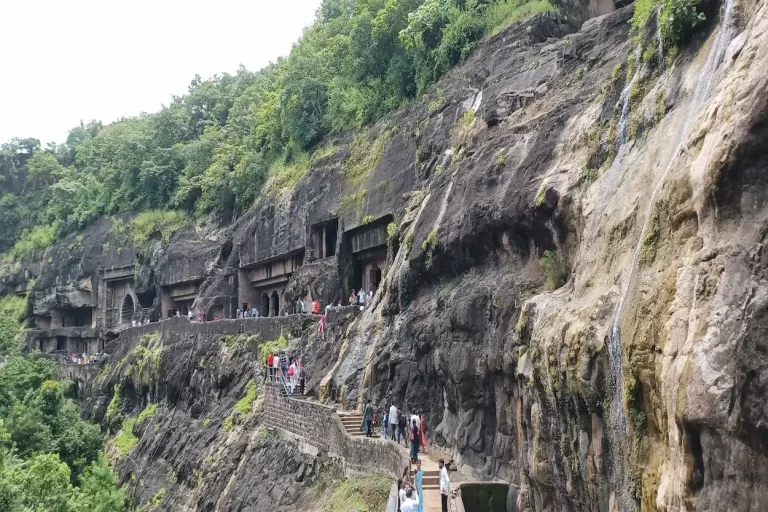
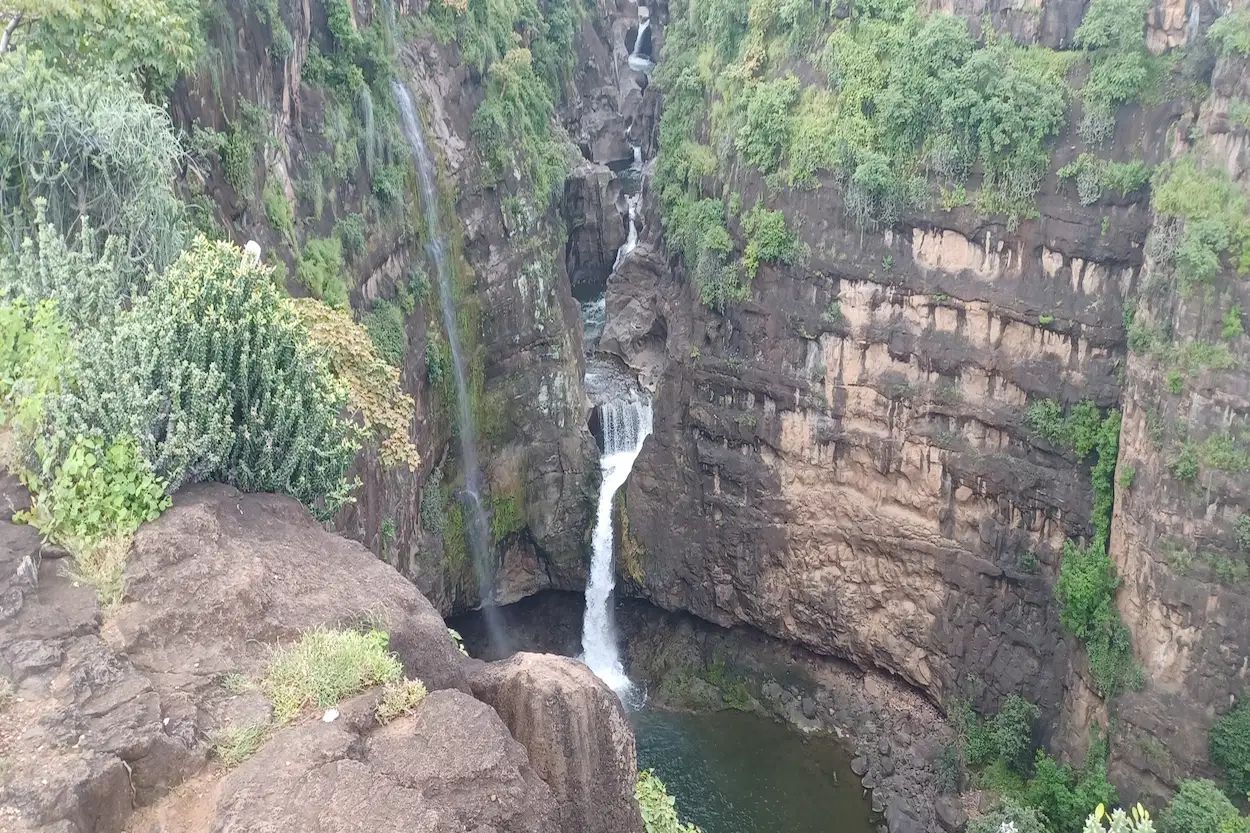
Most people picture the Ajanta cliff face as dry golden rock. In monsoon, it transforms completely. The horseshoe-shaped gorge fills with green — deep, almost unnaturally vivid green — and the Waghur River below the caves runs full and loud. Seasonal waterfalls appear on the rock face itself, cascading down beside the cave entrances.
It is, genuinely, one of the more beautiful versions of Ajanta that exists.
The problem is that this version of Ajanta comes with real trade-offs — humidity inside the caves, occasional closures, and slippery pathways that require proper footwear. If you come prepared, the monsoon visit can be extraordinary. If you come expecting dry-season conditions, you will be disappointed.
💡 Tip: The waterfalls on the cliff face are most dramatic in late July through August — this is when the Waghur River is at full force and the seasonal falls run strongest. Come specifically for the waterfalls? This is your window.

Ajanta Caves Monsoon Timings and Entry Fees
Ajanta Caves follows its standard schedule during monsoon with one important exception — the Archaeological Survey of India closes the caves every Monday. This does not change in monsoon. What can change is unplanned temporary closures during extremely heavy rainfall, when the pathways become unsafe.
Ajanta Caves Timings (monsoon and year-round):
- Open: Tuesday to Sunday, 9:00 AM to 5:30 PM
- Closed: Every Monday
Entry Fees:
- Indian nationals: ₹35 (online via ASI portal) / ₹40 (counter/cash)
- Foreign nationals: ₹600
- SAARC and BIMSTEC country citizens: Indian rates apply (₹35 online / ₹40 counter)
- Children under 15: Free entry
Camera and Equipment Rules:
- Mobile phones and still cameras (without flash): No additional fee
- Tripods: Strictly prohibited inside all caves
- Professional video equipment and commercial gear: Requires separate permission and additional charges
- Flash photography: Strictly prohibited inside all caves
💡 Tip: Book your tickets online through the official ASI portal before you travel — you save ₹5 per ticket and avoid the counter queue, which in monsoon can mean standing in the rain.
The Paintings in Monsoon — Light, Humidity, and What to Expect Inside
This is the question serious visitors ask, and it deserves a careful answer.
The Ajanta cave paintings — mineral pigments applied to a prepared lime plaster surface nearly 1,500 years ago — are sensitive to humidity and light. The ASI has installed special fiber-optic cool lighting inside the caves specifically to illuminate the paintings without damaging them through heat or UV exposure. Visitor numbers per cave are strictly controlled to manage the humidity load inside each chamber.
Personal torches and flashlights are not permitted inside Ajanta Caves. Security at each cave entrance enforces this. The fiber-optic lighting installed by ASI is the only light source available to visitors inside. This lighting is designed to show the paintings without the distortion of direct torchlight.
What this means practically: your eyes need a moment to adjust when you enter each cave. Give them that moment. The Bodhisattva Padmapani in Cave 1, the ceiling paintings of Cave 2, the narrative cycle in Cave 17 — they reveal themselves slowly, which is exactly as they were meant to be experienced.
What you will notice inside the caves in monsoon: the air feels heavier and slightly cooler than outside. The caves maintain a more stable internal temperature than the surrounding environment. Bring a light cotton layer — the contrast between the humid outside heat and the cave interior is noticeable.
💡 Tip: In each cave, stand still for a full minute before you start moving through it. Let your eyes adjust to the fiber-optic light. Most visitors rush in and rush out without seeing what is actually on the walls. The paintings in Cave 1 alone deserve twenty minutes of slow, patient attention.

Is Monsoon a Good Time to Visit Ajanta? Honest Assessment
Let me give you the real picture rather than a generic seasonal guide.
Monsoon is good for Ajanta if you:
- Are coming specifically for the landscape — the green gorge, the cliff waterfalls, the transformed rock face
- Can visit on a weekday when crowds are significantly lower than peak season
- Are comfortable with light rain during the walk between cave entrances
- Have proper closed footwear with grip soles
- Have already visited in dry season and want a completely different experience of the same site
Monsoon is not ideal for Ajanta if you:
- Are visiting for the first time and want guaranteed stable conditions
- Are traveling with elderly family members or very young children who may find slippery stone pathways difficult
- Have only one day in the region and cannot afford a weather-related disruption
- Are a serious photographer requiring consistent, predictable interior light
The honest recommendation: If you are already in Chhatrapati Sambhajinagar (formerly Aurangabad) in July or August, visit Ajanta without hesitation. The monsoon landscape version of Ajanta is worth seeing — it is a different site from the dry-season version and genuinely beautiful. If you are planning your entire trip around Ajanta and have flexibility, October to March gives you more predictable conditions and consistent cave lighting.
Getting to Ajanta Caves in Monsoon — Practical Notes
The road from Chhatrapati Sambhajinagar to Ajanta (approximately 100 km) is a state highway that remains passable in normal monsoon conditions. Certain stretches can develop potholes and waterlogging during particularly heavy spells, but in a standard monsoon year the road is manageable.
Recommended transport in monsoon:
- Private car or taxi — the most reliable option. A local driver will know which stretches to avoid after heavy overnight rain.
- MSRTC state bus — runs regularly but schedules can be affected during very heavy rainfall
- Two-wheelers — not recommended during heavy monsoon rain on this route
From Mumbai, the train or flight to Chhatrapati Sambhajinagar remains the sensible first leg, with a private car arranged from the city to the caves.
💡 Tip: Ask your driver specifically about road conditions at the Fardapur T-junction — this is the turn-off point from the main highway toward Ajanta and it can waterlog after sustained heavy rain. Any local driver from Chhatrapati Sambhajinagar will know the current condition.
📍 Fardapur Junction on Google Maps
Monsoon Ajanta with me — What My Tours Cover
I run private guided tours of Ajanta through the monsoon season, and the approach shifts slightly from my dry-season tours.
In monsoon, I time entry for 9:00 AM sharp — opening hour — because the morning light in monsoon at Ajanta is extraordinary. The mist sits in the gorge, the cliff face is green, and the crowds have not yet arrived. By 11:00 AM the light flattens and the group tours begin appearing at the entrance.
Inside, I spend more time in Cave 1, Cave 2, and Cave 17 in monsoon than I do in peak season, because the reduced visitor load means the viewing experience inside each chamber is less pressured. Cave 17 — which carries the most complete narrative painting cycle at Ajanta — is where I always spend the longest time regardless of season. The Visvantara Jataka painted across its walls tells a full story if you know how to follow it. Most visitors walk past it.
👉 Book Ajanta Private Day Tour — AC car from Chhatrapati Sambhajinagar, cave entry, and 6 hours at the caves with professional driver.
What to Wear and Pack for Monsoon Ajanta
- Footwear: Closed shoes with rubber grip sole — non-negotiable. The stone pathways between caves become slick in rain. No sandals, no smooth-soled shoes.
- Rain cover: A compact umbrella or light rain poncho for the walks between cave entrances
- Light layer: The cave interiors are noticeably cooler than the outside in monsoon humidity. A light cotton layer is enough.
- Dry bag or zip-lock pouches: Protect your phone and camera between cave visits
- Water bottle: The monsoon heat outside is deceptive. Hydrate between caves.
- No tripods: Leave them at the hotel — they are prohibited inside all caves

FAQ — Ajanta Caves in Monsoon
Q1: Are Ajanta Caves open during monsoon season?
Yes, Ajanta Caves in monsoon remain open following the standard schedule — Wednesday to Sunday, 9:00 AM to 5:30 PM. The caves are closed every Tuesday year-round. Temporary unplanned closures can occur during extremely heavy rainfall when outdoor pathways become unsafe, but these are uncommon. Check locally before traveling on days with forecast heavy rain.
Q2: Is it safe to visit Ajanta Caves in monsoon?
Yes, with appropriate footwear and reasonable weather conditions. The stone pathways between cave entrances become slippery in rain — closed shoes with grip soles are essential. During heavy downpours, wait inside a cave until the rain lightens before moving to the next. The cave interiors themselves are completely safe.
Q3: What is the best month to visit Ajanta Caves in monsoon?
It depends on what you are coming for. Late July through August is when the waterfalls on the cliff face are most active and the Waghur River is at full force — this is the most dramatic visual version of monsoon Ajanta. September keeps the greenery but the waterfalls reduce significantly by mid-September. For landscape photography specifically, August is your month. For a quieter, greener-than-peak-season visit without the heaviest rain, early September works well.
Q4: Are torches or flashlights allowed inside Ajanta Caves?
No — personal torches and flashlights are strictly prohibited inside Ajanta Caves. The ASI has installed special fiber-optic cool lighting throughout the painted chambers, which illuminates the murals without damaging them through heat or UV exposure. Security at each cave entrance enforces this rule. Your eyes will adjust to the fiber-optic lighting within a minute of entering.
Q5: Can I visit Ajanta Caves in monsoon with a family?
Yes, with appropriate precautions. Ensure all family members — especially children and elderly visitors — wear proper grip footwear. Avoid planning the visit on days with heavy rain forecast. The cave interiors are accessible and safe. A private guided tour is especially recommended for families in monsoon — the guide manages pace, route, and safety appropriately throughout the visit.
👉 Related Posts You Might Like:
- Best Time to Visit Ajanta Caves for Tourists
- Tips for Visiting Ajanta Caves with Family
- Ajanta Caves Photography Guide – Capture Timeless Art Like a Pro
- Ajanta Caves at Sunrise – Early Morning Entry Guide
- How to Reach Ajanta Caves from Mumbai