Kailasa Temple Ellora Caves – History and Travel Tips
The first time I stood before the Kailasa Temple Ellora, I actually forgot to breathe. Imagine this: a temple carved from a single mountain, built from the top down, with no joints, no separate stones, and no modern tools — just devotion and genius. The echo of chisels that once shaped this masterpiece still seems to hum in the air.
If you’re visiting Ellora, this temple isn’t just a stop — it’s the heart of the experience. In this guide, I’ll share everything about the Kailasa Temple Ellora — its fascinating history, architecture, hidden stories, and essential travel tips to help you see it like a traveler, not a tourist.
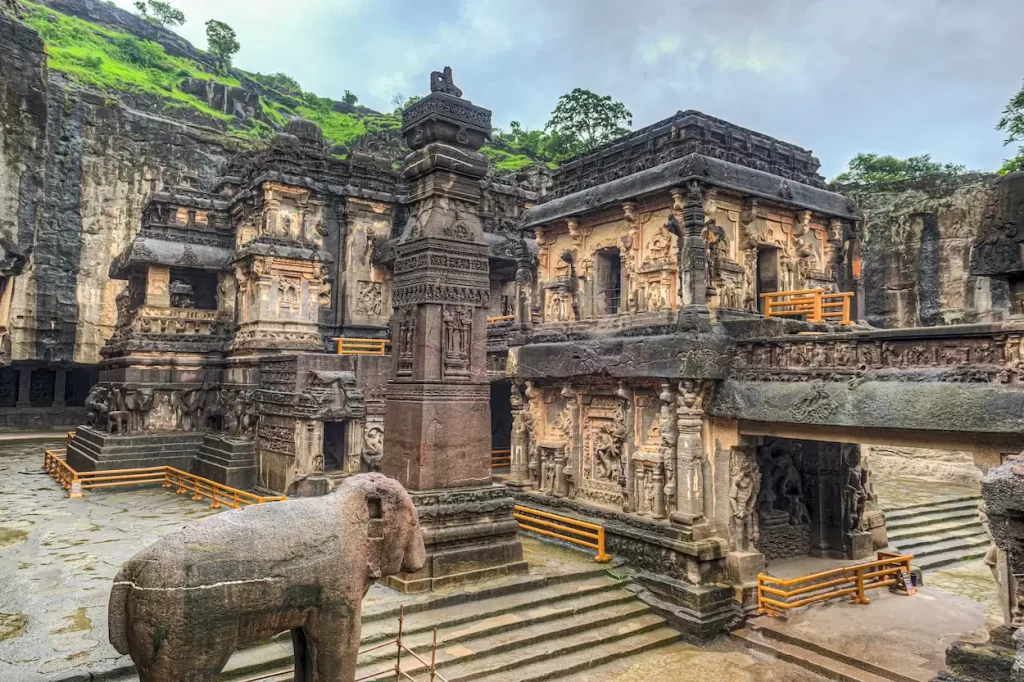
1. The Legend Behind Kailasa Temple Ellora
The Kailasa Temple (Cave 16) was built in the 8th century CE by King Krishna I of the Rashtrakuta dynasty, who ruled much of the Deccan. It’s dedicated to Lord Shiva and represents Mount Kailasa — his celestial home in the Himalayas.
According to local legend, Queen Manikeshwari, the king’s wife, vowed to fast until she could see the top of a temple dedicated to Shiva. To fulfill her wish quickly, the king’s architects designed a temple carved top-down, removing 200,000 tons of rock — a feat no other civilization has achieved.
💡 Tip: When you first enter, turn left and look back toward the main gateway — that angle gives you the most stunning perspective of the temple’s symmetry.
📍 View on Google Maps
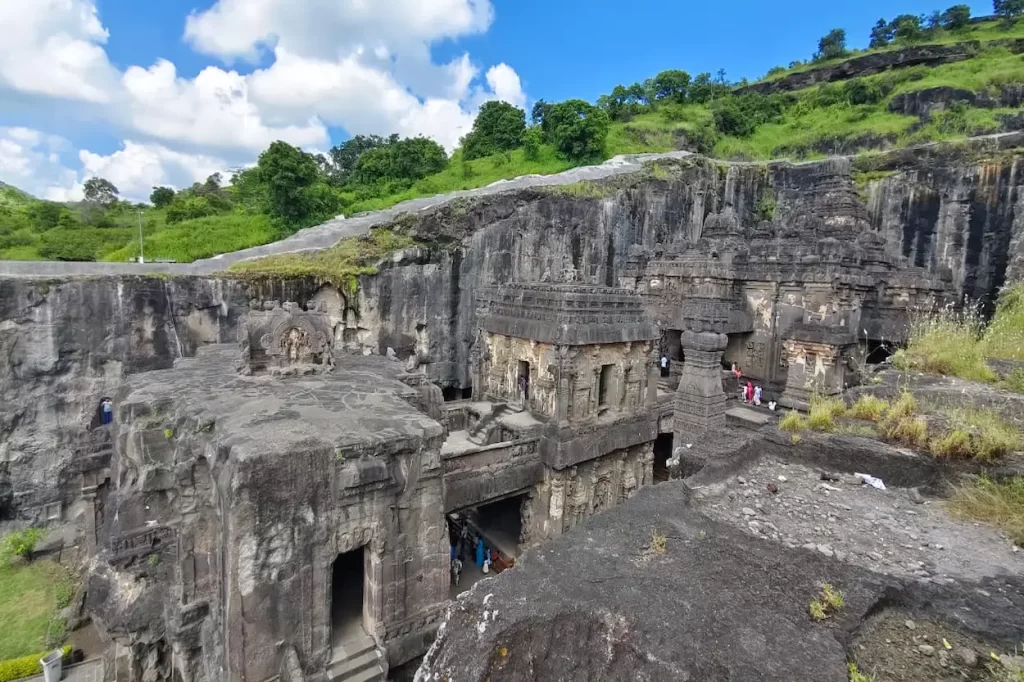
2. The Architecture – Carved from a Single Mountain
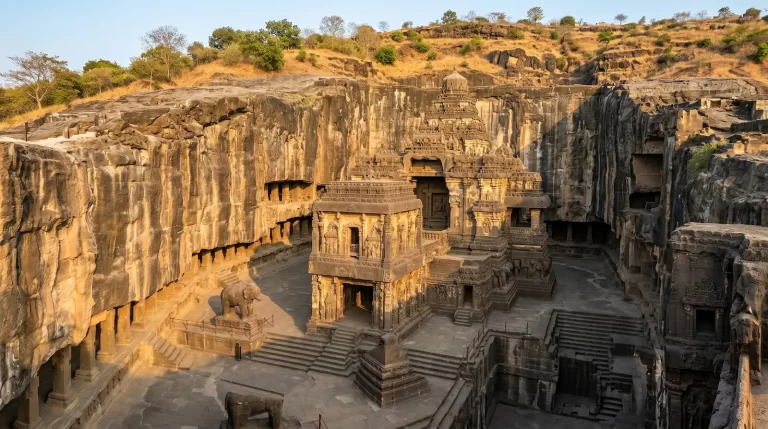
The Kailasa Temple Ellora is the largest monolithic rock-cut structure in the world. Unlike most temples built block by block, this one was excavated vertically from a single hill of basalt.
Key Architectural Highlights:
- Nandi Mandapa (Bull Pavilion): The first structure you’ll see after entering.
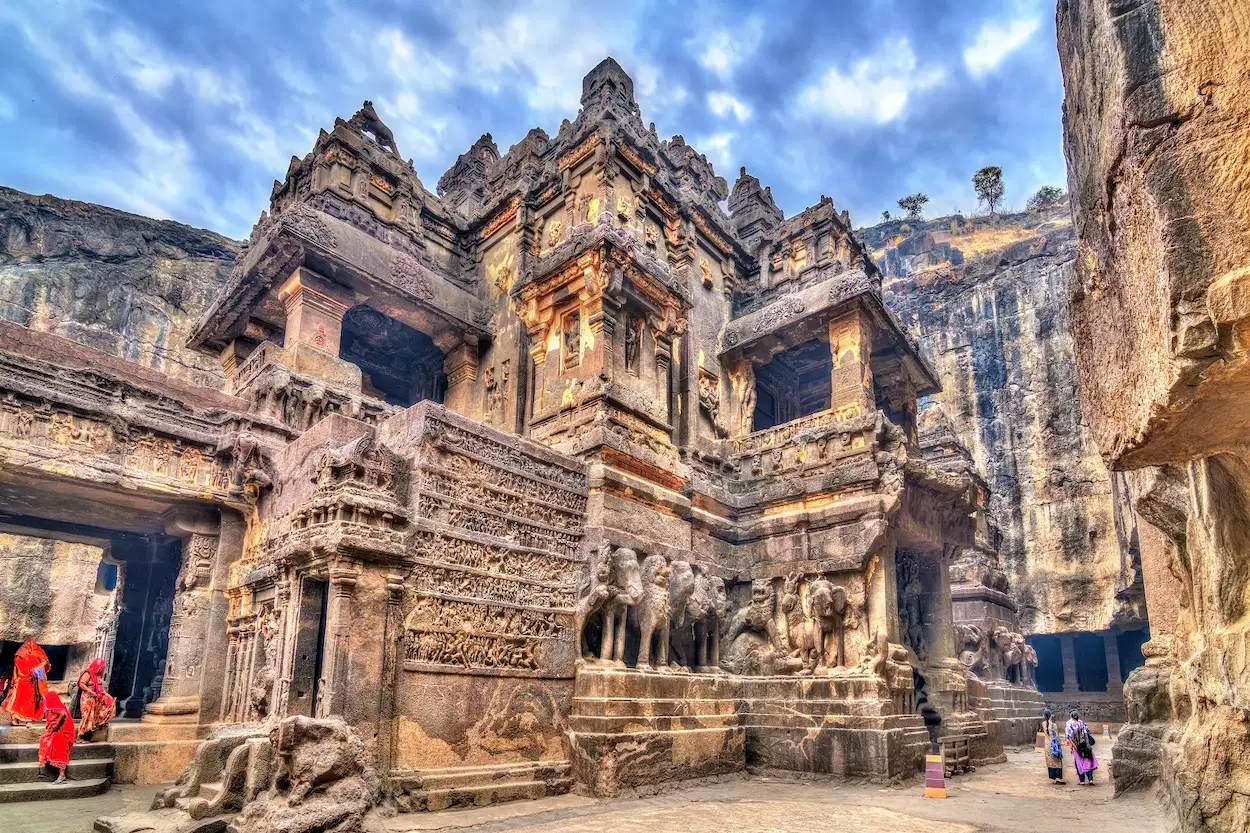
- Main Shrine: Dedicated to Lord Shiva, with a linga surrounded by life-size elephants and lions carved in stone.
- Bridges: Connect the Nandi pavilion to the temple, symbolizing the passage between devotion and divinity.
- Carvings: Depict scenes from the Ramayana and Mahabharata.
The precision is mind-blowing — pillars are perfectly aligned, and even the smallest carvings have emotion.
💡 Tip: Stand beneath the Nandi Mandapa mid-morning — sunlight falls directly on the temple tower, lighting it up like gold.
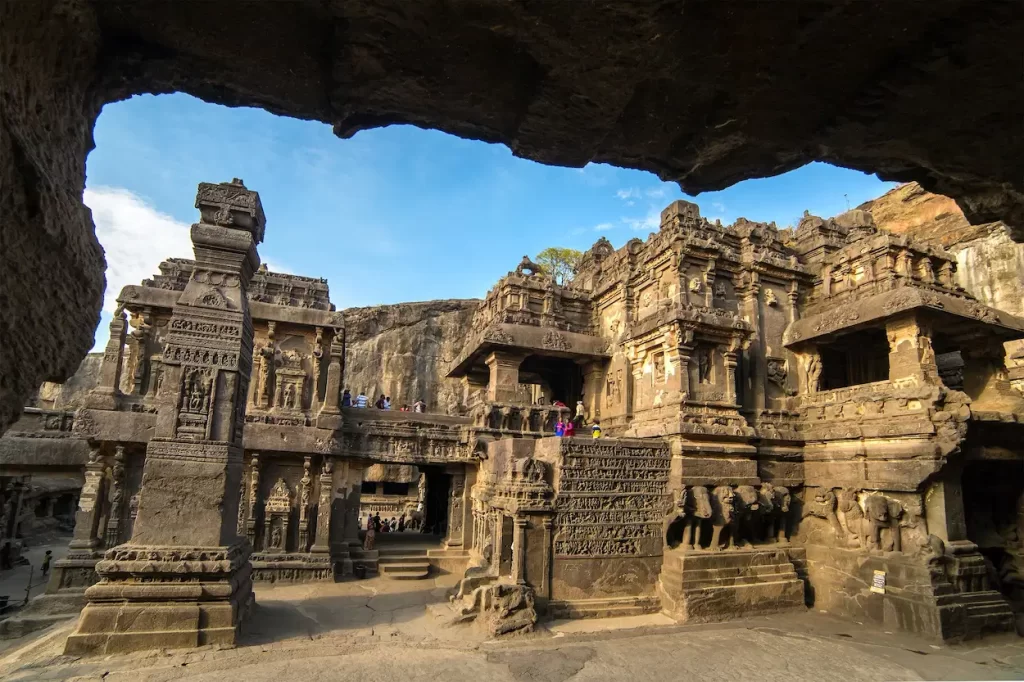
3. The Scale – A Wonder in Numbers
To truly grasp how incredible this is:
- The Kailasa Temple covers 60,000 sq. ft.
- Over 200,000 tons of rock were removed.
- It’s twice the size of the Parthenon in Greece.
- Built over 100 years by thousands of artisans.
💡 Tip: Climb the side path (accessible behind Cave 15) for an aerial view — it’s the only way to appreciate its scale fully.
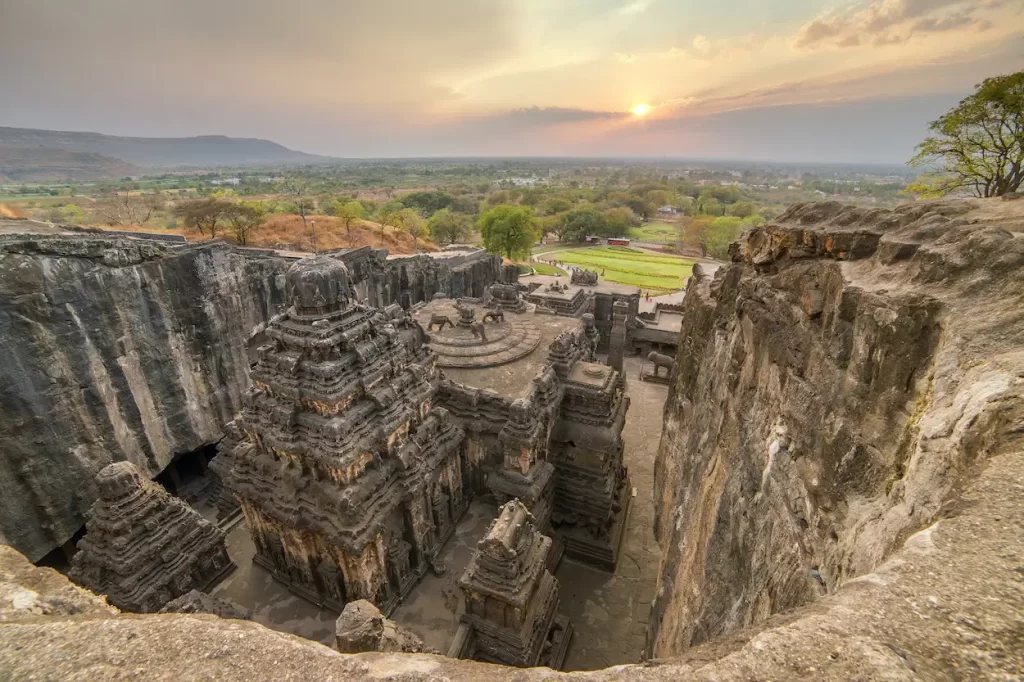
4. The Art and Symbolism
Every inch of Kailasa Temple Ellora is layered with meaning:
- The elephants at the base symbolize strength and endurance.
- The lions represent courage and kingship.
- The central Shiva Linga stands for consciousness and creation.
- Panels depict stories from the Ramayana, Mahabharata, and Puranas — blending mythology with philosophy.
Even the shadows here tell stories — notice how light enters the courtyard, changing from morning’s soft gold to sharp silver by noon.
💡 Tip: Hire an ASI-approved guide or audio tour — they’ll help decode carvings you’d otherwise miss.
5. Legends and Myths Surrounding Kailasa
According to folklore, the architect Kokasa completed the top of the temple in record time to fulfill the queen’s vow. Some say the design came to him in a divine vision after meditating on Lord Shiva.
Another legend claims that the temple aligns perfectly with certain constellations during Shivratri — symbolizing spiritual connection between heaven and earth.
💡 Tip: Visit around sunrise — the light rays on the Shiva Linga are mesmerizing and almost mystical.
6. Visiting Details – Timings, Entry Fees & Best Time to Visit
| Category | Details |
|---|---|
| Location | Ellora Caves, 30 km from Aurangabad |
| Timings | 9:00 AM – 5:30 PM |
| Closed | Tuesdays |
| Entry Fee (Indians) | ₹40 |
| Entry Fee (Foreigners) | ₹600 |
| Photography | Allowed (no flash) |
💡 Tip: Combine Kailasa with nearby attractions — Grishneshwar Temple, Daulatabad Fort, and Bibi Ka Maqbara — for a full heritage day trip.
7. Photography and Exploration Tips
The Kailasa Temple is a dream for photographers, but patience is key.
📸 Best Light: 9–11 AM and 3–5 PM
📸 Don’t Miss:
- The light falling on Shiva’s statue through the central shaft.
- Elephant carvings at the base of the courtyard.
- Aerial view from the upper terrace.
💡 Tip: Use a wide-angle lens — the temple’s symmetry is its true beauty.
8. Facilities and Nearby Attractions
Ellora has good visitor facilities:
- 🧴 Drinking water near Cave 16.
- 🍴 MTDC restaurant at the entrance.
- 🚻 Clean restrooms and benches.
- 🚗 Parking at the visitor center.
Nearby Attractions:
- Grishneshwar Temple (2 km): One of Shiva’s 12 Jyotirlingas.
- Daulatabad Fort (15 km): A hilltop fortress with sweeping views.
- Bibi Ka Maqbara (30 km): The “Mini Taj Mahal.”
💡 Tip: Visit Grishneshwar Temple after Kailasa — it beautifully connects faith and history.
9. My Personal Experience at Kailasa Temple Ellora
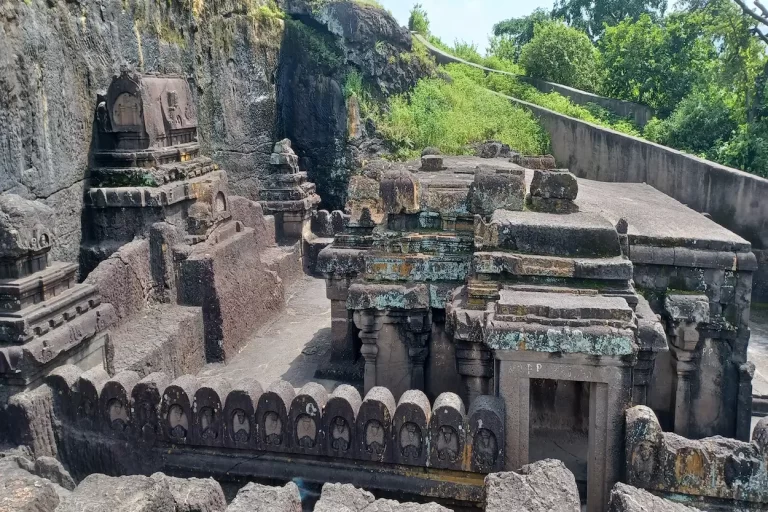
Standing beneath the carved pillars of the main sanctum, I could almost hear the sound of hammers echoing through time. There’s a spot near the northern wall where the carvings are unfinished — a quiet reminder that even perfection can remain incomplete.
Every visit feels different. Once, I watched a monk silently bow before the Shiva Linga as the sun filled the courtyard — no sound, no movement, just peace. It’s moments like that which make Kailasa Temple Ellora unforgettable.
💡 Tip: Visit early, go slow, and let the place speak. You’ll leave with more than photos — you’ll leave with stillness.
Personally Tested Best GetYourGuide Tours
👉 Related Posts You Might Like:
- Best Temples and Monasteries to See in Ellora Caves
- Complete Visitor Guide to Ellora Caves
- Ellora Caves Travel Guide
- Ajanta and Ellora Combo Tour from Aurangabad
- Grishneshwar Jyotirlinga Temple Visitor Guide
Frequently Asked Questions (FAQ)
Q: What makes the Kailasa Temple Ellora unique?
A: It’s the world’s largest monolithic structure, carved from a single rock top-down — a marvel of ancient engineering and devotion.
Q: Who built the Kailasa Temple Ellora?
A: It was commissioned by King Krishna I of the Rashtrakuta dynasty in the 8th century CE.
Q: What is the best time to visit the Kailasa Temple Ellora?
A: Between November and February — pleasant weather and clear skies make it ideal for exploration and photography.
Q: Is photography allowed inside Kailasa Temple?
A: Yes, handheld photography is allowed (without flash or tripods).
Q: Can I visit Kailasa Temple with a guide?
A: Absolutely. Hiring an ASI-approved local guide or booking a GetYourGuide tour enhances the experience.