Aurangabad Travel Tips 2026 – What No One Tells You Before You Go
I have walked enough travelers through this region to know exactly where the standard guides leave gaps — the small, practical things that genuinely change how a trip feels but rarely make it into a polished itinerary. These are not the headline facts about Ajanta or Ellora. These are the details I find myself repeating to almost every guest, usually because nobody told them beforehand.
The Name Confusion Is Real — Address It Early
If there is one thing that trips up nearly every first-time visitor researching this region, it is the name change from Aurangabad to Chhatrapati Sambhajinagar. Maps, booking platforms, train tickets, and older online content use both names interchangeably, sometimes inconsistently within the same source.
What I tell people: When booking trains, flights, or hotels, search both names. Railway station codes and airport listings have transitioned at different speeds across different platforms, and you do not want to discover a booking confusion the morning of your departure. I always recommend confirming your exact booking reference against both names before you travel.
💡 Tip: Save both names in your notes app before you arrive — “Aurangabad / Chhatrapati Sambhajinagar” — and use whichever one a specific platform or local driver responds to more readily. Locals still use both interchangeably in daily conversation.
The Heat Catches People Off Guard
Travelers researching Ajanta and Ellora online often focus entirely on the caves themselves and underestimate the Deccan plateau climate they will be walking through to reach them.
What I tell people: Between March and June, daytime temperatures regularly exceed 38-40°C, and the exposed pathways at Ajanta, Daulatabad Fort’s climb, and Lonar Crater’s rim trail all involve real sun exposure with limited shade. This is not weather you can power through on willpower alone.
The mistake I see most often: Visitors planning a tight multi-site day in peak summer without building in genuine hydration breaks, assuming the caves themselves (which are cooler) represent the whole experience, when significant portions of any day here are spent outdoors in direct heat.
💡 Tip: If you have flexibility in your travel dates, October to March gives you a dramatically more comfortable experience across every site in this guide. If summer is your only option, front-load your day with the most demanding outdoor walking (Daulatabad Fort, the Ajanta viewpoint) before 10:00 AM, and treat midday as a rest window.
Cash Is Genuinely Disappearing — Plan for Digital Payments
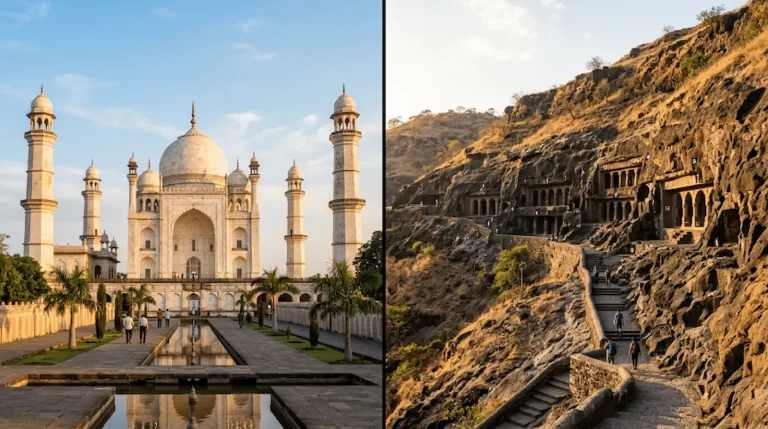
Across nearly every site in this region — Ajanta, Ellora, Bibi ka Maqbara, Daulatabad Fort — cash ticket counters have largely been phased out in favor of QR code and UPI-based digital payment.
What I tell people: This works smoothly for Indian travelers with UPI apps already set up, but international visitors sometimes arrive assuming cash will work as a fallback and find themselves stuck at a gate with no clear path to a ticket. Confirm your payment method works in India before you need it at a ticket counter, not in the moment.
My honest recommendation: Book ASI entry tickets online in advance wherever possible — Ajanta, Ellora, Bibi ka Maqbara, and Daulatabad Fort all support this. It removes the payment-method uncertainty entirely and saves you the queue.
💡 Tip: Network connectivity at some sites — particularly the Ajanta gorge — can be unreliable, which makes pre-booking the night before, with your ticket saved offline as a screenshot or PDF, more reliable than trying to book or pay on arrival.
The Guide Quality Gap Is Bigger Than Most Visitors Expect
I say this as someone whose livelihood is partly built on guiding, so take it as honest rather than self-serving: the difference between a genuinely knowledgeable guide and someone who picked up a few facts to sell tours is significant at these sites, more so than at many heritage destinations.
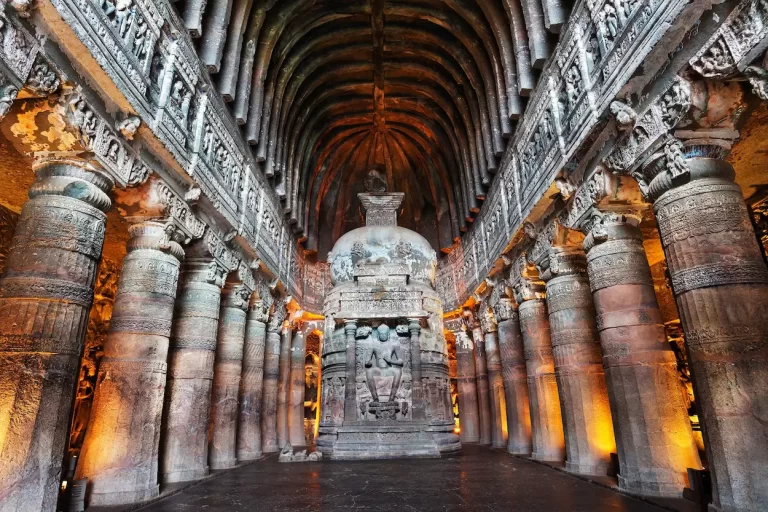
What I tell people: At Ajanta and Ellora specifically, ask any prospective guide a slightly specific question before hiring them — not “tell me about Ajanta” but something like “which cave has the Dying Princess painting” or “what’s special about Cave 15’s upper floor at Ellora.” A guide with genuine depth answers immediately and specifically. A guide working from a generic script hesitates or gives a vague answer.
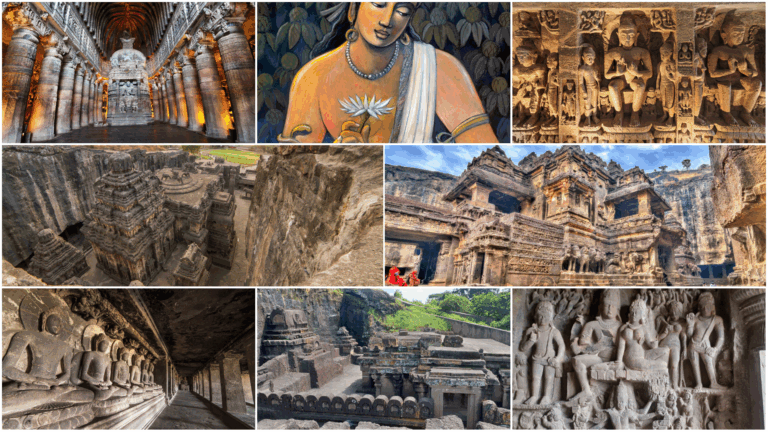
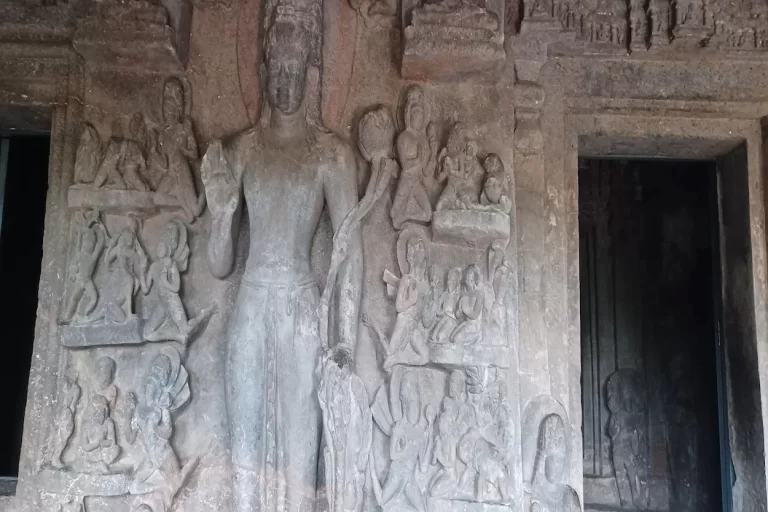
Why this matters more here than elsewhere: Ajanta’s paintings and Ellora’s three religious traditions carry enough genuine complexity that a shallow guide leaves you with surface-level facts rather than real understanding. The gap between a good and mediocre guide experience at these specific sites is larger than at more straightforward heritage stops.
💡 Tip: Always use the official ASI guide booth at the entrance rather than guides who approach you directly outside the gate. This alone filters out a meaningful portion of the unlicensed, lower-quality guide pool.
Footwear Matters More Than People Expect
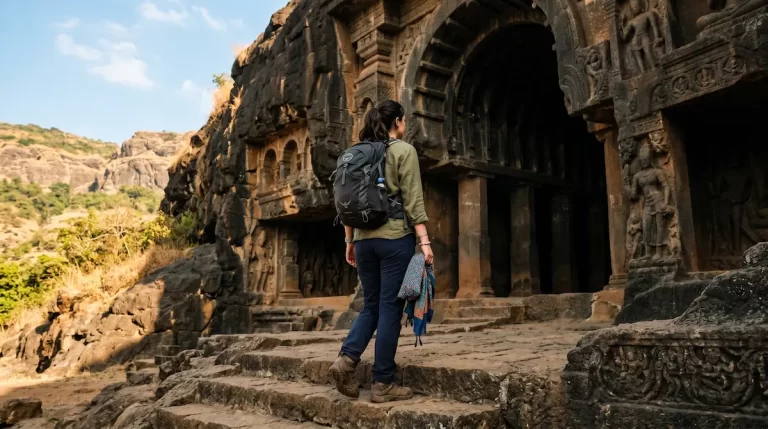
This region’s heritage sites are not uniformly easy walking. I see this surprise visitors repeatedly.
What I tell people: Ajanta and Ellora both involve worn stone pathways that become genuinely slippery in monsoon. Daulatabad Fort requires a sustained climb over uneven terrain. Lonar Crater’s rim trail is natural, rugged ground, not a maintained pathway. None of these sites are appropriate for sandals, smooth-soled shoes, or anything you would not comfortably wear on a multi-hour walk.
The mistake I see most often: Visitors who packed for a “cultural sightseeing trip” rather than recognizing that several of these sites require closer to hiking-appropriate footwear.
💡 Tip: If you only bring one pair of versatile closed shoes with a grip sole for this entire region, you will be prepared for every site in this guide. It is the single most consistently useful packing decision for this specific region.
The Region Rewards More Time Than People Budget
This is the tip I find myself repeating most often, in different forms, across nearly every conversation I have with travelers planning their itinerary.
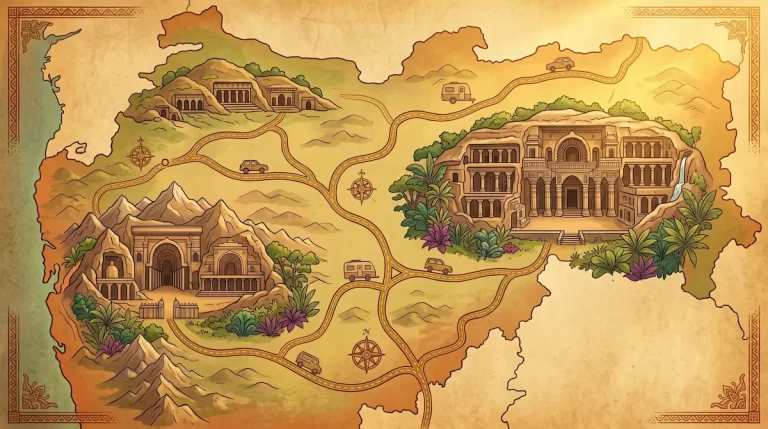
What I tell people: Ajanta and Ellora are each large, complex sites that genuinely reward a full day. Most generic India itineraries I see allocate a single rushed day for “Ajanta-Ellora” as if they are one stop, when they are 100 km apart and each individually substantial. I would rather see someone spend 2-3 focused days on this region and skip another stop elsewhere in their broader India trip than rush through both UNESCO sites in a single compressed day.
Why this is worth saying directly: I understand the pressure of a packed India itinerary with limited total days. But I have guided enough rushed visitors to know that a compressed Ajanta-Ellora day leaves people with photos and a vague sense of having “done” the sites, rather than the genuine understanding and emotional impact that proper time allows.
💡 Tip: If you are deciding between adding one more city to your broader India itinerary versus giving this region its full two days, I would choose the two days here. Most travelers who rush this region tell me, in hindsight, that they wish they had allocated more time — I rarely hear the opposite.
Monsoon Has Real Trade-Offs Worth Understanding
Most travel content treats monsoon as simply “the rainy season to avoid.” The reality for this specific region is more nuanced.
What I tell people: Late July through August transforms Ajanta’s gorge into genuinely extraordinary green landscape with active waterfalls on the cliff face — something the dry season simply does not offer. But monsoon also means slippery pathways, occasional heavy downpours that pause outdoor movement, and reduced visibility at viewpoints on heavily overcast days.
My honest take: If landscape and atmosphere matter more to you than guaranteed dry conditions, monsoon (specifically late July-August) is a legitimate, even superior, choice for Ajanta specifically. For Daulatabad Fort’s climb or Lonar Crater’s rim trail, I lean toward recommending dry season given the terrain involved.
💡 Tip: Do not let “monsoon” become a blanket reason to avoid this region if your travel dates fall in July-September. Ask specifically which sites you are prioritizing — the monsoon trade-off is genuinely different for Ajanta versus the more rugged sites like Daulatabad Fort or Lonar Crater.
Mumbai Travelers Underestimate How Accessible This Region Is
This is a pattern I see specifically among Mumbai-based travelers, and it costs them a trip they would genuinely enjoy.
What I tell people: Mumbai to Chhatrapati Sambhajinagar (Aurangabad) is a manageable overnight train or a short flight, and the resulting 2-night extension unlocks two UNESCO World Heritage Sites that many Mumbai residents have never visited despite living within reasonable striking distance their entire lives. I meet more international visitors who have made this trip than I do Mumbai locals, which always strikes me as backwards.
Why I bring this up specifically: If you live in or are visiting Mumbai and have not built in this extension, I would genuinely reconsider. The accessibility gap between “feels far” and “actually takes one overnight train” is larger than most people assume until they make the trip once.
💡 Tip: The most common regret I hear from Mumbai-based travelers who do make this trip is not having done it sooner. If you have a long weekend and have been putting this off, this is the nudge to stop putting it off.
The Alternative — Local Knowledge Without the Trial and Error
Everything in this guide is the accumulated result of years of guiding people through this exact region — the mistakes I have watched visitors make, the questions I get asked most often, the small adjustments that change a rushed, confusing trip into a genuinely rewarding one.
A guided tour means you get this knowledge applied to your specific itinerary from the start, rather than learning it the way most of these tips were learned — by watching it happen to someone else first.
👉 See Ajanta-Ellora 2-Day Tour Details & Book — the complete UNESCO circuit, planned with everything in this guide already built in.
👉 See Aurangabad 3-Day Heritage Tour Details & Book — the fuller regional experience, properly paced.
FAQ — Aurangabad Travel Tips
Q.1 : Is Aurangabad the same as Chhatrapati Sambhajinagar?
Yes — the city formerly known as Aurangabad was officially renamed Chhatrapati Sambhajinagar. Both names are still in active use across maps, booking platforms, and daily conversation, so it is worth searching both names when booking trains, flights, or hotels to avoid confusion.
Q.2 : What is the biggest mistake first-time visitors make in Aurangabad?
The most common mistake is underestimating how much time Ajanta and Ellora each deserve, treating them as a single rushed “Ajanta-Ellora” day rather than recognizing they are 100 km apart and individually substantial UNESCO World Heritage Sites. Most travelers who rush this region report wishing they had allocated more time, in hindsight.
Q.3 : Do I need cash for sightseeing in Aurangabad?
Increasingly, no — most heritage sites including Ajanta, Ellora, Bibi ka Maqbara, and Daulatabad Fort have shifted to QR code and UPI-based digital payment, with cash counters largely phased out. Booking ASI tickets online in advance is recommended, particularly given unreliable network connectivity at some sites like the Ajanta gorge.
Q.4 : How do I find a good guide at Ajanta or Ellora?
Always approach the official ASI guide booth rather than guides who approach you outside the entrance. Ask a specific question before hiring — something only a genuinely knowledgeable guide would answer immediately, like which cave contains a specific painting. This filters out shallow or unlicensed guides effectively.
Q.5 : Is monsoon a bad time to visit Aurangabad’s heritage sites?
Not necessarily — it depends on which sites you prioritize. Monsoon, particularly late July through August, transforms Ajanta’s gorge into a genuinely beautiful green landscape with active waterfalls. For more rugged sites like Daulatabad Fort or Lonar Crater’s rim trail, dry season is generally preferable given slippery terrain conditions during heavy rain.
👉 Related Posts You Might Like:
- How Many Days in Aurangabad – 1, 2 or 3?
- Best Hotels in Aurangabad – All Budgets
- Ajanta Caves in Monsoon – Is It Really Worth Visiting?
- Daulatabad Fort – Complete Guide
- Aurangabad to Shirdi – Day Trip Guide