What to Wear at Indian Caves – Dress Code Guide (2026)
Planning what to wear at Indian caves is simpler than most visitors expect. Most cave sites across Maharashtra — including Ajanta, Ellora, Bhaja, Pandavleni, Aurangabad Caves, and Lonar Crater — are archaeological monuments with no formal dress code.
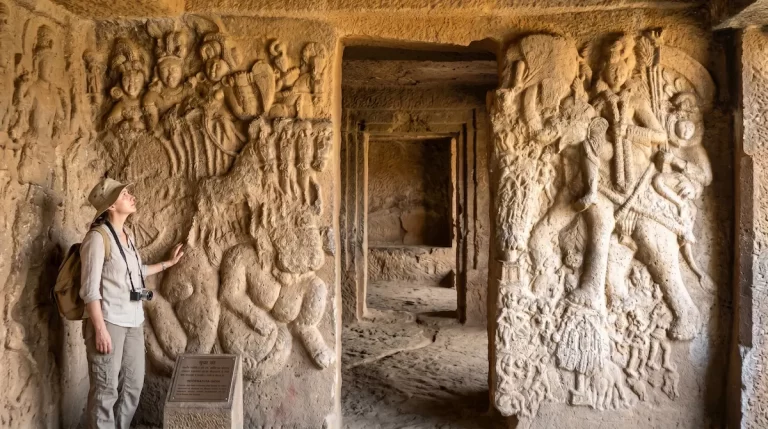
However, several cave complexes also contain active temples and shrines where traditional temple etiquette still applies. Wearing practical, modest clothing not only helps you stay comfortable during long climbs but also ensures you’re prepared for any active worship areas you may encounter.
This guide explains exactly what to wear, what footwear works best, and where special dress requirements apply.
Quick Facts
| Item | Recommendation |
|---|---|
| General Dress Code | Modest, comfortable clothing |
| Best Clothing | Lightweight cotton clothing |
| Footwear | Closed shoes with grip soles |
| Temple Areas | Shoulders and knees covered |
| Footwear Removal | Required inside active shrines |
| Photography | Modest clothing recommended |
Do Indian Cave Sites Have a Dress Code?
For most visitors, the answer is no.
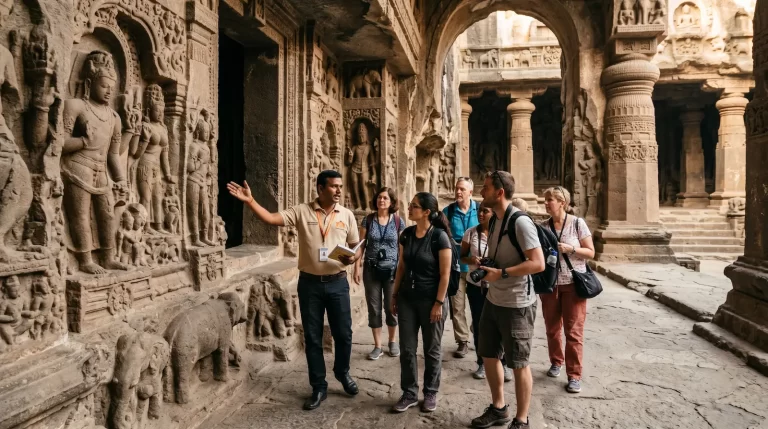
Major archaeological sites such as Ajanta Caves, Aurangabad Caves, Bhaja Caves, Pandavleni Caves, and most sections of Ellora Caves do not enforce a formal dress code.
Visitors regularly wear:
- T-shirts
- Shirts
- Trousers
- Jeans
- Trekking pants
- Long skirts
- Comfortable travel clothing
The main expectation is respectful and practical attire rather than religious clothing.
Cave Sites with Active Temples
Some Maharashtra cave sites contain active places of worship where traditional temple etiquette applies.
These include:
| Site | Active Shrine |
|---|---|
| Karla Caves | Ekvira Devi Temple |
| Ellora Caves | Hindu temple caves |
| Lonar Crater | Daitya Sudan Temple |
| Near Ellora | Grishneshwar Temple |
When entering these areas:
- Cover shoulders
- Cover knees
- Remove footwear
- Dress respectfully
Visitors wearing modest clothing generally encounter no issues.
What I Recommend Wearing
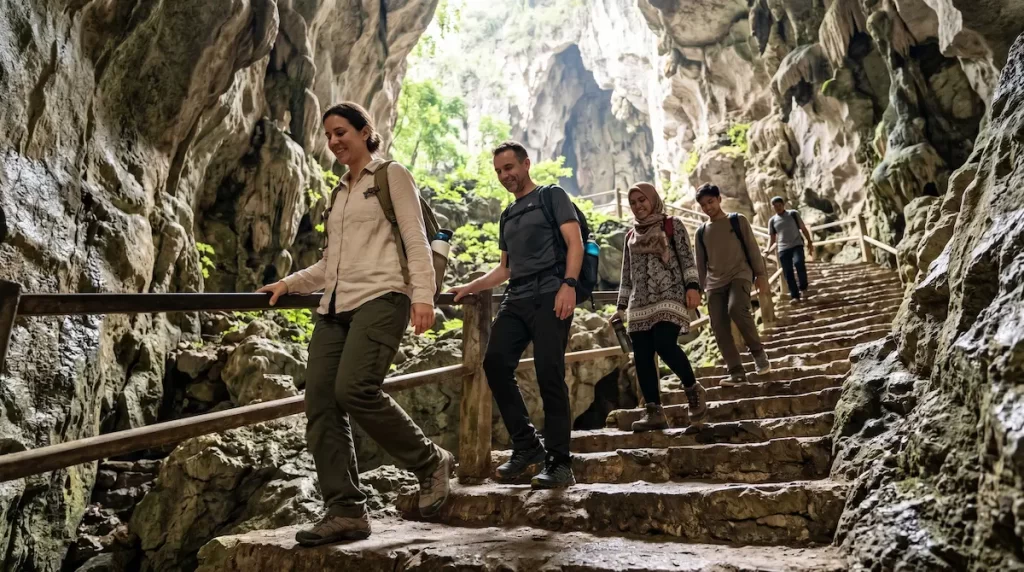
If you’re visiting multiple cave sites during the same trip, keep things simple.
Wear:
- Lightweight cotton shirt or T-shirt
- Comfortable trousers or trekking pants
- Breathable clothing suitable for heat
- Sun hat or cap
- Sunglasses
- Light shawl or scarf
A small scarf or stole is particularly useful because it can instantly provide additional coverage when entering temples.
This approach works at virtually every Maharashtra cave site.
Footwear Matters More Than Clothing
The biggest mistake visitors make isn’t their clothing.
It’s their shoes.
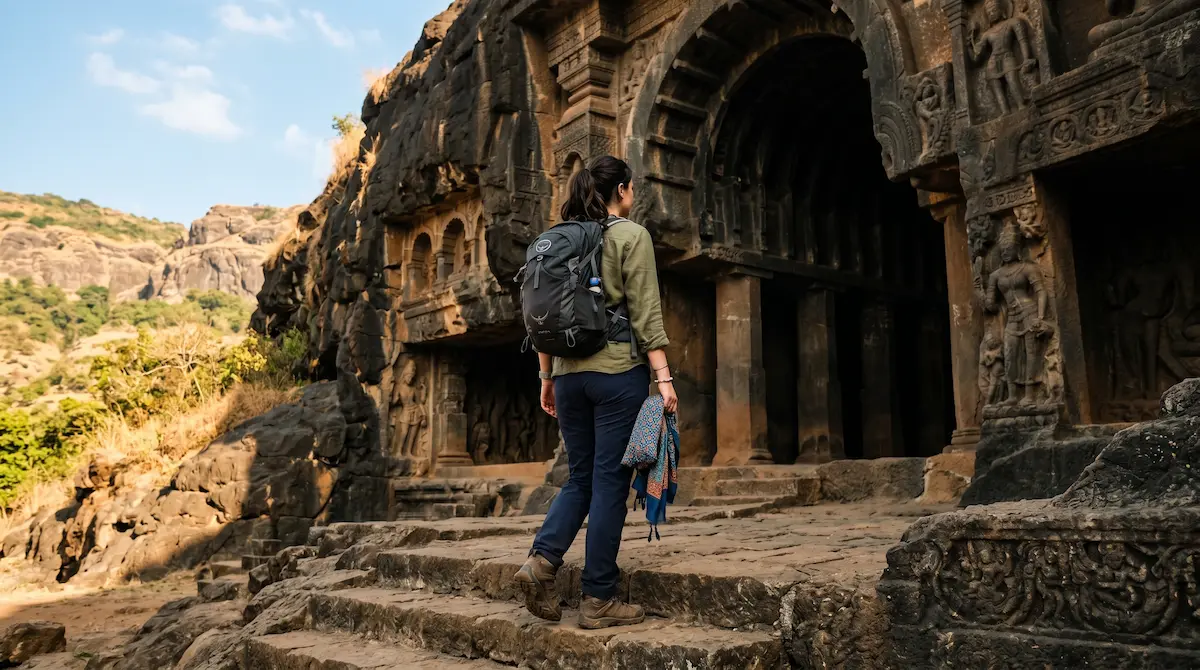
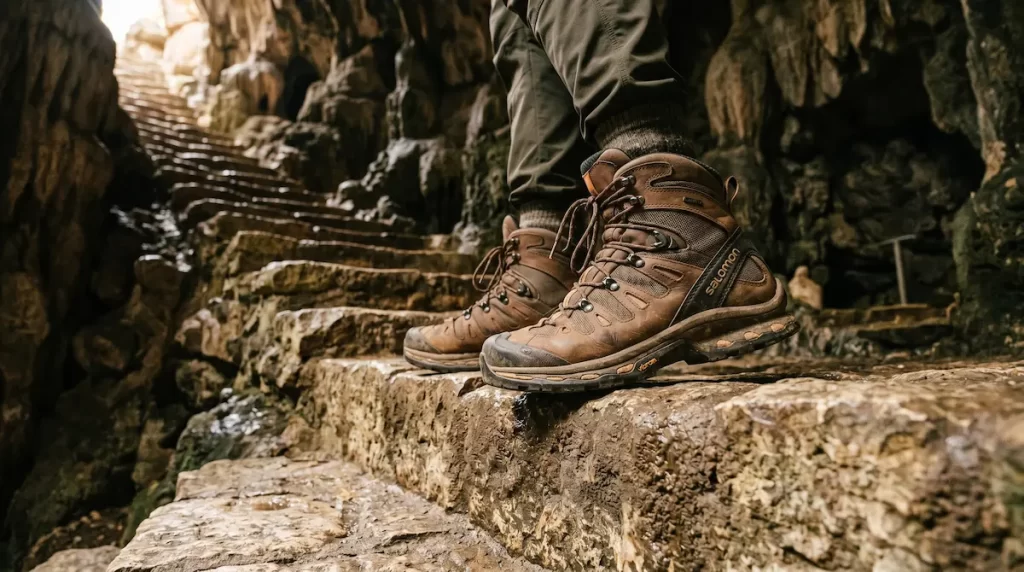
Many cave sites involve significant climbing:
| Site | Approximate Climb |
|---|---|
| Karla Caves | 300+ steps |
| Bhaja Caves | 200+ steps |
| Pandavleni Caves | 200+ steps |
| Lonar Crater | Steep crater descent |
| Daulatabad Fort | Long stair sections |
Closed shoes with good grip make these visits far more comfortable and safer.
Avoid:
- Flip-flops
- Slippers
- Smooth-soled sandals
- Fashion footwear with poor grip
What to Wear During Summer
Summer temperatures across Maharashtra frequently exceed 35°C.
For visits between March and June:
- Light-colored clothing
- Breathable fabrics
- Sun protection
- Reusable water bottle
- Lightweight hat
Early morning visits are strongly recommended.
What to Wear During Monsoon
Monsoon changes the priorities completely.
Instead of heat, the main concern becomes slippery stone surfaces.
Recommended:
- Quick-dry clothing
- Lightweight rain jacket
- Waterproof bag
- Shoes with excellent grip
Avoid long trailing garments that can become wet or muddy during climbs.
Photography Considerations
Photography is permitted at most cave sites, although active temple areas sometimes have separate rules.
For photographs:
- Neutral colors work best
- Avoid overly bright patterns
- Modest clothing generally looks more appropriate in heritage settings
Always check local photography rules before photographing inside active shrines.
Final Recommendation
If you’re unsure what to wear at Indian caves, keep it simple:
Comfortable clothing, covered shoulders, practical walking shoes, and a lightweight scarf.
That combination works at nearly every major cave site in Maharashtra and ensures you’re prepared whether you’re exploring a Buddhist monastery, a Hindu temple cave, or a steep hillside staircase.
FAQ — What to Wear at Indian Caves
Q1: Is there a dress code at Ajanta Caves?
No. Ajanta Caves does not have a formal dress code, although modest clothing is recommended.
Q2: Do I need traditional Indian clothing to visit cave sites?
No. Comfortable travel clothing is perfectly acceptable.
Q3: Which cave sites have active temples?
Karla Caves, parts of Ellora, Daitya Sudan Temple at Lonar, and nearby Grishneshwar Temple are active worship sites.
Q4: What shoes should I wear?
Closed walking shoes or trekking shoes with good grip are the best choice.
Q5: Do I need to remove footwear?
Only when entering active temples or shrine areas. Archaeological cave sections generally do not require shoe removal.
Related Posts You Might Like
- Maharashtra Caves Circuit – 5-Day Complete Itinerary
- Photography Rules at Indian Caves – What’s Allowed
- Maharashtra Caves Accessibility Guide
- Pandavleni Caves and Trimbakeshwar Temple Combo
- Hiring Guides at Maharashtra Caves – Cost and Tips