India’s Top 10 Rock-Cut Cave Sites – Complete Ranking (2026)
India’s rock-cut cave tradition spans nearly two thousand years, stretching from Maharashtra’s Deccan Plateau to the eastern hills of Odisha and the temple landscapes of South India. Some sites are famous for painted murals, others for colossal architecture, and a few preserve inscriptions that transformed our understanding of ancient Indian history.
This is my honest ranking of India’s 10 most significant rock-cut cave sites, based on historical importance, architectural ambition, artistic achievement, and overall visitor experience.
Quick Facts
| Fact | Details |
|---|---|
| Tradition Span | 3rd century BCE to 13th century CE |
| States Represented | Maharashtra, Karnataka, Odisha, Tamil Nadu, Madhya Pradesh |
| UNESCO World Heritage Sites | 3 |
| Maharashtra Sites in Top 10 | 5 |
1. Ellora Caves, Maharashtra
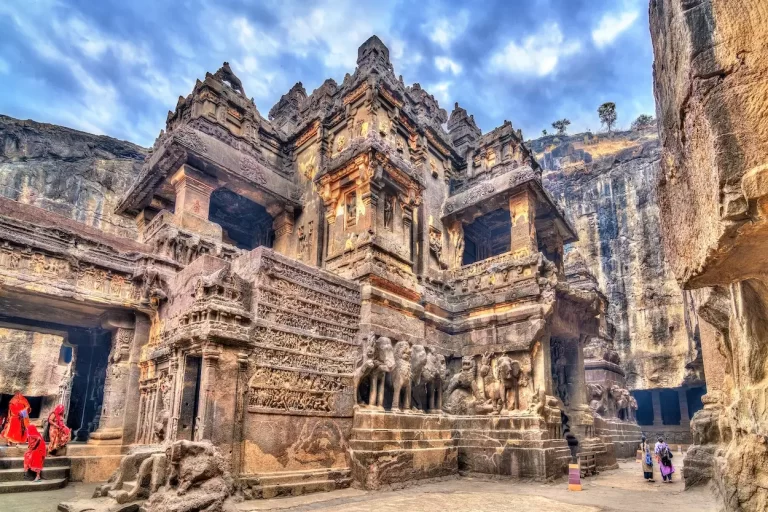
Ellora takes the top position because of the extraordinary Kailasa Temple, the world’s largest monolithic rock-cut monument. Carved entirely from a single rock face, the temple remains one of the greatest engineering achievements in human history.
The site contains 34 caves representing Buddhist, Hindu, and Jain traditions, making it one of the clearest examples of religious coexistence in ancient India.
2. Ajanta Caves, Maharashtra
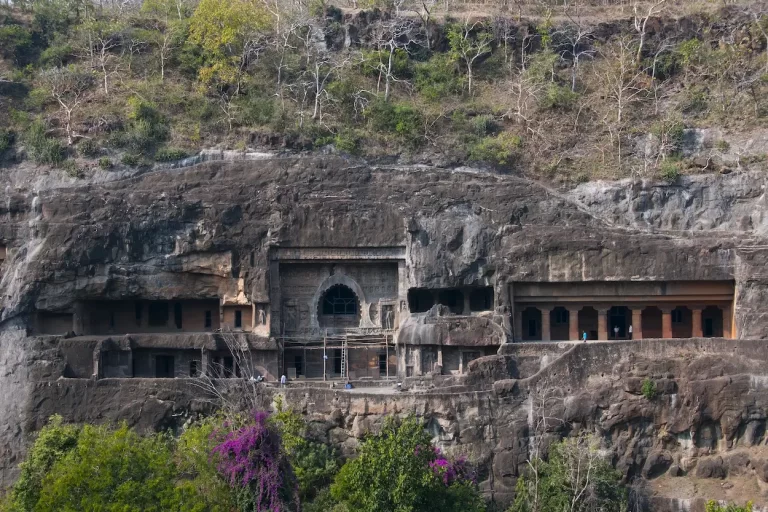
Ajanta is India’s greatest surviving collection of ancient Buddhist paintings.
Its 30 caves preserve remarkable murals depicting the Jataka tales and offer a rare window into religious life, court culture, clothing, architecture, and artistic traditions from more than 1,500 years ago.
3. Elephanta Caves, Maharashtra
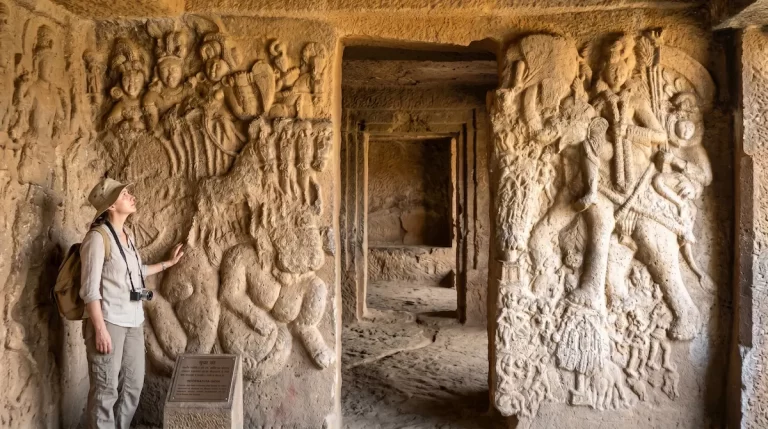
Located on an island near Mumbai, Elephanta is best known for its magnificent Trimurti sculpture, a three-faced representation of Lord Shiva considered one of the finest achievements of Hindu cave art.
Its island setting and monumental sculptures make it one of India’s most distinctive heritage experiences.
4. Udayagiri and Khandagiri Caves, Odisha
Among India’s oldest cave complexes, Udayagiri and Khandagiri preserve important Jain heritage and inscriptions connected to King Kharavela’s reign during the 2nd century BCE.
Rani Gumpha remains one of the most architecturally impressive caves in eastern India.
5. Badami Cave Temples, Karnataka
Carved into dramatic red sandstone cliffs, Badami’s cave temples mark the rise of early Chalukya architecture in South India.
The site’s sculptural detail, location, and historical significance make it one of India’s most underrated cave destinations.
6. Karla Caves, Maharashtra
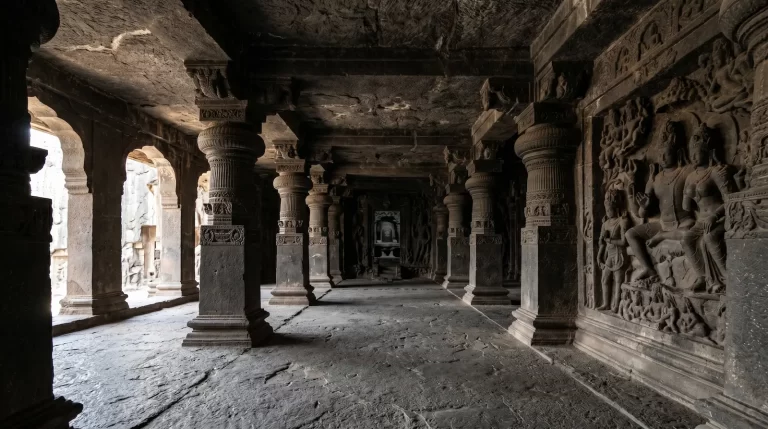
Karla houses the largest and best-preserved ancient Buddhist chaitya hall in India.
Its enormous prayer hall, soaring pillars, and historical inscriptions connected to the Satavahana and Western Kshatrapa dynasties make it one of the country’s most important Buddhist sites.
7. Bhaja Caves, Maharashtra
Bhaja offers a more intimate cave experience than Karla, with beautifully preserved architecture, a famous musician panel often linked to early depictions of the tabla, and a remarkable cluster of memorial stupas dedicated to Buddhist monks.
8. Pandavleni Caves, Maharashtra
Located near Nashik, Pandavleni is one of India’s most important inscription sites.
The caves preserve the Nashik Prashasti, a key historical record describing the achievements of Satavahana ruler Gautamiputra Satakarni and helping historians reconstruct ancient Deccan history.
9. Bagh Caves, Madhya Pradesh
Often compared to Ajanta, the Bagh Caves contain Buddhist paintings and architecture dating to approximately the 6th century CE.
Although less visited, they remain an important companion site for anyone interested in India’s ancient painting tradition.
10. Mahabalipuram (Pancha Rathas), Tamil Nadu
The Pancha Rathas represent South India’s unique contribution to rock-cut architecture.
Carved during the Pallava period, these monolithic temples demonstrate how rock-cut experimentation gradually evolved into the structural temple architecture that would later define much of southern India.
Why Maharashtra Dominates This List
Five of the ten sites on this ranking are located in Maharashtra.
This reflects the state’s historic position along ancient trade routes connecting India’s western coast with the Deccan interior. For centuries, merchants, rulers, monks, and patrons funded the excavation of Buddhist, Hindu, and Jain cave complexes across the region, creating one of the world’s greatest concentrations of rock-cut heritage.
FAQ — India’s Top Rock-Cut Cave Sites
Q1: What is the largest rock-cut monument in India?
The Kailasa Temple at Ellora Caves is the largest monolithic rock-cut monument in India and one of the greatest rock-cut structures ever created.
Q2: Why does Maharashtra have so many important cave sites?
Its location along major ancient trade routes encouraged centuries of religious patronage and cave excavation by Buddhist, Hindu, and Jain communities.
Q3: Which is older, Ajanta or Karla Caves?
Karla’s earliest construction dates to around 160 BCE, making it slightly older than Ajanta’s earliest excavation phase.
Q4: Are Udayagiri and Khandagiri as important as Ajanta and Ellora?
Yes, though for different reasons. Their historical significance and early inscriptions make them among India’s most important ancient cave sites.
Q5: What makes Elephanta Caves special?
The monumental Trimurti sculpture is widely regarded as one of the finest achievements of Hindu rock-cut art anywhere in India.
Related Posts You Might Like
- Maharashtra Caves Circuit – 5-Day Complete Itinerary
- Ajanta vs Ellora vs Karla vs Bhaja – Which to Visit?
- Buddhist Caves Near Mumbai – Complete List
- Karla Caves History – Buddhist Heritage Explained
- Maharashtra Caves Map – All Sites in One Place