Ajanta Caves Nearby Attractions – What to See Around (2026 Local Guide)
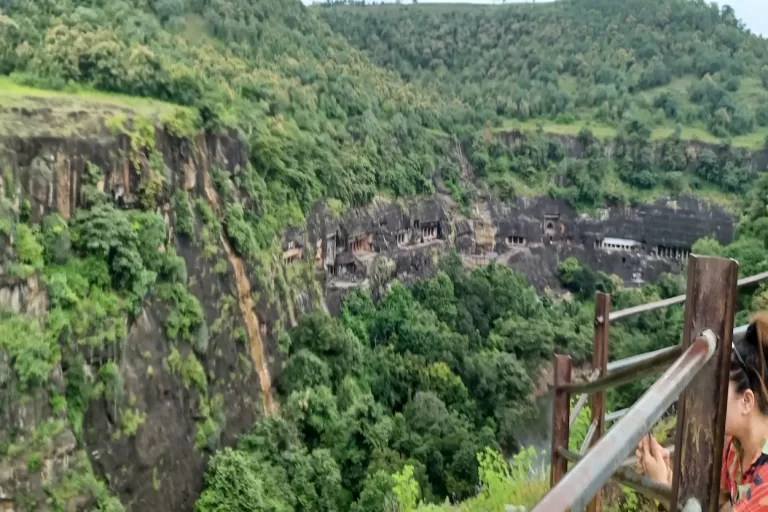
Ajanta Caves nearby attractions are not afterthoughts — some of them are among the most significant heritage sites in India. The region around Ajanta and Chhatrapati Sambhajinagar (Aurangabad) contains two UNESCO World Heritage Sites, a Mughal monument that rivals the Taj Mahal in architectural ambition, one of the most intact medieval hill forts in the Deccan, and a meteor crater with 12 ancient temples on its rim. Most visitors see one site and leave. This guide helps you see the region properly.
How to Think About the Ajanta Region
Ajanta sits at the northern edge of the Chhatrapati Sambhajinagar (Aurangabad) heritage cluster — roughly 100 km from the city. Everything else worth seeing is closer:
- Ellora Caves — 30 km from Chhatrapati Sambhajinagar (Aurangabad)
- Aurangabad Caves — 5 km from Chhatrapati Sambhajinagar (Aurangabad) city center
- Bibi Ka Maqbara — inside Chhatrapati Sambhajinagar (Aurangabad) city
- Daulatabad Fort — 15 km from Chhatrapati Sambhajinagar (Aurangabad)
- Grishneshwar Temple — 30 km from Chhatrapati Sambhajinagar (Aurangabad), adjacent to Ellora
- Lonar Crater — 140 km from Chhatrapati Sambhajinagar (Aurangabad)
- Pitalkhora Caves — 78 km from Chhatrapati Sambhajinagar (Aurangabad)
The practical itinerary is: spend your Ajanta day at Ajanta, use Chhatrapati Sambhajinagar (Aurangabad) as your base, and allocate separate days to the closer attractions. Trying to combine Ajanta with any of these on the same day compromises both experiences.
💡 Tip: Two nights in Chhatrapati Sambhajinagar (Aurangabad) is the minimum that makes sense for this region. Day one Ajanta, day two Ellora plus Daulatabad Fort plus Grishneshwar Temple. A third day adds Bibi Ka Maqbara, Aurangabad Caves, and the city itself. Each day is a complete and distinct experience.
📍 Chhatrapati Sambhajinagar on Google Maps

Ellora Caves — The Essential Second Day
Distance from Ajanta: 130 km (via Chhatrapati Sambhajinagar Aurangabad)
Distance from Chhatrapati Sambhajinagar (Aurangabad): 30 km
Time needed: Full day
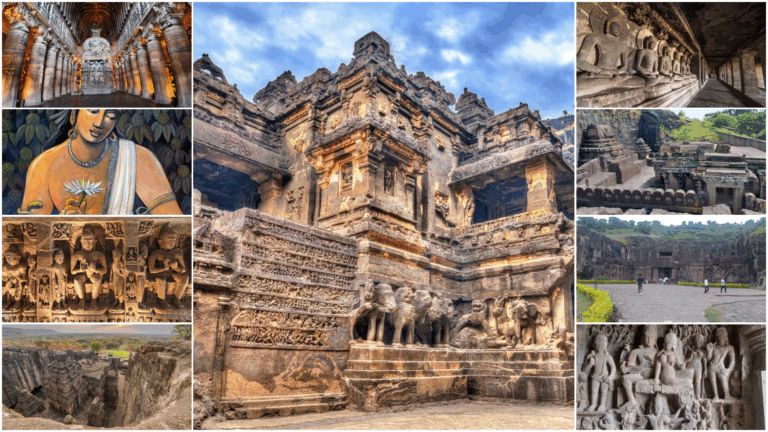
Ellora is not a follow-up to Ajanta — it is an equal. The 34 caves at Ellora span three religions — Buddhism, Hinduism, and Jainism — carved over six centuries from roughly the 5th to 11th century CE. Where Ajanta is about painting, Ellora is about sculpture and architecture at a scale that has no parallel anywhere in India.
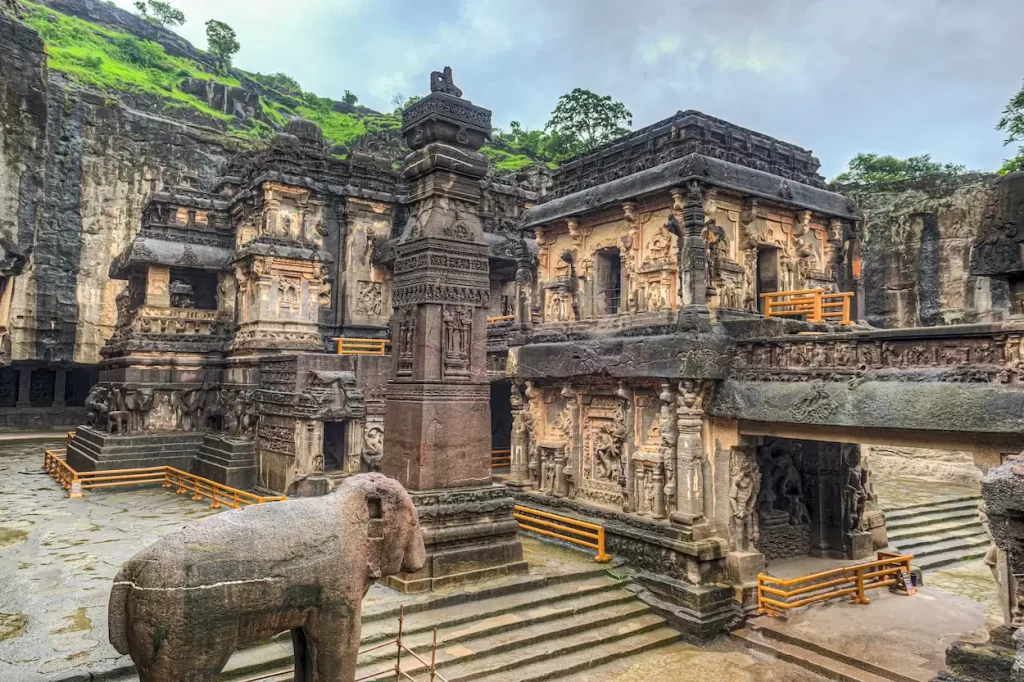
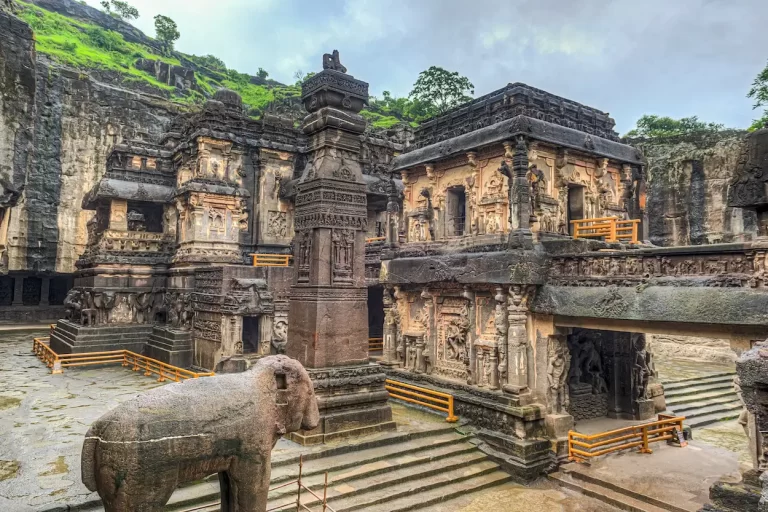
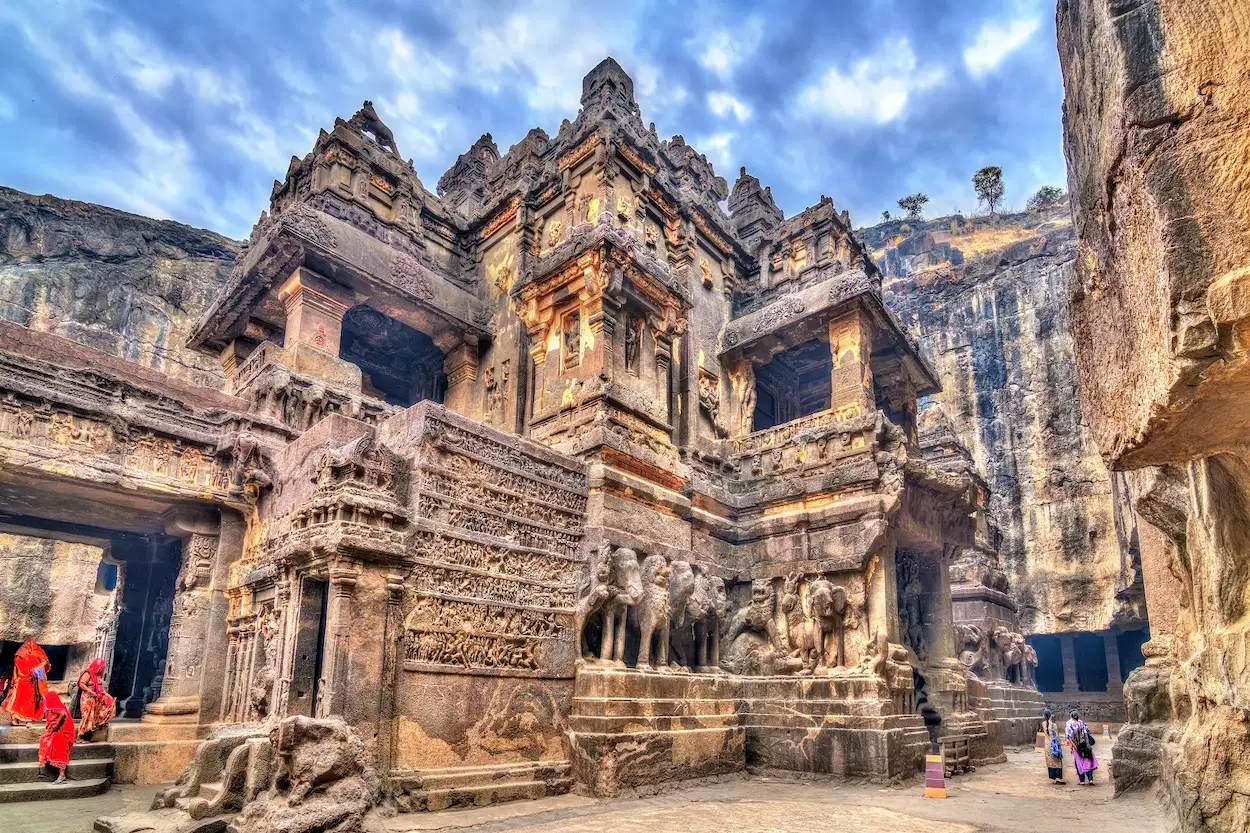
The Kailasa Temple — Cave 16 at Ellora:
The Kailasa Temple is the reason Ellora exists in any serious heritage itinerary. It is a complete Hindu temple — shikhara, mandapa, courtyard, subsidiary shrines, two life-size elephant sculptures at the entrance — carved entirely from a single basalt cliff. Not built. Carved downward from the top of the rock, removing an estimated 200,000 tonnes of stone over approximately 100 years during the reign of the Rashtrakuta dynasty in the 8th century CE.
The scale of the Kailasa Temple does not reveal itself immediately. You walk around it, then around it again, and each time the fact of what a single generation of craftsmen carved from one rock face becomes slightly more impossible to accept.
Buddhist caves (1–12): Multi-storey monasteries with elaborate carved facades, predating the Hindu phase. Cave 5 — the Maharwada — has a dining hall with stone benches still in place.
Jain caves (30–34): Often missed because they are at the far end of the complex. The Indra Sabha (Cave 32) has the finest Jain sculpture at Ellora — elaborately carved figures on two levels with a central courtyard.
💡 Tip: Most visitors spend all their Ellora time at the Kailasa Temple and leave having seen only the Hindu section. The Jain caves at the far end of the complex — a 15-minute walk past the Hindu section — contain sculpture of extraordinary quality and are almost always empty. Budget time for them. 👉 The Ajanta-Ellora 2-Day Tour covers both sites properly — Ajanta on day one, Ellora with Kailasa Temple and the Jain caves on day two.
Daulatabad Fort — The Unconquered Hill
Distance from Chhatrapati Sambhajinagar (Aurangabad): 15 km
Time needed: 2–3 hours
Best combined with: Ellora day
Daulatabad Fort sits on a 200-metre volcanic rock pinnacle rising from the Deccan plateau. It was built and rebuilt by successive dynasties — Yadavas, Delhi Sultanate, Bahmani, Mughals — each adding fortification layers that make Daulatabad one of the most complex defensive structures in medieval India.
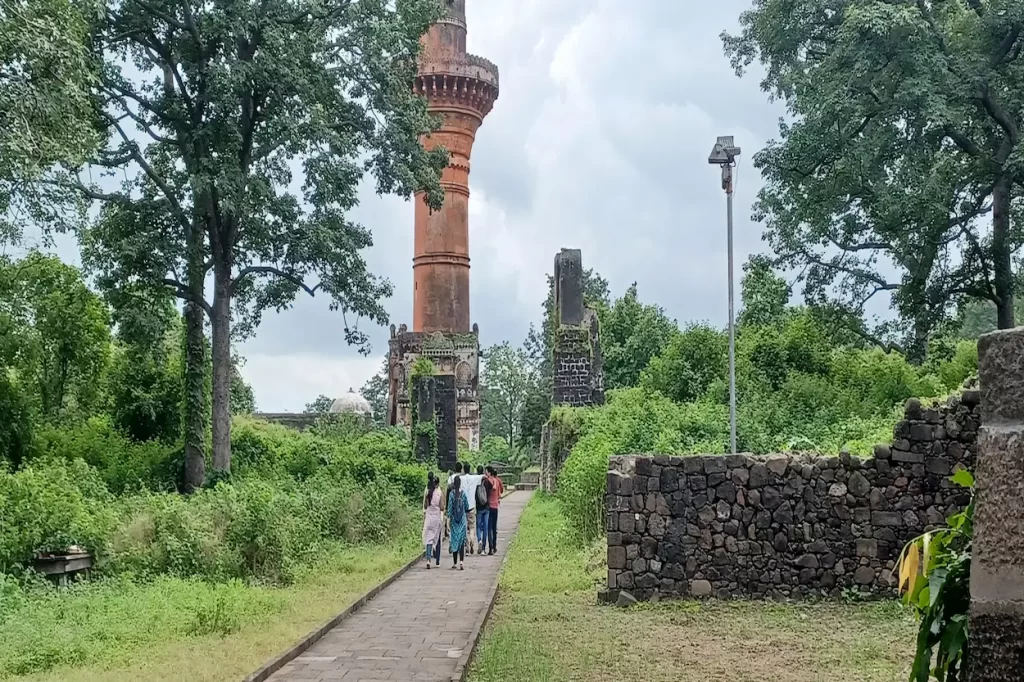
What makes it worth visiting:
The approach to the inner citadel involves a deliberate maze — a carved tunnel through the rock, a moat section that was historically filled with water and crocodiles, a section of complete darkness where defenders could trap attackers without light. The military engineering is extraordinary and still largely intact.
The view from the top — over the Deccan plateau toward Chhatrapati Sambhajinagar (Aurangabad) and, on clear days, toward the Ellora escarpment — is among the best in the region.
Practical note: The climb to the top is steep and involves the dark tunnel section. A torch is useful (unlike at Ajanta, you may carry one here). Not recommended for visitors with mobility limitations.
💡 Tip: Combine Daulatabad Fort with the Ellora day — the fort is directly on the Chhatrapati Sambhajinagar (Aurangabad) to Ellora road. Stop at Daulatabad on the way to Ellora in the morning and you add a compelling heritage site without a separate day trip.
📍 Daulatabad Fort on Google Maps
Bibi Ka Maqbara — The Taj of the Deccan
Distance from Chhatrapati Sambhajinagar (Aurangabad) city center: 3 km
Time needed: 1.5–2 hours
Best combined with: Aurangabad Caves, city heritage walk
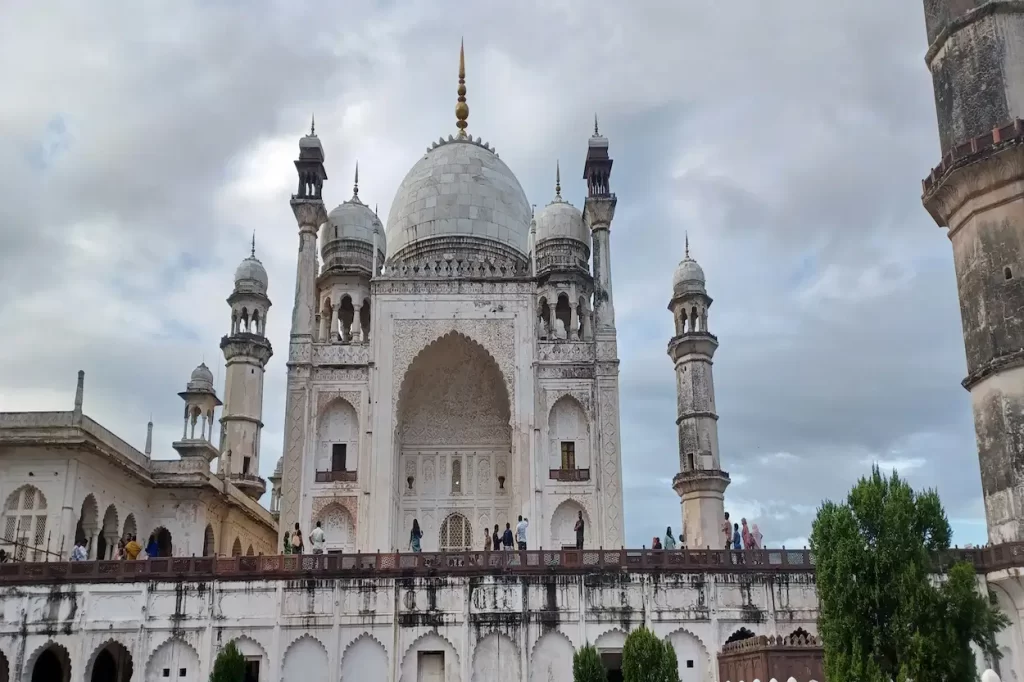
Bibi Ka Maqbara is a Mughal mausoleum built in 1660 CE by Azam Shah, son of Aurangzeb, in memory of his mother Dilras Banu Begum. It is modeled directly on the Taj Mahal — four minarets, a central domed tomb, a formal Persian garden — and was constructed with the explicit intention of replicating the Taj in the Deccan.
The honest comparison: Bibi Ka Maqbara is smaller and built with less expensive materials than the Taj — marble was used only for the lower portions of the structure, with lime plaster on the upper sections. But the proportions are graceful, the garden setting is well-maintained, and at dawn or dusk the structure carries genuine atmospheric weight.
Why it matters beyond the Taj comparison:
Bibi Ka Maqbara is the most significant Mughal monument in Maharashtra and one of the last major Mughal constructions before the empire’s decline. Its history — built by a son for his mother, in a city where his father Aurangzeb spent the final decades of his reign — is inseparable from the political history of the late Mughal period.
💡 Tip: Visit Bibi Ka Maqbara at sunrise if you can — the early morning light on the white plaster and marble, with almost no other visitors present, is the version of the monument worth seeing. The noon visit with tour groups is a different experience entirely.
📍 Bibi Ka Maqbara on Google Maps

Aurangabad Caves — The Forgotten Buddhist Site
Distance from Chhatrapati Sambhajinagar (Aurangabad) city center: 5 km
Time needed: 1.5–2 hours
Best combined with: Bibi Ka Maqbara half-day
The Aurangabad Caves are 12 rock-cut Buddhist caves carved in two separate groups — dating from roughly the 2nd to 6th century CE — on a hillside just outside the city. They are among the most undervisited significant heritage sites in Maharashtra.
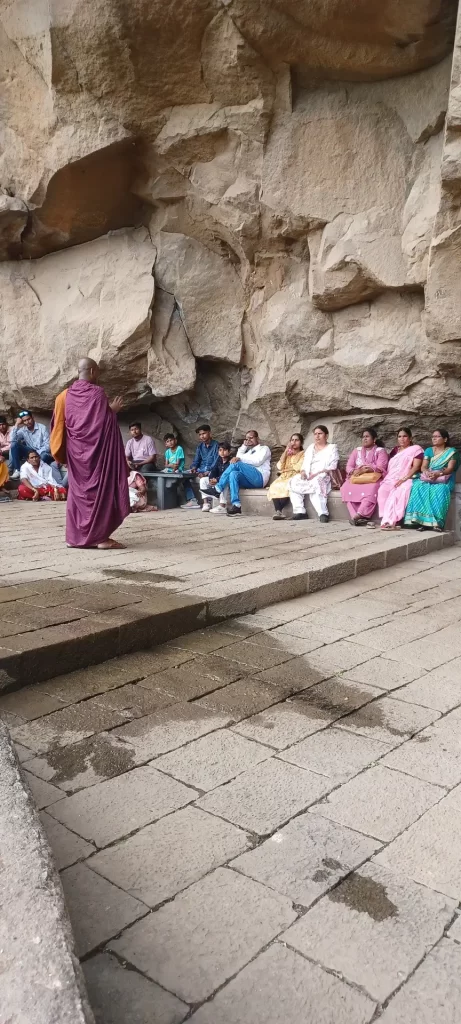
Why they matter:
The Western Group (Caves 1–5) contains the finest sculpture at the Aurangabad Caves — particularly Cave 3, which has an elaborate carved facade with figures of Bodhisattvas and celestial beings in a style that bridges the Ajanta and Ellora periods. Cave 7 in the Eastern Group contains the most famous sculpture — a multi-armed goddess figure that is one of the earliest representations of Tantric Buddhist iconography in India.
The honest assessment:
After Ajanta and Ellora, the Aurangabad Caves feel modest in scale. But they are genuinely significant — and they are almost always empty. If you have a half-day in Chhatrapati Sambhajinagar (Aurangabad) between your Ajanta and Ellora days, the Aurangabad Caves plus Bibi Ka Maqbara is a perfect morning.
💡 Tip: The Aurangabad Caves are on a hillside above the city and require a short climb. The view of Chhatrapati Sambhajinagar (Aurangabad) from the cave level — over the Deccan plateau — is worth the ascent even before you enter the first cave.
📍 Aurangabad Caves on Google Maps
Grishneshwar Temple — One of the 12 Jyotirlingas
Distance from Chhatrapati Sambhajinagar (Aurangabad): 30 km (adjacent to Ellora)
Time needed: 1–1.5 hours
Best combined with: Ellora day
Grishneshwar Temple is one of the 12 Jyotirlinga shrines — the most sacred Shiva temples in Hinduism — and sits 1 km from the Ellora cave complex. For Hindu pilgrims, it is the primary reason to visit the Ellora region. For heritage travelers, it is a working 18th-century temple rebuilt under the patronage of Ahilyabai Holkar, with red stone carvings that reward careful attention.
Practical note: Grishneshwar is an active temple with a strict dress code — traditional Indian clothing or a dhoti/saree is required. Western clothing is not permitted inside the inner sanctum. Clothes can be hired at the temple entrance. Remove footwear before entering.
Photography: Not permitted inside the inner sanctum. Permitted in the outer temple areas.
💡 Tip: Visit Grishneshwar first thing in the morning before Ellora — the temple is most atmospheric at the early morning puja, before the day-visitor crowds arrive. Then proceed directly to Ellora for the rest of the day.
📍 Grishneshwar Temple on Google Maps
Lonar Crater — Maharashtra’s Hidden Geological Wonder
Distance from Chhatrapati Sambhajinagar (Aurangabad): 140 km
Time needed: Full day or overnight
Best combined with: Separate day trip or 3-day itinerary
Lonar Crater is a 50,000-year-old meteor impact crater — one of only four hyper-velocity impact craters in basaltic rock on earth. The crater lake is saline and alkaline, with a unique ecosystem found nowhere else in India. Around the crater rim sit 12 ancient temples — some partially submerged by the lake — dating from the 6th to 13th centuries CE.
What makes it extraordinary:
The combination of geological rarity and historical depth at Lonar is unlike anything else in Maharashtra. The crater is 1.8 km in diameter and 150 metres deep. Walking the rim trail takes 2–3 hours. The temples inside the crater — particularly the Daitya Sudan Temple dedicated to Vishnu — are significant examples of Hemadpanthi architecture.
Honest logistics note: Lonar is 140 km from Chhatrapati Sambhajinagar (Aurangabad) — a 3-hour drive each way. A day trip is possible but long. Staying one night in Lonar and combining with an Ajanta visit (Ajanta is 170 km from Lonar, roughly northwest) on a multi-day loop is the more satisfying approach.
💡 Tip: Lonar at dawn — when the crater lake catches the first light and the temple spires emerge from the mist — is the version most photographers come for. An overnight stay is the only way to be at the crater rim at sunrise. 👉 The Ajanta-Ellora-Lonar 3-Day Tour covers all three sites on a single planned route — no separate car hire or hotel research needed.

Pitalkhora Caves — For the Seriously Curious
Distance from Chhatrapati Sambhajinagar (Aurangabad): 78 km
Time needed: Half day
Best combined with: Ajanta day (en route, adds 40 km)
Pitalkhora is a group of 14 rock-cut Buddhist caves in a forest ravine in the Sahyadri hills, dating from the 2nd century BCE to the 5th century CE. They are among the oldest rock-cut cave sites in Maharashtra — predating Ajanta — and are almost entirely unknown to mainstream travelers.
Why they matter:
Pitalkhora shows the earliest phase of rock-cut Buddhist architecture in the Deccan — before the refined Ajanta style was established. The elephant sculptures at the cave entrance (now partially collapsed) and the water management system carved into the hillside for the monsoon are significant. For visitors who have seen Ajanta and want to understand where the tradition came from, Pitalkhora is the answer.
Honest assessment: Pitalkhora is not for casual visitors. The caves require a forest approach, the site has minimal facilities, and the significance is primarily historical and archaeological. For heritage specialists and seriously curious travelers, it is worth the detour. For most travelers on a standard Ajanta itinerary, it is not necessary.
💡 Tip: If you are driving from Mumbai to Ajanta and have flexibility in your route, Pitalkhora can be added as a stop — it is roughly between the two. Confirm road conditions locally before adding this detour.
📍 Pitalkhora Caves on Google Maps
Quick Reference — Nearby Attractions by Distance
| Attraction | Distance from CSN (Aurangabad) | Best Combined With | Time Needed |
|---|---|---|---|
| Aurangabad Caves | 5 km | Bibi Ka Maqbara morning | 1.5–2 hours |
| Bibi Ka Maqbara | 3 km | Aurangabad Caves | 1.5–2 hours |
| Daulatabad Fort | 15 km | Ellora day | 2–3 hours |
| Ellora Caves | 30 km | Separate full day | Full day |
| Grishneshwar Temple | 30 km | Ellora day morning | 1–1.5 hours |
| Pitalkhora Caves | 78 km | En route from Mumbai | Half day |
| Lonar Crater | 140 km | Separate day or overnight | Full day |
The Alternative — See Everything Without Planning Everything
Knowing which sites to combine, which order makes sense, and how much time each actually takes — this is the planning most travelers spend hours researching and still get wrong on the day.
A private guided tour from Chhatrapati Sambhajinagar (Aurangabad) handles all of it. The Ajanta day is timed correctly. The Ellora day includes Daulatabad Fort and Grishneshwar Temple in the right sequence. The Lonar extension is planned as a proper overnight loop, not a rushed 300 km day trip.
👉 See Ajanta Private Day Tour Details & Book — Ajanta done properly, one booking.
👉 See Ajanta-Ellora 2-Day Tour Details & Book — both UNESCO sites, correct sequence, everything arranged.
👉 See Ajanta-Ellora-Lonar 3-Day Tour Details & Book — the complete Chhatrapati Sambhajinagar (Aurangabad) heritage circuit.
FAQ — Ajanta Caves Nearby Attractions
Q.1 : What are the best attractions near Ajanta Caves?
The best Ajanta Caves nearby attractions are Ellora Caves (30 km from Chhatrapati Sambhajinagar Aurangabad, UNESCO World Heritage Site), Daulatabad Fort (15 km, medieval hilltop fortification), Bibi Ka Maqbara (3 km from city center, Mughal mausoleum), Aurangabad Caves (5 km, Buddhist rock-cut caves), Grishneshwar Temple (30 km, one of 12 Jyotirlingas), and Lonar Crater (140 km, meteor impact crater with ancient temples).
Q.2 : Can I visit Ajanta and Ellora on the same day?
Possible but not recommended. Ajanta and Ellora are 130 km apart via Chhatrapati Sambhajinagar (Aurangabad), and each deserves a full day. Combining both in one day means rushing through both sites — which defeats the purpose of visiting UNESCO heritage sites of this significance. Two days — one per site — is the correct approach.
Q.3 : How far is Ellora from Ajanta Caves?
Ellora Caves are approximately 130 km from Ajanta via Chhatrapati Sambhajinagar (Aurangabad) — roughly 2.5 to 3 hours by road. Ellora is 30 km from Chhatrapati Sambhajinagar (Aurangabad) city. The standard itinerary is: Ajanta on day one, return to Chhatrapati Sambhajinagar (Aurangabad) for the night, Ellora on day two.
Q.4 : Is Lonar Crater worth visiting from Chhatrapati Sambhajinagar (Aurangabad)?
Yes — if you have a third day or are willing to stay overnight at Lonar. The crater is 140 km from Chhatrapati Sambhajinagar (Aurangabad) and a day trip is long. The combination of geological rarity (one of four hyper-velocity impact craters in basaltic rock on earth), the saline crater lake, and 12 ancient temples on the rim makes Lonar one of the most unusual heritage sites in India.
Q.5 : What is Daulatabad Fort and is it worth visiting?
Daulatabad Fort is a 200-metre volcanic rock pinnacle fortified over centuries by successive Deccan dynasties. Its military engineering — including a deliberate maze approach, a moat, and a dark tunnel section through the rock — is extraordinary and largely intact. It is directly on the road from Chhatrapati Sambhajinagar (Aurangabad) to Ellora, making it a natural addition to the Ellora day without requiring separate transport.
👉 Related Posts You Might Like:
- Ellora Caves Travel Guide – Complete Visitor Guide
- Kailasa Temple Ellora Caves – History and Travel Tips
- Ajanta Caves for First-Time India Visitors – Complete Guide
- How Many Days for Ajanta Caves – 1 Day or 2?
- Ajanta and Ellora Day Trips – Complete Travel Guide