Ajanta Caves for First Time India Visitors – Complete Honest Guide (2026)
Ajanta Caves for first time India visitors requires a specific kind of guidance — not just what the caves are, but how India works around them. Getting to Ajanta from Mumbai, understanding what the entry system involves, knowing what you are looking at inside the caves, and not being overwhelmed by the logistics of a site 100 km from the nearest city — this is what most guides do not cover. This one does.
What Ajanta Caves Actually Is — Context Before You Arrive
Most first-time visitors to India arrive at Ajanta knowing that it is a UNESCO World Heritage Site with ancient paintings. This is correct but insufficient preparation for what Ajanta actually is.
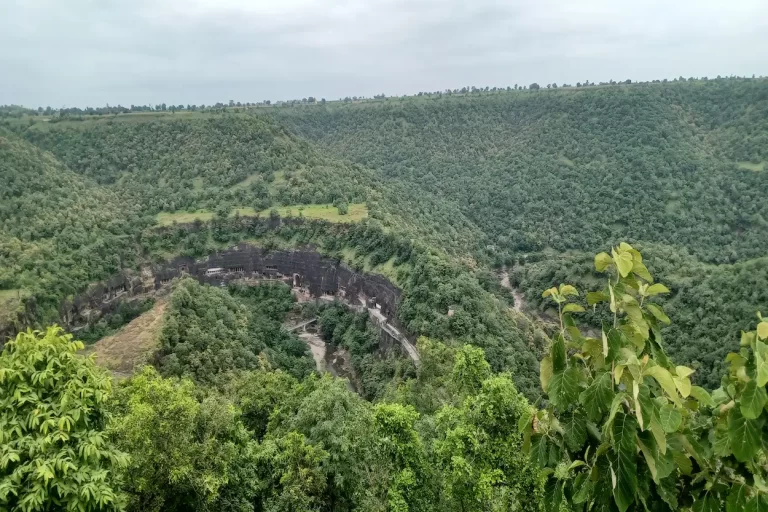
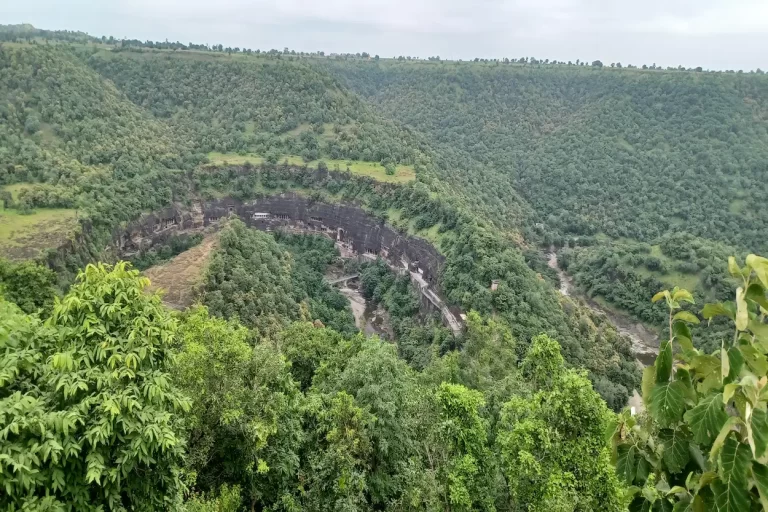
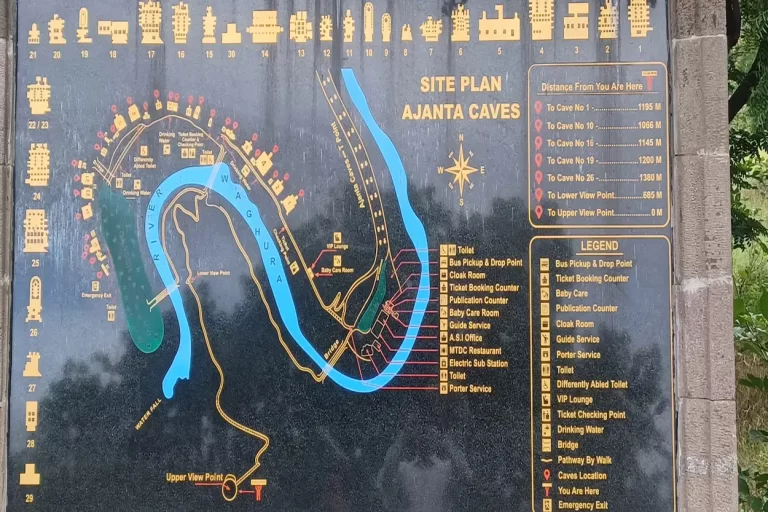
Ajanta is a complex of 30 Buddhist caves carved into a horseshoe-shaped cliff above the Waghur River in the Deccan plateau of Maharashtra. The caves were carved in two phases — the earliest dating to the 2nd century BCE, the later and more significant phase to the 5th century CE. The paintings inside — mineral pigments on lime plaster — are the finest surviving examples of ancient Indian art anywhere in the world. Not one of the finest. The finest.
The scale of what this means takes time to absorb. A painting of a Bodhisattva on the wall of Cave 1 was painted approximately 1,500 years ago by an artist whose name is unknown, using pigments ground from lapis lazuli and cinnabar, on a lime plaster surface prepared with the same care a European fresco painter would use a millennium later. In the fiber-optic light of the cave, it looks like it was painted last year.
This is what you are going to see. Arrive knowing this and Ajanta will stop you cold. Arrive without it and you will walk through 30 dark rooms and wonder what the fuss was about.
💡 Tip: Before your Ajanta visit, spend 30 minutes reading about the Jataka tales — the Buddhist birth stories that form the narrative content of most Ajanta paintings. You do not need academic depth. Just enough to know that the paintings tell stories — specific stories — and that your guide will identify which story each panel depicts. This preparation doubles what you take away from the visit.

Where Ajanta Fits in an India Itinerary
For first-time India visitors, the standard itinerary question is: Mumbai, Delhi, Rajasthan, Kerala — where does Ajanta fit?
The honest answer: Ajanta fits as a 2-night extension from Mumbai that adds two UNESCO World Heritage Sites — Ajanta and Ellora — to any India itinerary. Mumbai to Chhatrapati Sambhajinagar (Aurangabad) by overnight train or morning flight takes 2–3 hours. Two nights in Chhatrapati Sambhajinagar (Aurangabad) covers Ajanta on day one and Ellora on day two. Return to Mumbai on day three morning.
This is not a difficult addition to an India itinerary — it is a 2-night extension that adds what is arguably the greatest concentration of ancient art and rock-cut architecture in the country.
Where Ajanta sits relative to other India heritage sites:
- The Ajanta paintings are older than the Taj Mahal by 1,000 years
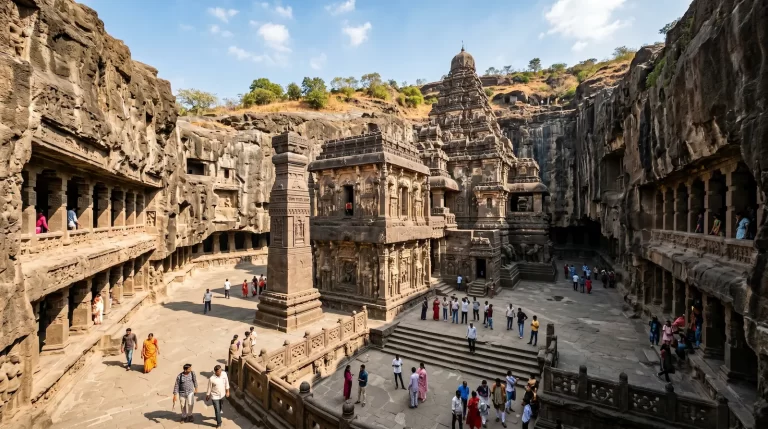
- The Ellora Kailasa Temple is the largest rock-cut structure on earth
- Together, Ajanta and Ellora represent India’s Buddhist, Hindu, and Jain heritage in a way that no single site elsewhere does
For a first-time India visitor with 10–14 days, skipping Ajanta and Ellora in favor of staying longer in Rajasthan or Goa is the most common itinerary regret I hear from travelers who return for a second visit.
💡 Tip: Mumbai is the correct base for an Ajanta extension — not Delhi or Pune. The overnight Devagiri Express or Nandigram Express from Mumbai CST reaches Chhatrapati Sambhajinagar (Aurangabad) in the early morning, giving you the full first day at Ajanta. Book the train ticket at least 2 weeks in advance — sleeper class fills up on this route.
Getting to Ajanta — The Complete First-Timer’s Logistics
Step 1 — Reach Chhatrapati Sambhajinagar (Aurangabad)
From Mumbai:
- Overnight train (Devagiri Express / Nandigram Express) — most practical for first-timers. Book sleeper or 3AC. Journey time approximately 6–7 hours overnight.
- Morning flight — faster but adds cost. Several daily flights from Mumbai to Chhatrapati Sambhajinagar (Aurangabad) airport.
From Delhi:
- Flight to Chhatrapati Sambhajinagar (Aurangabad) — direct or via Mumbai. Most practical option from Delhi.
From Pune:
- Bus or train — several options, approximately 5–6 hours.
Step 2 — Chhatrapati Sambhajinagar (Aurangabad) to Ajanta
Ajanta is 100 km from Chhatrapati Sambhajinagar (Aurangabad). Allow 2 to 2.5 hours by road. Options:
- Private AC car for the day — recommended for first-timers. Full timing control, driver handles the route, you arrive on your schedule.
- MSRTC state bus to Fardapur + auto + Eco-Bus — budget option, works but involves multiple connections and schedule dependency.
Step 3 — Amenities Center to Caves
From the Amenities Center (T-point) at Ajanta, private vehicles are not permitted into the eco-sensitive zone. Board the mandatory Eco-Bus (₹30–₹40) to the cave entrance. This is not optional — it applies to all visitors including private car passengers.
Step 4 — Entry tickets
Book online through the ASI portal before you travel. Cash counters are largely phased out and on-site QR/UPI payment can be unreliable at the gorge. Entry fee: ₹600 for foreign nationals, ₹35 online for Indian nationals.
💡 Tip: For first-time India visitors managing multiple logistics simultaneously — train booking, hotel in Chhatrapati Sambhajinagar (Aurangabad), car to Ajanta, ASI tickets, guide at the site — the number of moving pieces is real. 👉 The Ajanta Private Day Tour covers car, entry, Eco-Bus, and guide in one booking from Chhatrapati Sambhajinagar (Aurangabad). For a first visit to India, removing the day-of logistics from the equation is worth considering.
What to Expect on the Day — Honest First-Timer Briefing
The Amenities Center:
Your first stop after arrival. This is where you buy tickets (if not already done online), board the Eco-Bus, and deposit large bags at the cloakroom (₹10–₹20 per bag). There are basic food stalls here for tea and snacks.
The Eco-Bus:
A short electric or CNG bus ride from the Amenities Center to the cave entrance. Takes approximately 10 minutes. Runs regularly throughout the day.
The cave pathway:
A stone walkway that runs along the cliff face connecting all 30 cave entrances. The pathway is linear — you walk from Cave 1 (or 29, depending on direction) to the other end and back. It is not possible to get lost. Some sections have steps and uneven stone — closed grip footwear is essential.
Inside the caves:
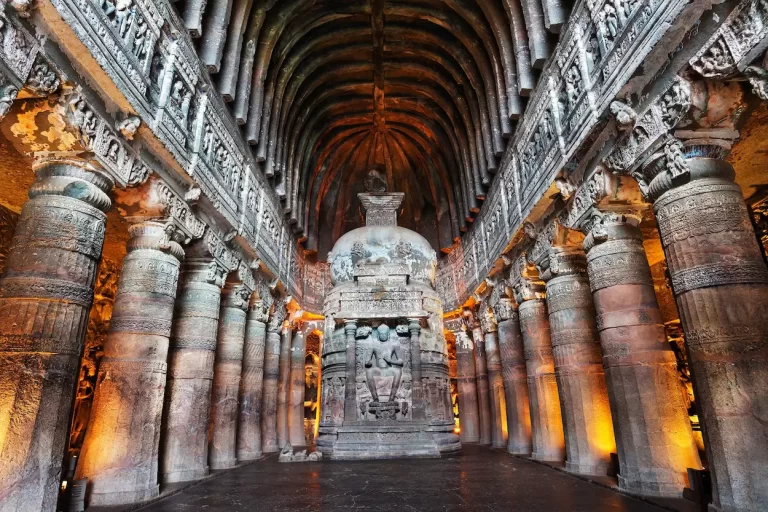
Dark. Your eyes need a full minute to adjust after each entry. The fiber-optic lighting is low by design — it protects the paintings. Flash photography and tripods are prohibited. Personal torches are not permitted. Give your eyes time at every cave entrance before moving through.
The crowds:
Ajanta receives significant visitor numbers, particularly on weekends and public holidays. Arrive at 9:00 AM opening to experience the caves before the large tour groups arrive between 10:00 and 10:30 AM. Weekdays are noticeably quieter than weekends.
The heat:
The Deccan plateau is hot from March through June. October to February is comfortable. Carry water — minimum 1 litre per person — and wear sun protection on the exposed pathway sections.
💡 Tip: First-time India visitors sometimes feel overwhelmed by the volume of information at a site like Ajanta — the cave numbers, the religious context, the painting iconography, the historical phases. A licensed guide resolves all of this. You do not need to research Ajanta deeply in advance if you have a good guide on the day. The guide is the research, delivered in real time at the exact painting it refers to.

The Essential Five Caves — Where to Focus
With a full day and a guide, a first-time visitor can cover all 30 caves. These five are where the most significant content is — and where a first-timer’s attention should be anchored:
Cave 1 — Start here
The finest paintings at Ajanta. The Bodhisattva Padmapani on the left wall of the antechamber is the image most associated with Ajanta globally. Give it 25–30 minutes. Let your eyes adjust fully before moving through.
Cave 2 — Do not skip it
The ceiling mandala is the most elaborate painted ceiling at Ajanta. Most visitors arrive at Cave 2 mentally satisfied from Cave 1 and move through too quickly. Look up. Stand in the center of the hall and look directly at the ceiling.
Cave 16 — The emotional peak
The Dying Princess painting — Sundari collapsing upon learning her husband is leaving for the monastery — is one of the great paintings of world art. Cave 16 has the lowest interior light of any significant cave at Ajanta. Two full minutes of eye adjustment after entering. Then find the panel on the left wall. Stand in front of it and do not rush.
Cave 17 — The narrative cave
The most complete painted narrative cycle at Ajanta. The Visvantara Jataka across one wall tells the complete story of a prince who gives away everything. Your guide’s explanation of this cave pays off more completely than in any other.
Cave 26 — End here
The Great Parinirvana reclining Buddha — 7 metres of carved rock depicting the Buddha at the moment of his final passing. End your Ajanta visit here. It is the correct conclusion.
Practical India Tips Specific to Ajanta
Cash vs digital payments:
On-site ticket counters are largely phased out — UPI and QR code payment is the current system. However, network at the Ajanta gorge is unreliable. Pre-book tickets online and carry some cash for the Eco-Bus, cloakroom, and the MTDC restaurant.
Guides and touts:
At the Amenities Center and cave entrance, you will be approached by unofficial guides offering their services. Always use the official ASI guide booth. Ask to see the guide’s ASI license before agreeing to anything. Agree on the rate clearly before boarding the Eco-Bus together.
Footwear:
Closed shoes with rubber grip soles. The cave pathway and steps are worn smooth over centuries and become slippery in monsoon. Sandals and smooth-soled shoes are genuinely unsuitable.
Photography:
Mobile and still cameras — no flash — are permitted with no additional fee. Turn flash off before entering the site, not cave by cave. Tripods are prohibited everywhere at Ajanta.
Lunch:
The MTDC restaurant at the cliff base — just below the cave pathway — is the correct lunch stop. Eating here saves the Eco-Bus round trip to the Amenities Center and back, which costs 45 minutes or more. Simple Indian meals.
💡 Tip: First-time India visitors sometimes hesitate about Indian food at heritage site restaurants. The MTDC restaurant at Ajanta cliff base is reliable, clean, and serves straightforward dal, rice, and roti. It is not an adventurous food experience — it is practical fuel for the afternoon caves.
Ajanta as Part of a Wider India Heritage Itinerary
For first-time visitors building an India itinerary around heritage, this is how Ajanta fits into a broader picture:
The 2-night Chhatrapati Sambhajinagar (Aurangabad) extension from Mumbai:
- Night 1: Arrive Chhatrapati Sambhajinagar (Aurangabad) by overnight train or morning flight. Check in, rest.
- Day 1: Ajanta Caves — full day, licensed guide, all 30 caves.
- Day 2: Ellora Caves + Daulatabad Fort + Grishneshwar Temple.
- Morning Day 3: Bibi Ka Maqbara + Aurangabad Caves. Afternoon train or flight back to Mumbai.
This 2-night extension adds two UNESCO World Heritage Sites, one Jyotirlinga temple, one extraordinary medieval fort, and one significant Mughal monument to any India itinerary — all within a manageable geographic cluster.
👉 See Ajanta-Ellora 2-Day Tour Details & Book — both UNESCO sites, correct sequence, all logistics handled from Chhatrapati Sambhajinagar (Aurangabad).
👉 See Aurangabad Heritage Tour Details & Book — Bibi Ka Maqbara, Daulatabad Fort, Aurangabad Caves, and the city in one day.

FAQ — Ajanta Caves for First-Time India Visitors
Q.1 : Is Ajanta Caves worth visiting for first-time India visitors?
Yes — unambiguously. Ajanta Caves contains the finest surviving ancient paintings in the world and is a 2-night extension from Mumbai that adds two UNESCO World Heritage Sites to any India itinerary. For first-time India visitors, skipping Ajanta and Ellora in favor of more time elsewhere is the most common itinerary regret on return visits.
Q.2 : How difficult is it to get to Ajanta Caves as a foreign visitor?
Manageable with preparation. The overnight train from Mumbai to Chhatrapati Sambhajinagar (Aurangabad) is reliable and bookable online through IRCTC or third-party platforms. From Chhatrapati Sambhajinagar (Aurangabad), a private car to Ajanta for the day is the most practical option. The entry system — pre-booked ASI tickets, mandatory Eco-Bus — is straightforward once you know what to expect.
Q.3 : Do I need a guide at Ajanta Caves as a first-time visitor?
Yes — strongly recommended. The paintings carry complex Buddhist iconographic and narrative content that is not legible without context. A licensed guide hired at the ASI booth transforms the visit from a walk through 30 dark rooms into an experience with genuine depth and meaning. For first-time visitors with no prior knowledge of Jataka tales or Buddhist iconography, a guide is essential.
Q.4 : What is the entry fee for foreign nationals at Ajanta Caves?
The entry fee for foreign nationals at Ajanta Caves is ₹600 per person. SAARC and BIMSTEC country citizens pay Indian rates — ₹35 online or ₹40 on-site. Children under 15 enter free. Book tickets online through the ASI portal before traveling — on-site network can be unreliable.
Q.5 : How does Ajanta compare to other India heritage sites for a first-time visitor?
Ajanta is in a category of its own for painting — the 1,500-year-old Buddhist murals have no equivalent anywhere in India or the world. Ellora’s Kailasa Temple is the largest rock-cut structure on earth. Together, Ajanta and Ellora represent a concentration of ancient heritage that rivals any heritage destination in Asia. The Taj Mahal is 400 years old. The Ajanta paintings are 1,500 years old. Both are essential. Neither replaces the other.
👉 Related Posts You Might Like:
- How Many Days for Ajanta Caves – 1 Day or 2?
- Ajanta Caves for Solo Travelers – Complete Honest Guide
- Ajanta Caves Nearby Attractions – What to See Around
- Ajanta and Ellora Day Trip from Mumbai
- Best Caves Inside Ajanta – Cave 1, 2, 16, 17 and 26 Explained