Karla Caves History – Buddhist Heritage Explained (2026)
Karla Caves history is far more politically complex than most visitors realize. Behind India’s largest ancient Buddhist prayer hall lies a story of rival dynasties, Greek-influenced merchants, powerful trade networks, and inscriptions that allow historians to date specific events with remarkable accuracy. This is the fuller picture behind one of Maharashtra’s most important Buddhist heritage sites.
What the Caves Were Originally Called
Karla’s ancient name, recorded in its own inscriptions, was Veluraka — a detail almost entirely absent from casual travel writing about the site, but a useful reminder that this was a known, named place in its own historical moment, not simply an old cave complex waiting to be rediscovered by modern tourism.
Two Phases, Two Different Political Powers

The caves at Karla developed over a long window — from roughly the 2nd century BCE through the 5th century CE — but the most significant single structure, the Grand Chaitya, has a politically specific construction story that spans two competing dynasties.
The earliest facade elements of the chaitya are dated to around 160 BCE based on inscription analysis. But the chaitya hall’s main construction phase is attributed to the period of Western Kshatrapa rule under the ruler Nahapana, in the decades before 120 CE — a Saka-origin dynasty that controlled parts of the western Deccan during this period.
What happened next is the genuinely interesting political detail: the Satavahana dynasty, the Kshatrapas’ regional rivals, later took control of the area, and the Satavahana ruler Vasishthiputra Pulumavi patronized the site in the mid-second century CE. One of his inscriptions at Karla is specifically dated to the 24th year of his reign — corresponding to 154 CE — making this one of the more precisely datable moments in the site’s entire history.
💡 Tip: I find this detail changes how I think about Karla — the chaitya hall wasn’t built by one continuous, friendly patron. It was started under one ruling power and completed or expanded under their political successors and rivals, which tells you something about how durable and important this site was considered regardless of who controlled the region at any given moment.
A Trading Hub, Not Just a Monastery
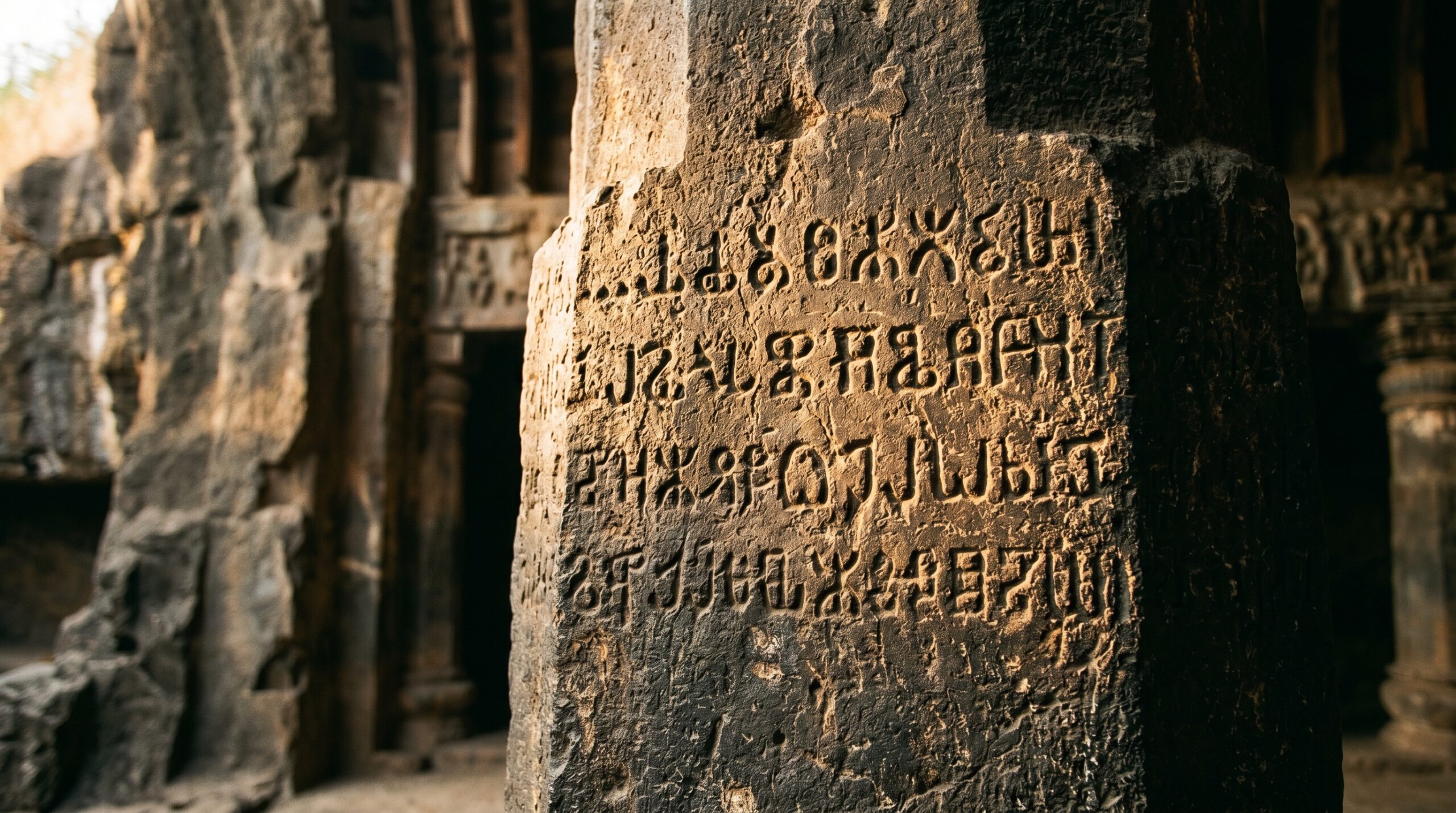
Karla’s inscriptions — 22 of them, predominantly in Prakrit using Brahmi script — record donations from an unusually wide cross-section of people: traders, monks, nuns, pilgrims, and merchant guilds from towns both near and genuinely distant, including Nashik, Kalyan, Paithan, and Sopara on the Konkan coast.
One detail I find genuinely striking: several donors recorded in the inscriptions, from the town of Dhenukakata, were identified as Yavanas — a term referring to people of Greek or Greek-influenced background, descendants of the Indo-Greek presence on India’s western coast following Alexander’s campaigns centuries earlier. Their donations toward pillars, windows, and carved roof beams are recorded directly in the stone, meaning the patronage network funding this Buddhist monument extended well beyond any single ethnic or regional community.
💡 Tip: This is the detail I’d specifically point out to anyone interested in how genuinely cosmopolitan ancient Deccan trade networks were — Greek-descended merchants funding a Buddhist prayer hall’s roof beams is not the kind of detail that fits a simple, singular narrative of who built and used these sites.
The Religious Tradition Behind the Caves
Karla’s caves are associated with the Mahasanghika monastic order — one of the early Buddhist schools and a precursor tradition to later Mahayana Buddhism. This places Karla within the broader Hinayana phase of Buddhist architecture, the same general tradition represented at Bhaja and at the earliest excavations of Ajanta, before the later Mahayana painting tradition that defines Ajanta’s most famous caves emerged in subsequent centuries.
Why This Site Faded From Wider Memory
Karla’s relative obscurity compared to Ajanta and Ellora reflects geography and tourism promotion patterns more than any gap in genuine historical significance. Sitting in Pune district near Lonavala — a region whose tourism identity is built around hill-station leisure rather than UNESCO-designated heritage circuits — Karla simply does not receive the same promotional attention as the Ajanta-Ellora region, despite several scholars describing its Grand Chaitya as comparable in ambition and craftsmanship to anything at either UNESCO site.
💡 Tip: I think the most useful way to hold Karla in your mind is as evidence that India’s rock-cut Buddhist tradition was not concentrated in one or two famous locations. It was a sustained, widespread practice across multiple regions of the Deccan, with Karla representing one of its most accomplished achievements.
The Alternative — History Explained on Site
The Nahapana-to-Pulumavi political transition, the Yavana donor inscriptions, and the Mahasanghika tradition are exactly the kind of details that land best standing in front of the actual inscriptions, with someone pointing to the specific pillar and explaining what the carved text actually says.
👉 See Karla and Bhaja Caves Full-Day Tour Details & Book — full historical context at both sites, paired in one booking.
Related Posts You Might Like
- Karla Caves – Complete Guide 2026
- Bhaja Caves – Complete Guide 2026
- Karla vs Bhaja Caves – What’s the Difference?
- Buddhist Caves Near Mumbai – Complete List
- Best Caves Inside Ajanta – Cave 1, 2, 16, 17 and 26 Explained
FAQ
Q.1: Who built Karla Caves?
Karla Caves developed over centuries under multiple patrons. The chaitya hall’s main construction is attributed to Western Kshatrapa ruler Nahapana before 120 CE, with later patronage from the Satavahana dynasty under Vasishthiputra Pulumavi in the mid-2nd century CE. Additional funding came from merchant guilds and individual donors across the Deccan and Konkan coast.
Q.2: What was Karla Caves originally called?
The ancient name recorded in the site’s own inscriptions is Veluraka.
Q.3: What Buddhist tradition is Karla Caves associated with?
Karla Caves is associated with the Mahasanghika monastic order, one of the early Buddhist schools and a precursor tradition to later Mahayana Buddhism, placing it within the broader Hinayana phase of Indian Buddhist architecture.
Q.4: What do the Karla Caves inscriptions reveal?
The inscriptions record donations from traders, monks, nuns, pilgrims, and merchant guilds from towns across western India. They also mention Yavana donors of Greek-influenced background, highlighting the diverse patronage network behind the caves.
Q.5: How old are the Karla Caves?
The earliest facade elements date to approximately 160 BCE, while the main chaitya hall was developed between the 1st century BCE and 2nd century CE. Activity at the site continued through the 5th century CE.