Lonar Crater Temples – Complete Guide to the Ancient Temples Around the Crater (2026)
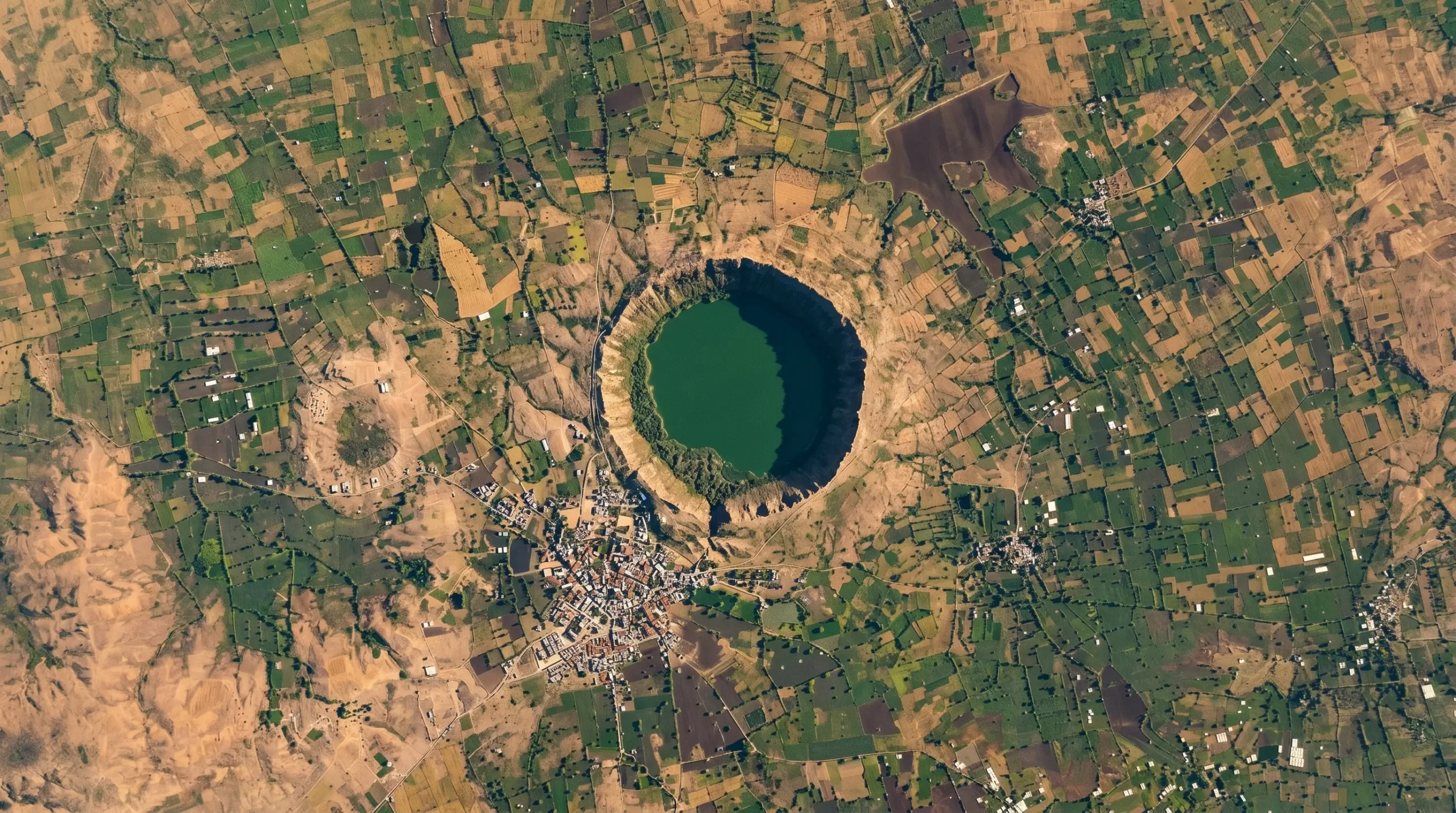
The Lonar Crater temples are one of the most fascinating parts of visiting this famous meteor impact site in Maharashtra. Scattered across Lonar town, the crater rim, the forested slopes, and even small islands within the lake itself, these temples add centuries of religious and architectural history to a landscape already famous for its geological significance.
While Lonar is known worldwide for its meteor crater, many visitors are surprised to discover that the area also contains dozens of historic temples dating from roughly the 6th to 13th centuries CE.
Quick Facts
| Fact | Details |
|---|---|
| Historic temples recorded | Approximately 32 |
| ASI-protected temples | Around 19 |
| Most famous temple | Daitya Sudan Temple |
| Architectural style | Predominantly Hemadpanthi |
| Main period | 6th–13th century CE |
| Location | Lonar town, crater rim, crater floor, lake islands |
Why Are There So Many Temples at Lonar?
The crater has been a place of religious importance for centuries.
Ancient rulers, pilgrims, and local communities associated the site with the legend of the demon Lonasura and Lord Vishnu’s victory over evil.
As a result, temples dedicated to Vishnu, Shiva, Devi, Hanuman, and other deities were constructed around the crater over several centuries.
Many structures remain active places of worship today, while others survive as archaeological monuments protected by the Archaeological Survey of India.
Daitya Sudan Temple
The most important and best-preserved temple associated with Lonar Crater is the Daitya Sudan Temple.
Located in Lonar town rather than directly on the crater rim, this temple is dedicated to Lord Vishnu in his form as the destroyer of the demon Lonasura.
The temple is widely regarded as one of Maharashtra’s finest examples of Hemadpanthi architecture.
Highlights include:
- Intricately carved basalt stone walls
- Detailed mythological sculptures
- Rich exterior ornamentation
- Historic Vishnu shrine
Many visitors compare the quality of its carvings to some of the better-known medieval temple sites in central India.

Gomukh Temple
Gomukh Temple sits on the crater rim and is among the most visited shrines around Lonar.
The temple takes its name from a natural spring flowing through a stone structure shaped like a cow’s mouth.
Pilgrims traditionally stop here to collect water and perform rituals before continuing their visit around the crater.
The spring flows throughout the year and remains one of the most recognizable landmarks within the crater complex.
Kamalja Devi Temple
Kamalja Devi Temple stands on Kamalja Devi Island inside the crater lake.
Dedicated to Goddess Kamalja, a local form associated with Lakshmi and Parvati, the temple occupies one of the most unusual locations of any shrine in Maharashtra.
According to local traditions, the temple dates to the Yadava period and becomes particularly important during Navratri celebrations.
Its island setting makes it one of the most distinctive temples within the Lonar landscape.
Papahareshwar Temple
Papahareshwar Temple is one of the most significant Shiva temples within the crater.
Visitors come here for:
- Ancient stone architecture
- Traditional temple tank
- Historic mandapa
- Religious significance among local devotees
The temple is often included in crater-floor exploration routes.
Kumareshwar Temple
Kumareshwar Temple is another historic Shiva shrine located within the Lonar complex.
Although smaller than Daitya Sudan Temple, it remains an important stop for visitors interested in the religious history of the crater.
Ramgaya Temple
Ramgaya Temple is associated with local pilgrimage traditions and forms part of the wider sacred landscape surrounding the crater.
The structure survives in varying condition depending on seasonal weather and conservation activity.
Yajneshwar Temple
Yajneshwar Temple is known for its stone carvings and architectural details.
Although less visited than Daitya Sudan Temple, it remains one of the historically important structures within the Lonar temple circuit.
Motha Maruti Temple
Located near the crater area, Motha Maruti Temple is famous for its large Hanuman idol.
The temple attracts a steady flow of pilgrims throughout the year and is often combined with visits to Daitya Sudan Temple.

Seasonal Access to the Temples
A practical detail many visitors miss is that some temples near the crater floor become difficult to access during the monsoon season.
Heavy rainfall causes water levels inside the crater lake to rise, affecting paths and access routes to certain shrines.
For the easiest exploration of the temple circuit, November to June generally offers the best conditions.
Which Temples Should You Prioritize?
If you have limited time, focus on:
- Daitya Sudan Temple
- Gomukh Temple
- Kamalja Devi Temple
- Papahareshwar Temple
- Motha Maruti Temple
These provide the best combination of architecture, history, mythology, and accessibility.
FAQ — Lonar Crater Temples
Q1: How many temples are located around Lonar Crater?
Historical records mention approximately 32 temples, with around 19 currently protected by the Archaeological Survey of India.
Q2: Which is the most important temple at Lonar Crater?
Daitya Sudan Temple is considered the most architecturally significant and best-preserved temple associated with Lonar.
Q3: What is Gomukh Temple famous for?
Gomukh Temple is known for its perennial spring flowing through a stone structure shaped like a cow’s mouth.
Q4: Are any temples located inside the crater lake?
Yes. Kamalja Devi Temple is located on an island within the crater lake and is among the most unique shrines in the region.
Q5: Can all Lonar Crater temples be visited in one day?
Most major temples can be visited in a single day, though exploring every historic shrine around the crater requires additional time.
Related Posts You Might Like
- Lonar Crater – Complete Guide
- Lonar Crater History – Meteor Impact and Ancient Temples
- Lonar Lake – Saline and Alkaline Lake Explained
- Best Time to Visit Lonar Crater
- Lonar Crater Photography Guide