History and Architecture of Ajanta Caves Explained (2026 Detailed Guide)
Few places in the world capture the soul of ancient Indian civilization like the Ajanta Caves. These rock-cut masterpieces, hidden deep within the Sahyadri hills near Aurangabad, tell stories not through words, but through brushstrokes and stone carvings. For anyone curious about the history and architecture of Ajanta Caves, this site is not just an archaeological wonder — it’s a timeless dialogue between faith, art, and human imagination.
Having visited Ajanta multiple times, I can say no two visits ever feel the same. The caves are alive — with light, silence, and craftsmanship that continues to inspire even after two millennia. Here’s a complete breakdown of the history and architecture of Ajanta Caves, crafted for curious travelers, history lovers, and spiritual explorers alike.
1. The Beginning – The Story Behind Ajanta Caves
The Ajanta Caves were excavated in two major phases spanning over 700 years:
First Phase (2nd Century BCE – Satavahana Period)
- This early phase represents the Hinayana Buddhist tradition, focusing on simple prayer halls and stupas.
- These caves were built by monks who used the site for meditation and monsoon retreats.
- The early caves (notably Cave 9 and 10) are among India’s earliest surviving examples of rock-cut architecture.
Second Phase (5th–6th Century CE – Vakataka Period)
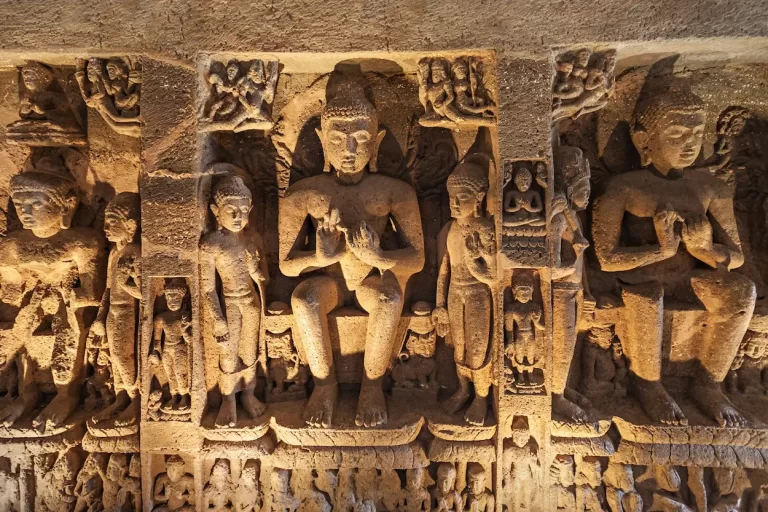
- Patronized by King Harishena of the Vakataka dynasty, this phase introduced elaborate carvings, paintings, and sculptures representing the Mahayana Buddhist philosophy.
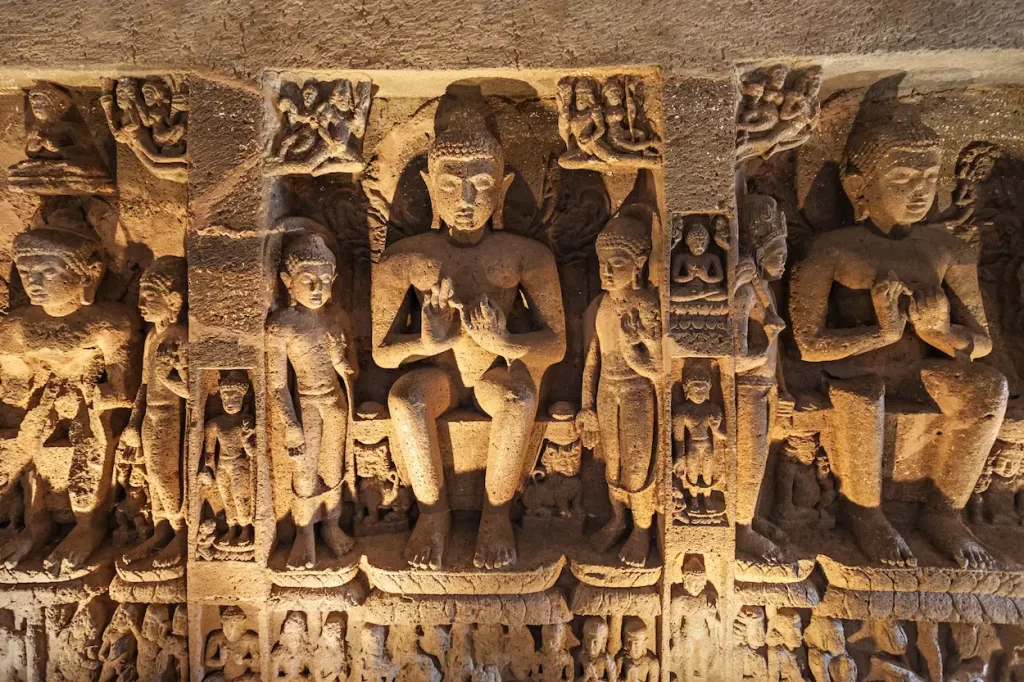
- Artists and monks created richly decorated Viharas (monasteries) and Chaityas (prayer halls) featuring Bodhisattvas, deities, and Jataka stories.
💡 Tip: Look for the stylistic differences — early caves are plainer, later ones are ornate and colorful.
📍 View on Google Maps
2. Rediscovery – From Abandonment to Global Fame
After Buddhism declined in India, the Ajanta Caves were abandoned and reclaimed by nature. For over a thousand years, they lay hidden under thick forests until 1819, when British officer John Smith accidentally discovered Cave 10 while hunting tigers.
What followed was one of the most important archaeological rediscoveries of the modern age. The caves soon became a global fascination, admired by artists and historians worldwide.
💡 Tip: Inside Cave 10, look for “John Smith, 1819” carved faintly into the wall — a reminder of Ajanta’s rediscovery.
3. The Architectural Layout of Ajanta Caves
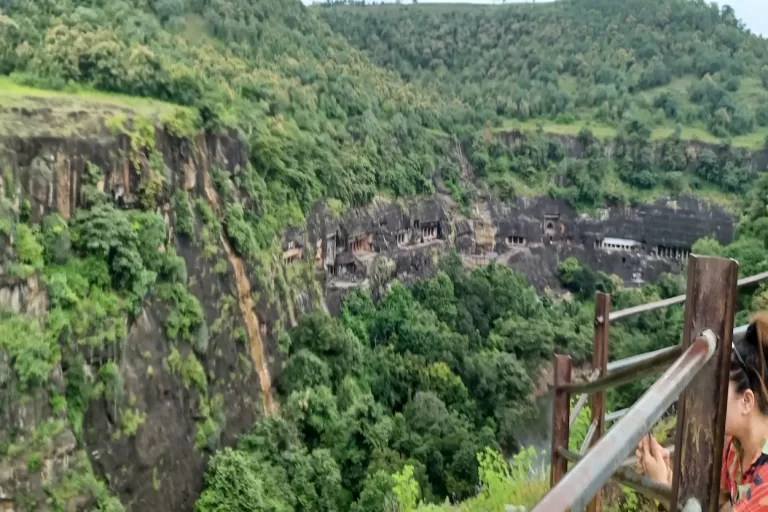
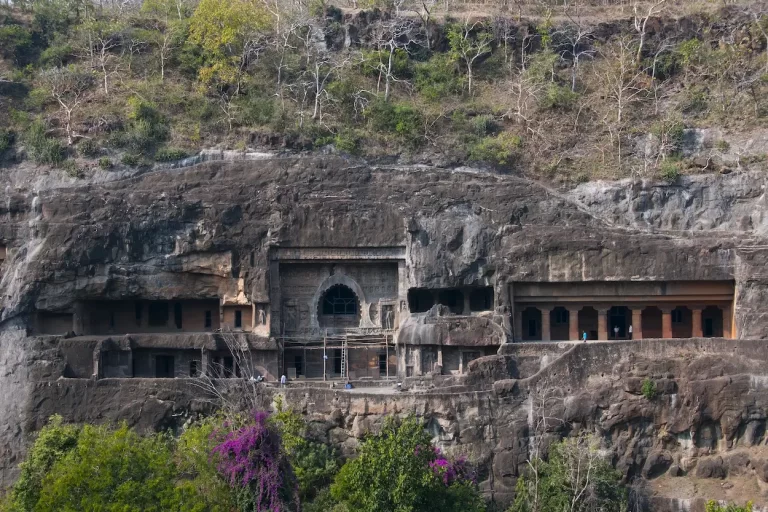
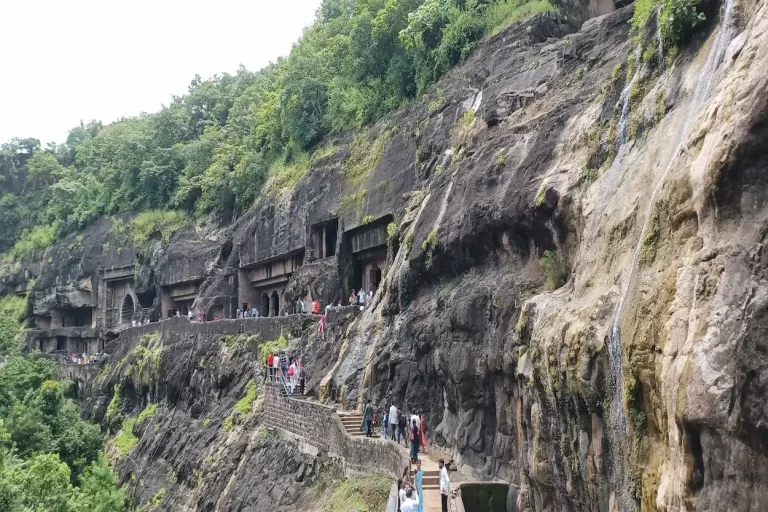
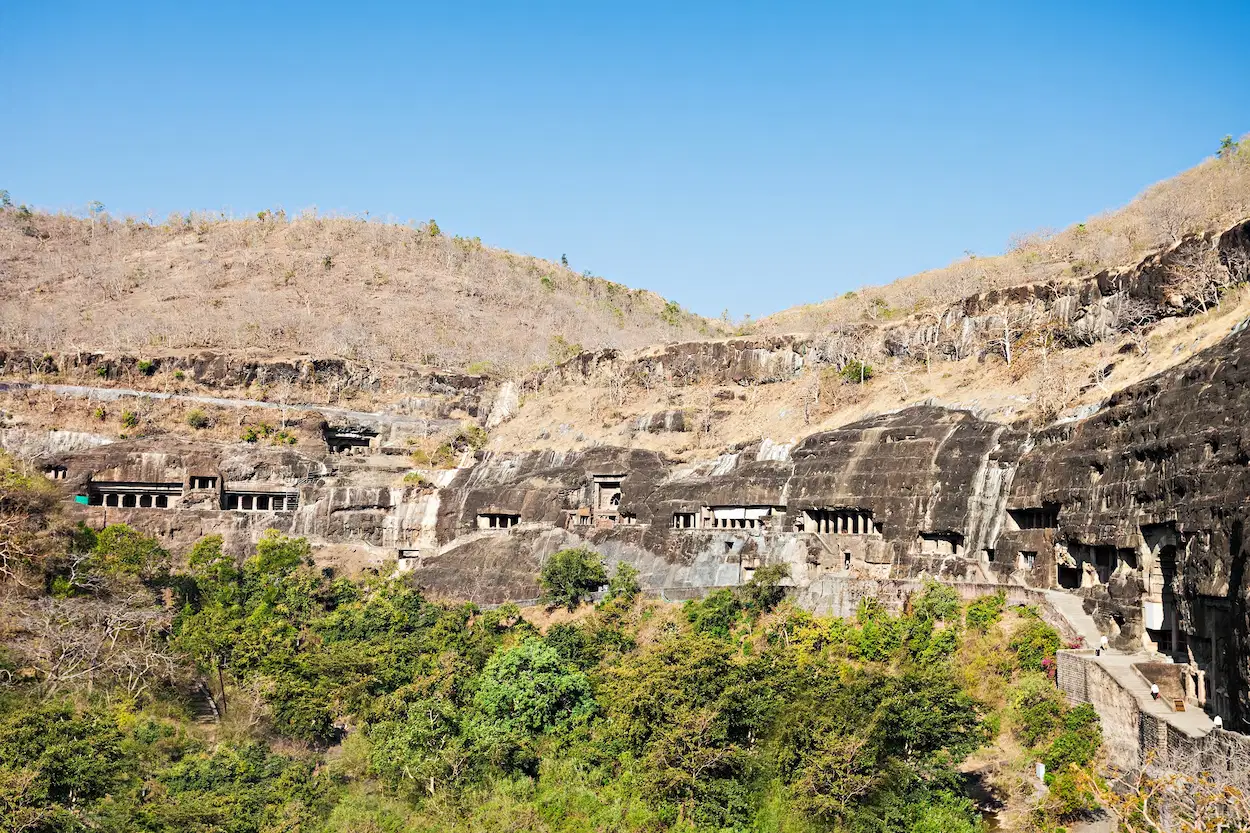
The architecture of Ajanta Caves was carved into a horseshoe-shaped cliff along the Waghora River. There are 30 caves in total — some unfinished, but each unique in its design.
Key Architectural Elements:
- Viharas (Monasteries): Square halls with rows of pillars and small monk cells. Central shrines often contain Buddha images.
- Chaityas (Prayer Halls): Long, vaulted spaces with stupas and stone ribs that mimic wooden architecture.
- Verandas & Pillars: Exquisitely carved with motifs of lotus flowers, animals, and celestial beings.
- Ceiling Paintings: Intricate floral and geometric designs, often representing the cosmos.
💡 Tip: Use the corridor at Cave 17 to understand how ancient artisans planned layouts symmetrically by hand — without modern tools.
4. Artistic Highlights – The Murals & Sculptures
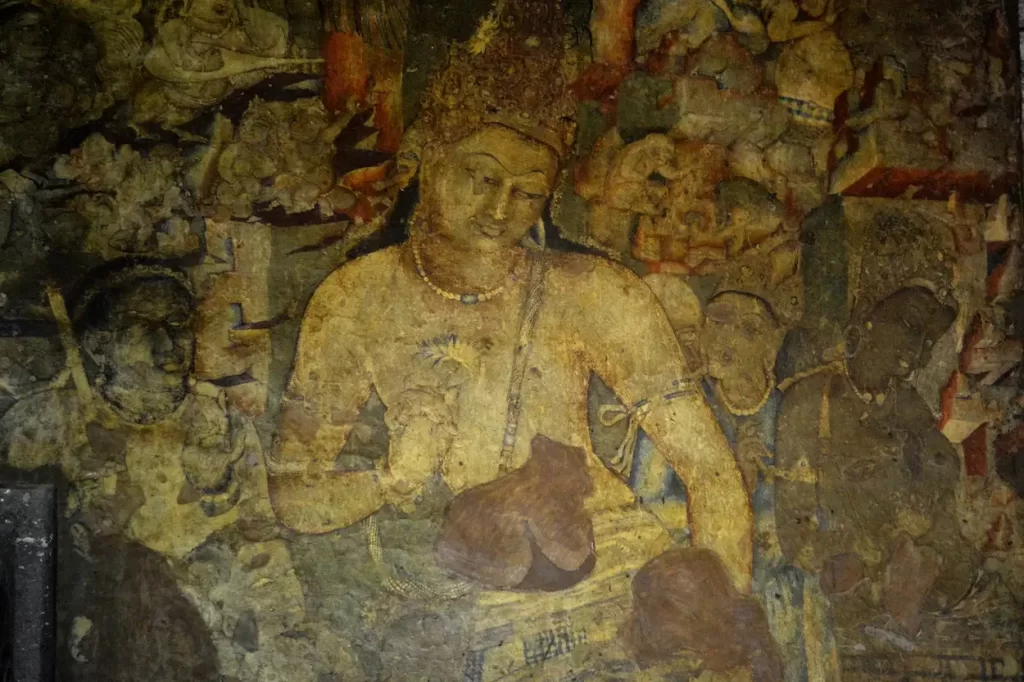
The paintings inside Ajanta are considered the pinnacle of ancient Indian art. Made using natural pigments like red ochre, lapis lazuli, and charcoal, they have survived centuries despite monsoon humidity.
Famous Works to Observe:
- Cave 1: The Bodhisattva Padmapani and Avalokiteshvara — considered icons of Indian painting.
- Cave 17: Scenes from Jataka tales like “The Temptation of Mara” and “Vessantara Jataka.”
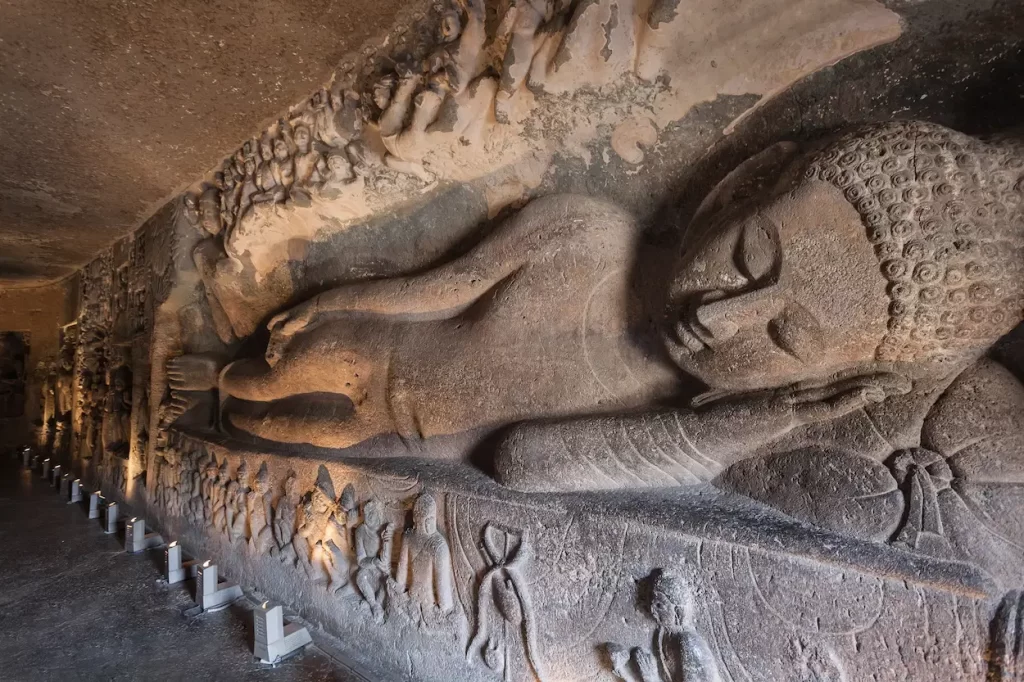
- Cave 26: The Mahaparinirvana of Buddha — an enormous reclining figure carved in stone.
💡 Tip: Stand near the entrance of each cave for natural light; direct sunlight enhances the wall colors without flash.
5. Techniques – How the Caves Were Created
Each cave was excavated manually using simple tools like hammers and chisels. The work began from the top of the basalt rock and moved downward — a method called “top-down excavation.”
The artists then applied multiple layers of clay, straw, and lime plaster before painting on them with mineral-based colors. The pigments were mixed with animal glue for longevity. Despite being over 1,500 years old, the paintings still retain their natural brilliance.
💡 Tip: Cave 2’s ceiling is a great example of geometric perfection achieved through hand-drawn designs — without rulers or compasses.
6. Symbolism & Spiritual Themes
The architecture of Ajanta Caves was not just functional — it was deeply symbolic. The entire complex mirrors Buddhist philosophy:
- The stupa represents enlightenment.
- The lotus symbolizes purity amidst worldly life.
- The Bodhisattva figures represent compassion and guidance toward Nirvana.
Each design choice — from the cave layout to mural placement — follows Buddhist cosmology, turning the entire complex into a visual mandala of spiritual ascension.
💡 Tip: Notice how the Buddha images face east in most caves — aligning with the morning sun, symbolizing awakening.
7. The People Behind the Caves – Artists & Patrons
Ajanta’s grandeur was made possible by the collaboration of monks, artisans, and royal patrons. The Vakataka kings, especially Harishena, financed much of the second-phase construction. The anonymous artisans who worked here were master craftsmen — their precision remains unmatched.
💡 Tip: In Cave 17, a small inscription mentions the name of a donor — one of the few glimpses into the individuals who supported this art.
8. The Decline & Preservation of Ajanta Caves
After the decline of Buddhism in India around the 7th century CE, Ajanta was gradually abandoned. Over centuries, forest growth and erosion damaged portions of the murals.
Today, the Archaeological Survey of India (ASI) maintains and conserves the site, using advanced humidity controls and protective lighting to preserve the ancient art.
💡 Tip: Avoid touching walls or leaning on pillars — even minor contact can damage delicate pigments.
9. Modern Relevance – Ajanta’s Legacy in Art History
The history and architecture of Ajanta Caves influenced not just Indian art, but also cultures across Asia. The cave murals inspired ancient artists in Sri Lanka, Nepal, and even Japan. Today, art schools around the world study Ajanta’s lines, compositions, and spiritual depth.
💡 Tip: Visit the ASI Museum near the site to see reproductions and restored fragments — perfect for learning about artistic evolution.
10. Visiting Today – How to Experience Ajanta Caves Fully
- Start early morning (8:30 AM–9:00 AM).
- Carry water, a hat, and non-slip shoes.
- Photography is allowed without flash.
- Avoid Mondays — caves are closed.
- Hire an ASI-certified guide for historical context.
💡 Tip: Climb the viewpoint opposite the caves (small trail) — the aerial view of the horseshoe valley is unforgettable.
Personally Tested Best GetYourGuide Tours
👉 Related Posts You Might Like:
- Complete Visitor Guide to Ajanta Caves
- Ajanta Caves Travel Guide
- Ajanta Caves Paintings You Should Not Miss
- Best Time to Visit Ajanta Caves
- Photography Guide to Ajanta Caves
Frequently Asked Questions (FAQ)
Q: What is the history and architecture of Ajanta Caves based on?
A: The caves were developed between the 2nd century BCE and 6th century CE, blending Hinayana and Mahayana Buddhist traditions. Their architecture includes rock-cut monasteries and intricately painted prayer halls.
Q: Who built the Ajanta Caves?
A: The caves were constructed by Buddhist monks and artists under the patronage of Satavahana and Vakataka rulers.
Q: What is special about the architecture of Ajanta Caves?
A: Their layout mirrors Buddhist philosophy — each cave represents a spiritual journey from worldly life to enlightenment.
Q: How were Ajanta Caves discovered?
A: They were rediscovered in 1819 by British officer John Smith during a hunting expedition.
Q: Why are the Ajanta Caves important today?
A: They are an unparalleled record of India’s early art, architecture, and religious evolution — a timeless link to its cultural heritage.