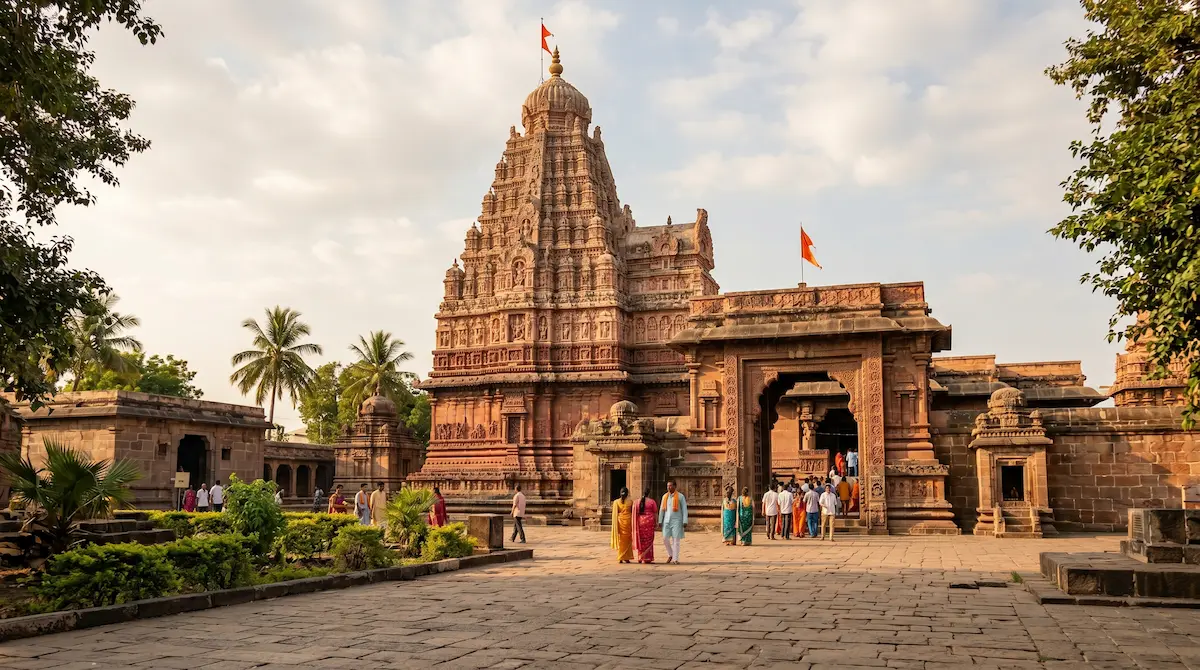
Grishneshwar Temple and Ellora Caves – Half Day Combo Guide (2026)
Grishneshwar Temple and Ellora Caves sitting almost next to each other is not a coincidence most visitors think about — but it is one of the more interesting facts about this part of Maharashtra. One of the 12 Jyotirlingas, the most sacred Shiva shrines in Hinduism, sits 1 km from the largest rock-cut temple complex on earth. This guide tells you exactly how to combine them properly, in the right order, with the right preparation.
Why These Two Sites Sit Together
Grishneshwar Temple and the Ellora Caves are both fundamentally about Shiva devotion — separated by roughly a thousand years but connected by the same religious geography of the Deccan plateau. The Ellora Hindu caves, including the Kailasa Temple itself, are dedicated primarily to Shiva. Grishneshwar — rebuilt in its current form in the 18th century under the patronage of Ahilyabai Holkar, though references to a shrine at this location go back much further — continues that same devotional tradition as a living, active temple.
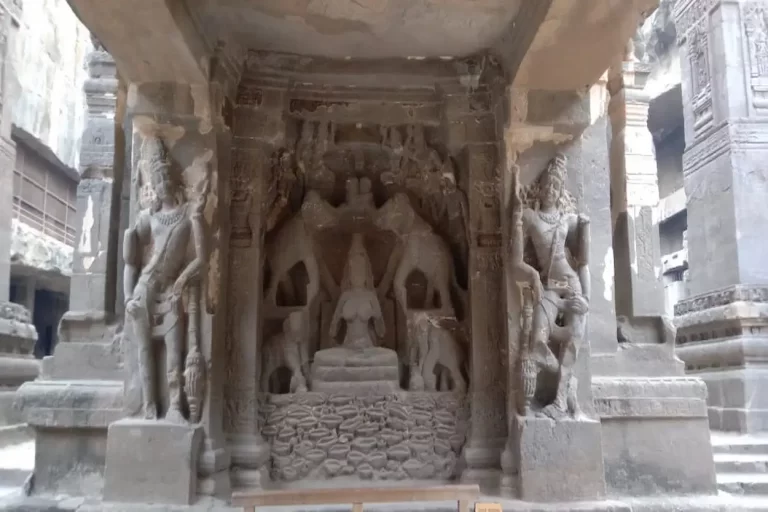
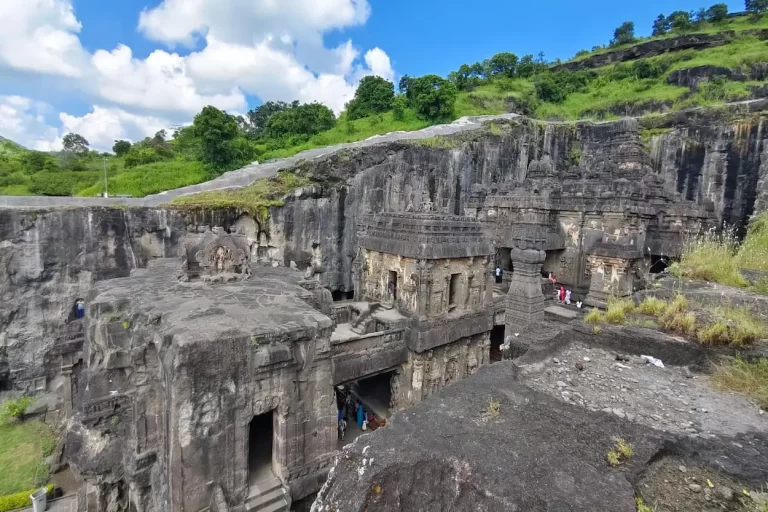
For heritage travelers, the combination offers something genuinely interesting: an ancient rock-cut Shiva temple (Kailasa) that is now a monument, and an active Shiva temple (Grishneshwar) where the same tradition continues today as living worship. Seeing both in the same morning gives you both ends of the same religious continuity.
For pilgrims specifically, Grishneshwar is one of the 12 Jyotirlingas — shrines believed to house a self-manifested form of Shiva as a lingam of light — and visiting it is a significant act of devotion regardless of any interest in Ellora’s heritage value.
💡 Tip: Most visitors do Ellora first and Grishneshwar second, almost as an afterthought on the way out. I recommend the reverse — Grishneshwar first, before the day’s crowds and heat build, then Ellora for the rest of the day. The temple is at its most atmospheric during the early morning puja.
📍 Grishneshwar Temple on Google Maps
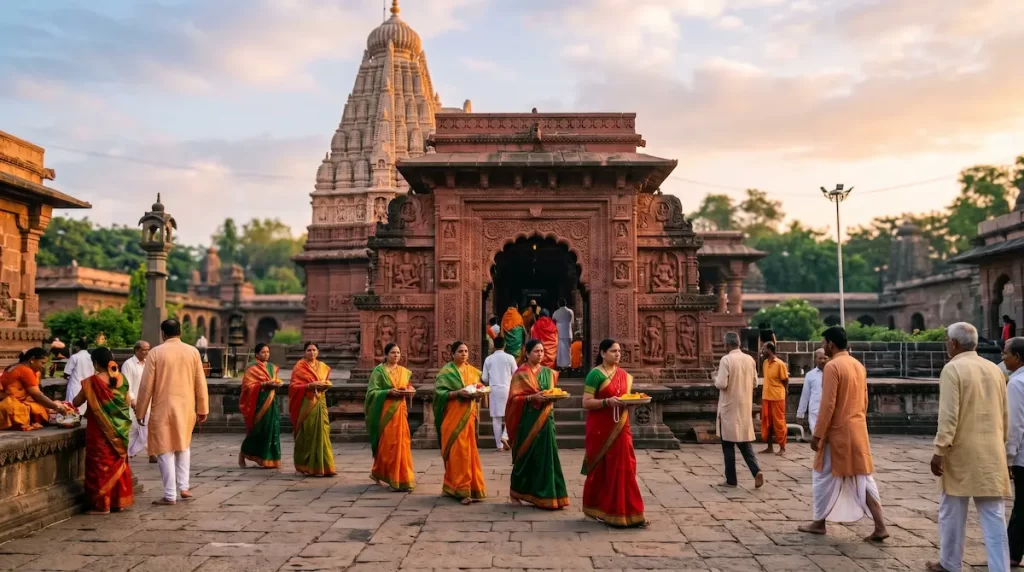
Grishneshwar Temple — What to Know Before You Go
What it is:
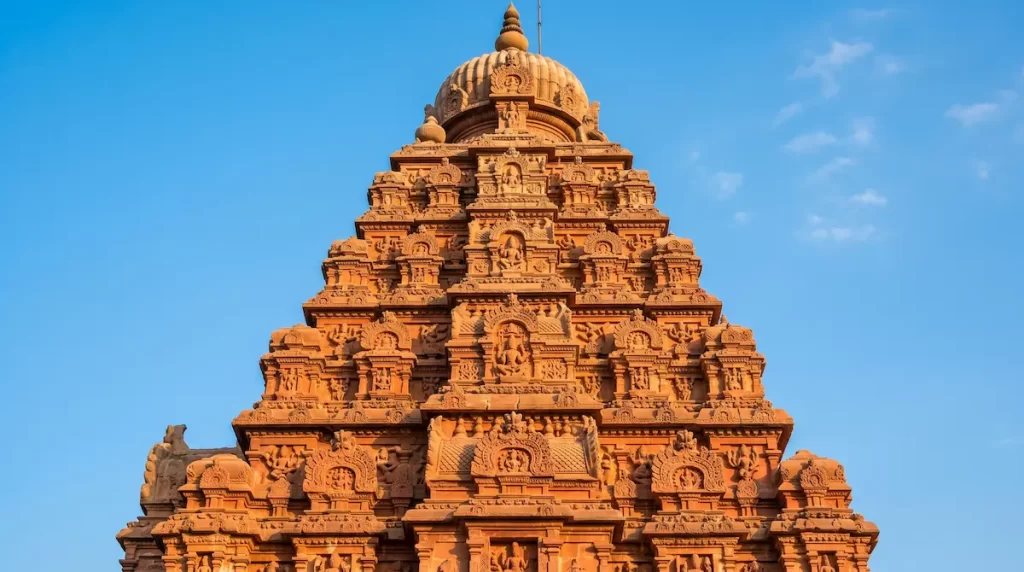
Grishneshwar is one of the 12 Jyotirlingas of Shiva — the most sacred category of Shiva shrine in Hinduism. The temple in its current form was rebuilt in the 18th century, constructed from red sandstone in a style with South Indian architectural influences — particularly visible in the five-tiered shikhara above the main shrine.
Religious significance:
For Hindu pilgrims, Grishneshwar is a primary pilgrimage destination in its own right — completing a visit to all 12 Jyotirlingas across India is a significant devotional undertaking, and Grishneshwar is the southernmost (or, depending on classification, one of the Deccan-region) shrines in that circuit.
Mandatory dress code:
This is an active temple with a strict dress code. Western-style clothing — shorts, sleeveless tops, jeans in some interpretations — is not permitted inside the inner sanctum. Traditional Indian clothing is required: a dhoti for men, a saree or traditional dress for women. Clothes can be rented at stalls near the temple entrance if you do not have appropriate attire. Footwear must be removed before entering — leave shoes at the designated stand near the entrance.
Photography rules:
Photography is not permitted inside the inner sanctum (garbhagriha). Photography in the outer temple courtyard and general temple grounds is generally permitted but be respectful of devotees engaged in worship.
Darshan timing:
The temple follows a daily schedule of aarti (worship ceremonies) at specific times, typically early morning and evening. The early morning aarti is the most atmospheric time to visit — fewer crowds, the temple bells, the specific quality of devotional energy that an active temple has and a monument does not.
💡 Tip: If you do not have traditional Indian clothing with you, do not worry — the rental stalls outside Grishneshwar are inexpensive and straightforward. Budget an extra 10–15 minutes for this if it is your first visit to an active South Indian-style Jyotirlinga temple and you are unfamiliar with the process.
The Architecture Worth Noticing

Beyond its religious significance, Grishneshwar has genuine architectural interest for heritage travelers.
The shikhara:
The five-tiered tower above the main shrine is constructed in red sandstone with intricate carved detail at each tier — a style that draws on both North Indian Nagara temple architecture and South Indian Dravidian influences, reflecting the broad geographic devotional networks that connected Maharashtra to temple traditions across the subcontinent by the 18th century.
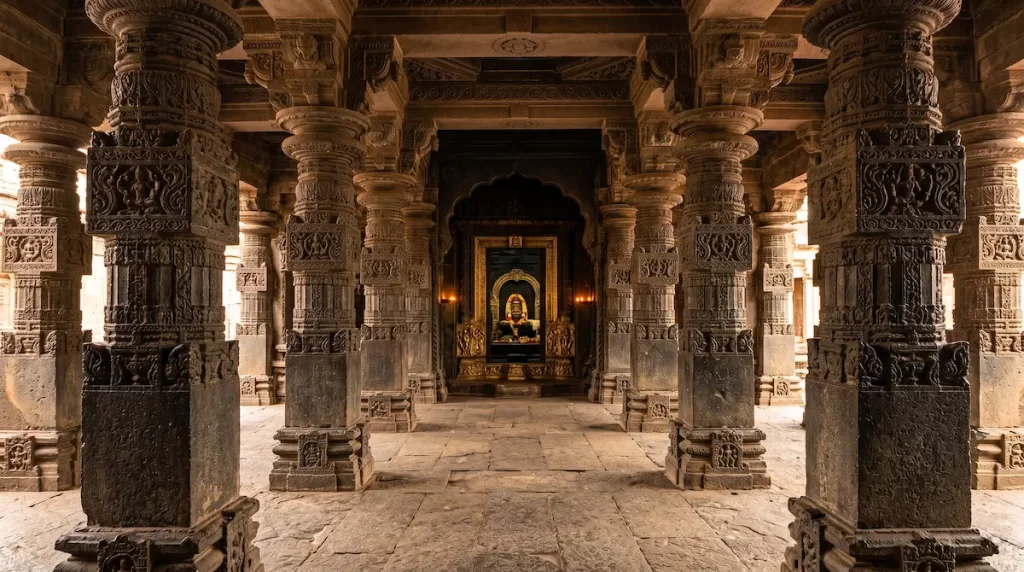
The carved pillars:
The mandapa (pillared hall) leading to the inner sanctum has carved stone pillars with floral and geometric motifs — less ancient than Ellora’s rock-cut carvings but executed with real craftsmanship, representing a continuation of Deccan stone-carving tradition centuries after the cave-cutting era ended.
Ahilyabai Holkar’s patronage:
Grishneshwar’s reconstruction under Ahilyabai Holkar, the 18th-century Maratha queen known for her extensive temple patronage across India, connects the site to a broader story of Hindu temple restoration during a period when many ancient shrines had fallen into disrepair under earlier political disruption. Holkar’s temple-building program — which also restored sites including Kashi Vishwanath in Varanasi — is itself a significant chapter in Indian religious and architectural history.
The Combo Route — Exact Timing
7:30 AM — Depart Chhatrapati Sambhajinagar (Aurangabad)
Both Grishneshwar and Ellora are approximately 30 km from the city — roughly 45 minutes to 1 hour by road.
8:15–9:15 AM — Grishneshwar Temple
Arrive in time for the early morning atmosphere. Allow time to change into appropriate temple attire if renting on-site. Visit the inner sanctum for darshan, then take time in the outer courtyard to appreciate the architecture without rushing.
9:15–9:30 AM — Transit to Ellora
Grishneshwar is approximately 1 km from the Ellora cave complex — a 5-minute drive or a comfortable 15-minute walk if you prefer.
9:30 AM onward — Ellora Caves
Enter Ellora at the start of its opening hours, with the bulk of your day still ahead. Follow the standard one-day Ellora itinerary from this point — Buddhist section, Kailasa Temple, post-Kailasa Hindu caves, and the Jain section as time allows.
💡 Tip: Doing Grishneshwar first means you complete the temple visit while you are fresh and before the heat of the day builds — both important since temple visits require bare feet on stone surfaces that become genuinely hot by midday in summer. It also means your full energy is available for the multi-hour Kailasa Temple visit afterward, rather than splitting your attention between a religious visit and a heritage visit in the wrong order.
Grishneshwar for Heritage Travelers Without Religious Intent
If you are visiting purely as a heritage and architecture traveler without personal religious practice, Grishneshwar is still worth the stop — but a few practical notes apply specifically to this situation:
You are welcome to enter and observe respectfully. The dress code applies regardless of religious intent — it is a practical requirement for entry, not contingent on faith. Approach the visit with the same respect you would bring to any active place of worship — quiet observation, no disruptive photography during active ceremonies, and following the lead of temple staff regarding where visitors may and may not go.
The 15–20 minutes at Grishneshwar, even for a purely heritage-focused traveler, adds meaningful context to the Ellora Hindu caves that follow. Standing in a living, actively worshipped Shiva shrine immediately before walking into the Kailasa Temple — a 1,200-year-old Shiva shrine that is now a monument rather than active worship — creates a direct, tangible connection between past and present devotion that pure heritage sites alone cannot provide.
💡 Tip: Even visitors with no religious practice of their own often describe the Grishneshwar-to-Kailasa sequence as one of the more meaningful parts of their Ellora day — not for religious reasons necessarily, but because it frames Ellora’s Hindu caves as part of a living tradition rather than only an archaeological one.
The Alternative — Grishneshwar and Ellora Without Logistics Stress
Coordinating the right departure time, knowing the temple dress code and rental process in advance, and sequencing Grishneshwar before Ellora rather than as a rushed afterthought — these are small details that make a real difference to how the morning feels, and they are easy to get wrong on a first visit.
A private guided tour from Chhatrapati Sambhajinagar (Aurangabad) builds Grishneshwar into the Ellora day at the correct time, with appropriate attire arrangements known in advance, so the temple visit is unhurried and the full Ellora day still has its complete time allocation afterward.
👉 See Ellora and Grishneshwar Tour Details & Book — temple visit and full Ellora day, correctly sequenced.
👉 See Aurangabad Heritage Tour Details & Book — Grishneshwar, Ellora, Daulatabad Fort and more in a complete regional circuit.
FAQ
Q1: How far is Grishneshwar Temple from Ellora Caves?
Grishneshwar Temple is approximately 1 km from the Ellora cave complex — a 5-minute drive or a 15-minute walk. Both sites are approximately 30 km from Chhatrapati Sambhajinagar (Aurangabad), making them naturally combinable in a single day trip.
Q2: What is the dress code for Grishneshwar Temple?
Grishneshwar Temple requires traditional Indian clothing for entry into the inner sanctum — a dhoti for men and a saree or traditional dress for women. Western-style clothing is not permitted in the inner sanctum. Clothing rental stalls are available near the temple entrance. Footwear must be removed before entering and left at the designated stand.
Q3: Should I visit Grishneshwar Temple before or after Ellora Caves?
Visiting Grishneshwar first is recommended. The early morning atmosphere at the temple — during the morning aarti — is the most rewarding time to visit, and completing the temple visit while you are fresh means your full energy is available for the multi-hour Kailasa Temple visit that follows at Ellora.
Q4: Is Grishneshwar Temple one of the 12 Jyotirlingas?
Yes — Grishneshwar is one of the 12 Jyotirlingas, the most sacred category of Shiva shrine in Hinduism. The temple in its current form was rebuilt in the 18th century under the patronage of Ahilyabai Holkar, constructed in red sandstone with a five-tiered shikhara tower.
Q5: Can non-religious heritage travelers visit Grishneshwar Temple?
Yes — Grishneshwar welcomes respectful visitors regardless of religious practice, provided the dress code is followed. For heritage travelers, visiting an active Shiva shrine immediately before the Kailasa Temple at Ellora — itself an ancient Shiva temple now functioning as a monument — provides meaningful context connecting the region’s living and historical devotional traditions.
👉 Related Posts You Might Like:
- Kailasa Temple – How It Was Built (The Engineering Mystery)
- Ellora Caves in One Day – Exact Itinerary
- Ellora Caves Hindu Section – Complete Guide to Caves 13–29
- Ajanta Caves Nearby Attractions – What to See Around
- Ellora Caves Travel Guide – Complete Visitor Guide