Aurangabad Caves History – The 1,500-Year-Old Buddhist Secret (2026)
I have spent years explaining the history of Ajanta and Ellora to visitors, and almost every time, when I bring up Aurangabad Caves, I get the same reaction: genuine surprise that a third significant Buddhist cave site exists just 5 km from the city, carved across roughly the same window of history as its more famous neighbors, and spanning not one but two distinct dynastic periods. This is the story most visitors never hear.
Where Aurangabad Caves Fits in the Buddhist Cave Timeline
To understand Aurangabad Caves properly, it helps to place it against the two sites everyone already knows.
Ajanta: Primarily carved in two phases — an early Hinayana phase around the 2nd century BCE, and a much more developed Mahayana painting phase concentrated in the 5th century CE under Vakataka dynasty patronage.
Ellora’s Buddhist section: Spans roughly the 5th to 8th century CE, representing the later Mahayana and Vajrayana phases of Buddhist cave architecture, extending well beyond Ajanta’s primary period.
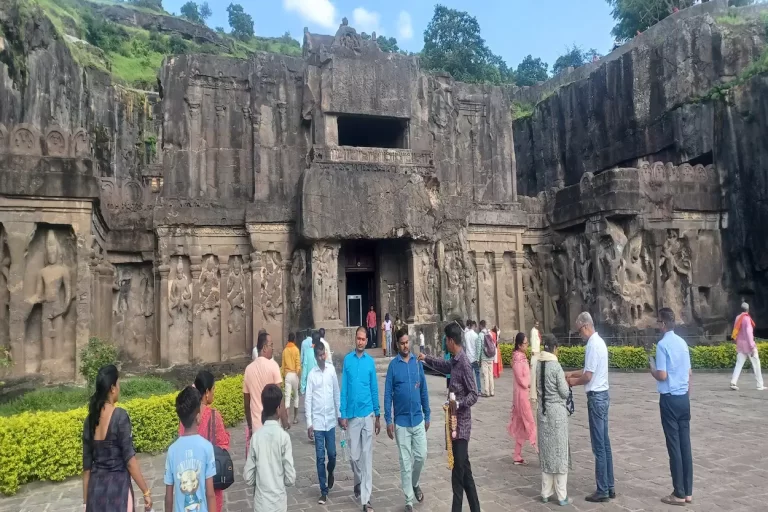
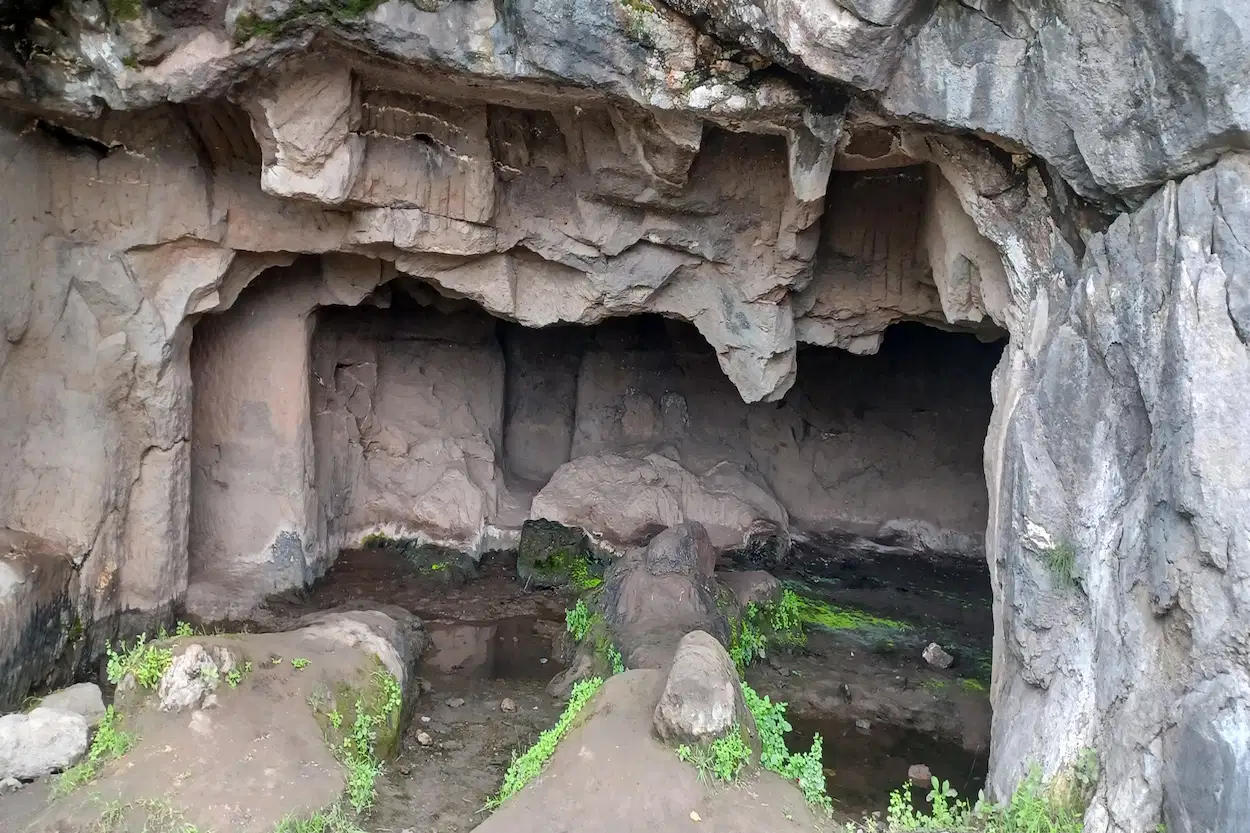
Aurangabad Caves: Carved across a broad window from approximately the 2nd to 6th-7th century CE — and genuinely spanning two distinct dynastic phases within that window. The Western Group, anchored by Cave 3, belongs to the Vakataka period of the 5th century CE — the same dynasty whose patronage produced Ajanta’s finest painted caves. The Eastern Group, including Cave 7, was carved later, during the 6th-7th century CE under Kalachuri and early Chalukya patronage — the same dynastic lineage that funded Elephanta Caves near Mumbai and the earliest Hindu caves at Ellora, including Cave 29 (Dhumar Lena).
This makes Aurangabad Caves a genuine historical bridge — not a single-period site, but one that physically connects Ajanta’s Vakataka-era achievement to the dynastic transition that would eventually shape Ellora’s earliest Hindu caves.
💡 Tip: I always tell visitors this is the detail that changes how they see Aurangabad Caves — it is not “a smaller version of Ajanta built later.” The Western and Eastern Groups here were carved roughly a century or more apart, under different ruling dynasties, making this single hillside a condensed record of the same broader political and artistic transitions that played out separately at Ajanta and Ellora.
Why This Specific Hillside
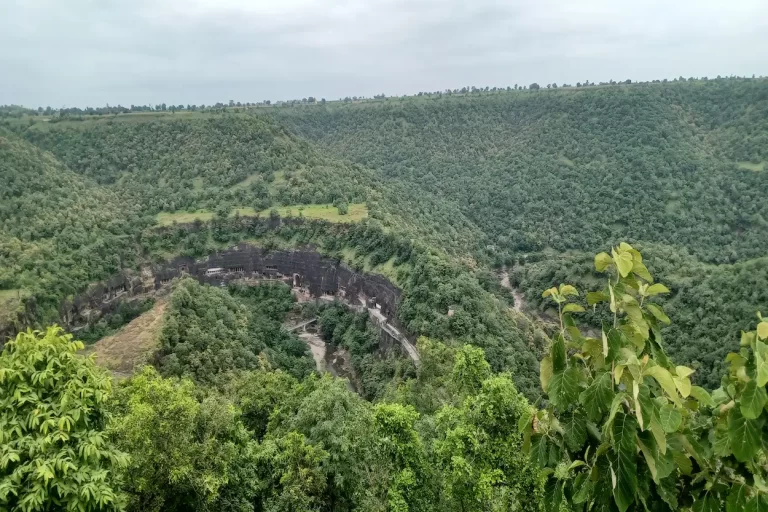
The location of Aurangabad Caves was not arbitrary. The hillside sits along ancient trade and travel routes through the region, the same broad network of routes that made Ajanta and Ellora viable sites for sustained Buddhist monastic activity.
Buddhist monasteries across ancient India were frequently positioned along trade routes deliberately — monks depended on the patronage and provisions of merchants and travelers passing through, and in turn offered spiritual services, lodging, and a point of connection along long journeys. Aurangabad Caves’ position, overlooking what would become the city of Chhatrapati Sambhajinagar (Aurangabad), reflects this same practical logic that shaped Buddhist cave-site selection throughout the Deccan.
💡 Tip: Standing at the caves and looking out over the plain below — toward where the modern city now sits — I find it genuinely useful to imagine this same view a thousand years before any of the Mughal-era monuments existed, when this hillside’s value was its position along a trade corridor rather than its proximity to a future city.
Cave 3 — The Vakataka-Era Masterwork
Cave 3, the standout achievement of the Western Group, is generally dated to the Vakataka period — the same dynasty whose patronage produced Ajanta’s finest painted caves in the 5th century CE.
What this dating tells us:
Cave 3’s facade sculpture — its Bodhisattva figures and celestial beings — shares stylistic characteristics with Ajanta’s contemporary work, evidence of shared artistic workshops, traveling craftsmen, or at minimum a closely connected regional artistic tradition operating across multiple sites simultaneously rather than in isolation.
A possible patronage connection:
Local historical scholarship has suggested a tantalizing link — that feudatories close to the court of Vakataka King Harishena, the ruler whose reign saw Ajanta’s most ambitious painted caves commissioned, including figures similar to Varahadeva (the prime minister credited with funding Ajanta’s Cave 16), may have been behind the funding of Cave 3 here as well. This connection is not definitively proven, but it places Aurangabad Caves’ patronage within the same court circle responsible for Ajanta’s finest achievements, rather than as an unrelated, lesser undertaking.
The bridging character:
Art historians often describe Cave 3 as occupying a stylistic position between Ajanta’s painting-focused tradition and Ellora’s later, more architecturally ambitious sculptural ethos. This makes Cave 3 a genuinely useful reference point for understanding how Buddhist cave art evolved across this region over the centuries — not just an isolated achievement, but a visible link in a longer developmental chain.
💡 Tip: If you have already visited Ajanta before coming to Aurangabad Caves, I always suggest looking specifically at the facial modeling and drapery treatment on Cave 3’s Bodhisattva figures and comparing it mentally to what you remember from Ajanta Cave 1’s Padmapani. The family resemblance, once you know to look for it, is genuinely striking — and given the possible shared patronage circle, it may not be coincidence.
Cave 7 and the Arrival of Tantric Buddhism Under a New Dynasty
Cave 7’s significance extends beyond its artistic quality — it represents both a doctrinal shift in Buddhism and a change in political patronage in this region.
A later phase, a different dynasty:
Where Cave 3 belongs to the Vakataka period, Cave 7 and the broader Eastern Group were carved later, during the 6th-7th century CE, under the patronage of the Kalachuri dynasty and the early Chalukyas who followed them. This is the same dynastic lineage responsible for Elephanta Caves near Mumbai and the earliest Hindu excavations at Ellora, including Cave 29. Aurangabad Caves, in other words, captures this exact dynastic transition on a single hillside.
The Tara figure:
The Tantric goddess Tara housed in Cave 7 is among the earlier such representations in this region of India, marking this site as a waypoint in the development of Vajrayana (Tantric) Buddhism — a tradition that would later flourish more extensively at sites like Ellora’s later Buddhist caves, particularly Cave 12’s Tantric iconography.
What this means historically:
Aurangabad Caves was not simply replicating an established tradition — at least in this specific respect, it was participating in an important stage of doctrinal development within Indian Buddhism, carried forward under new dynastic patrons, one that would go on to shape Buddhist art and practice across a much wider geography and timeframe.
The Dancing Panel — a different kind of historical record:
Cave 7’s celebrated Dancing Panel carries a different but equally significant historical value. The composition is a group of seven female figures in total — a central female dancer masterfully framed by six female musicians, each playing a different instrument including flute, cymbals, and drums. It is considered one of the most important architectural records of ancient Indian classical dance and court culture, offering art historians and dance scholars physical evidence of performance traditions, instrument types, and choreographic arrangement from this period that textual sources alone cannot fully convey.
💡 Tip: I find most visitors arrive expecting only religious sculpture and are genuinely surprised by the Dancing Panel — it is a reminder that these caves recorded the full cultural life of their era, not only its devotional content. When you stand in front of it, count the figures yourself: one central dancer, six musicians around her, seven women in total, each carved with individual posture and instrument.
Why This Site Faded From Wider Memory
If Aurangabad Caves is genuinely contemporary with Ajanta and shares artistic and dynastic connections with Ellora, the obvious question is why it remains comparatively unknown.
Scale: With 12 caves against Ajanta’s 30 and Ellora’s 34, Aurangabad Caves was always a smaller undertaking — likely serving a smaller or more localized monastic community rather than the larger pilgrimage and trade-route significance that drove Ajanta and Ellora’s greater investment and expansion over time.
Documentation history: The site was first systematically documented at scale in the 19th century by British archaeologists including John Wilson and James Burgess. Later, during the period when this region fell under Hyderabad State administration (prior to 1948), the Nizam’s own Archaeological Department played a significant role in the site’s conservation. Since coming under full ASI protection, its sculptures have been preserved comprehensively, even as tourism attention concentrated elsewhere.
UNESCO status: Ajanta and Ellora’s UNESCO World Heritage Site designation has, understandably, concentrated international attention, funding, and tourism infrastructure on those two sites specifically, leaving smaller but still significant sites like Aurangabad Caves comparatively under-promoted despite this solid conservation history.
Geography of fame: Once a region’s tourism narrative centers on two flagship sites, smaller sites within the same area tend to be treated as optional footnotes rather than independently promoted destinations — a pattern that affects heritage sites worldwide, not just this region specifically.
💡 Tip: I do not think Aurangabad Caves’ lower profile reflects its actual historical or artistic significance — it reflects the practical reality of how tourism attention concentrates around UNESCO-designated flagship sites. This is exactly why I make a point of bringing it up directly with every visitor rather than assuming they will find it on their own.
What Aurangabad Caves Tells Us About Buddhist Art in This Region
Taken together with Ajanta and Ellora, Aurangabad Caves completes a more accurate picture of Buddhist cave architecture’s development across this specific stretch of the Deccan plateau — a regional tradition spanning roughly eight centuries, at least three dynasties (Vakataka, Kalachuri, and early Chalukya), and a range of scales from the intimate (Aurangabad Caves) to the monumental (Ellora’s Teen Thal).
Understanding this fuller picture, in my experience, changes how visitors think about Ajanta and Ellora themselves — they stop seeing them as isolated wonders and start understanding them as the most prominent surviving expressions of a much broader, sustained artistic and religious culture that flourished across this entire region for centuries, with Aurangabad Caves as the connective thread between them.
The Alternative — History Explained on Site, Not in Advance
The connections between Aurangabad Caves, Ajanta, and Ellora — the Vakataka-era stylistic links in Cave 3, the Kalachuri-Chalukya dynastic shift visible in Cave 7, and the Dancing Panel’s significance — are exactly the kind of context that a knowledgeable guide brings to life standing in front of the actual sculpture, rather than something you need to research and remember in advance.
👉 See Aurangabad Heritage Tour Details & Book — Aurangabad Caves with full historical context, paired with Bibi ka Maqbara.
FAQ — Aurangabad Caves History
Q.1 : How old are the Aurangabad Caves?
Aurangabad Caves were carved across approximately the 2nd to 6th-7th century CE. The Western Group (including Cave 3) belongs to the 5th century CE Vakataka period, while the Eastern Group (including Cave 7) was carved later, in the 6th-7th century CE under Kalachuri and early Chalukya patronage.
Q.2 : Are Aurangabad Caves related to Ajanta and Ellora historically?
Yes, in two distinct ways. Cave 3 is dated to the Vakataka period, the same dynasty whose patronage produced Ajanta’s finest painted caves, with possible links to the same court circle that funded Ajanta’s Cave 16. Cave 7 and the Eastern Group were carved later under the Kalachuri and early Chalukya dynasties — the same lineage responsible for Elephanta Caves and Ellora’s earliest Hindu caves, including Cave 29.
Q.3 : What is historically significant about Cave 7 at Aurangabad Caves?
Cave 7 houses one of the earlier known representations of the Tantric Buddhist goddess Tara in this region, marking an important stage in the development of Vajrayana Buddhism under Kalachuri-Chalukya patronage. The cave’s Dancing Panel — a central dancer framed by six musicians, seven female figures in total — is also considered one of the most important architectural records of ancient Indian classical dance.
Q.4 : Why is Aurangabad Caves less famous than Ajanta and Ellora?
Primarily due to scale (12 caves versus Ajanta’s 30 and Ellora’s 34) and the fact that Ajanta and Ellora’s UNESCO World Heritage Site status has concentrated tourism attention and infrastructure on those two sites. The site has a solid documentation and conservation history, first studied systematically by British archaeologists in the 19th century and later cared for under the Nizam of Hyderabad’s Archaeological Department before coming under full ASI protection.
Q.5 : What dynasties patronized Aurangabad Caves?
Cave 3 and the Western Group are generally dated to the Vakataka dynasty, the same patrons responsible for Ajanta’s finest 5th-century CE painted caves. Cave 7 and the Eastern Group were carved later under Kalachuri and early Chalukya patronage, the same dynastic lineage behind Elephanta Caves and Ellora’s earliest Hindu caves.
👉 Related Posts You Might Like:
- Aurangabad Caves – Complete Guide 2026
- Best Caves Inside Ajanta – Cave 1, 2, 16, 17 and 26 Explained
- Ellora Caves Buddhist Section – Complete Guide to Caves 1–12
- Aurangabad Caves vs Ajanta Caves – What’s the Difference?
- Aurangabad Caves Timings and Entry Fees