Karla Caves Photography Guide (2026)
Karla Caves photography is all about light, timing, and patience. The cave complex offers everything from dramatic facade shots to low-light interior photography, but the best images usually come from visitors who arrive early and understand how the site’s changing light affects different subjects throughout the day.
Quick Facts
| Detail | Information |
|---|---|
| Best Light | Early morning (7:00–9:00 AM) |
| Flash Photography | Restricted inside chaitya hall |
| Tripod Use | Requires prior ASI permission |
| Best Subjects | Facade carvings, lion pillar, interior pillars, donor panels |
| Best Season | Post-monsoon and winter |
📍 Google Maps: Karla Caves
Photography Rules at Karla Caves
General photography with mobile phones and standard cameras is permitted without additional charges.
Flash photography is restricted inside the chaitya hall because excessive artificial light can affect ancient carvings and surfaces over time.
Tripod photography requires prior permission from the Archaeological Survey of India (ASI). If professional photography is your primary reason for visiting, it is worth arranging approval in advance.
Best Time of Day for Karla Caves Photography
The best light arrives between 7:00 AM and 9:00 AM.
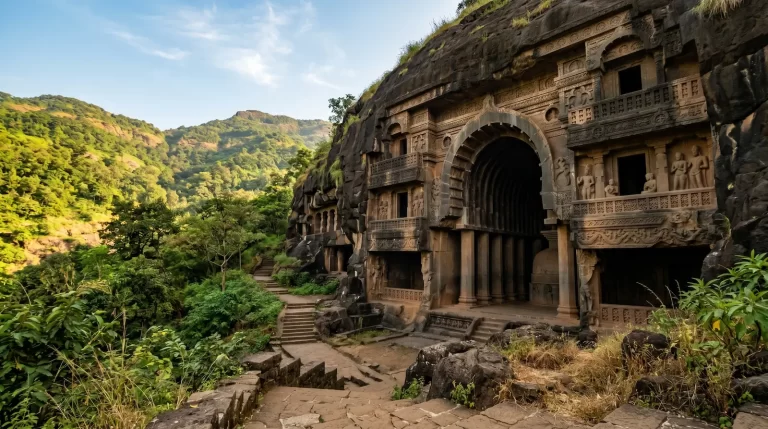
At this time, low-angle sunlight creates strong shadow definition across the facade, highlighting carvings that can appear flat under harsher midday light.
Early morning also means fewer visitors around the entrance area, making it easier to compose clean photographs.
Exterior Photography — The Facade
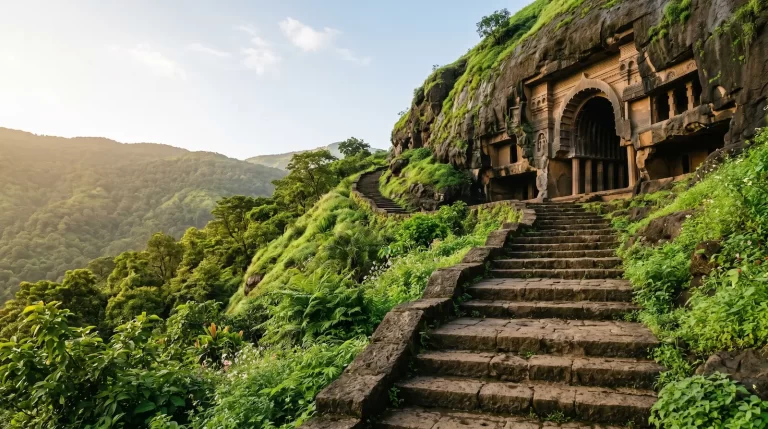
The Grand Chaitya facade is the most rewarding subject at Karla Caves.
Look for:
- The carved entrance arch
- Donor relief panels
- The lion pillar
- Architectural details around the facade
Morning side-light helps reveal texture and depth in the stone carvings.
Interior Photography — The Chaitya Hall
The interior presents a different challenge because natural light is limited.
For DSLR or mirrorless cameras:
- ISO 800–1600
- Wide aperture (f/2.8–f/4 if available)
- Image stabilization enabled
- Brace against a pillar when necessary
Modern smartphones with Night Mode often perform surprisingly well inside the chaitya hall.
The best interior composition is usually from the entrance looking toward the stupa through the rows of stone pillars.
What to Photograph
The Grand Facade
The defining image of Karla Caves and usually the first shot visitors should attempt.
The Lion Pillar
One of the most recognizable architectural features at the site.
Donor Panels
Close-up compositions often reveal details missed by visitors focused only on wide shots.
The Chaitya Interior

The long row of pillars leading toward the stupa creates one of the strongest visual compositions in western India’s Buddhist cave architecture.
The Wooden Ceiling Ribs
These ancient timber elements are exceptionally rare and deserve dedicated photographs looking upward from the center of the hall.
Camera Tips for Visitors
- Arrive early for the best light
- Avoid using flash inside the caves
- Bring a lens cloth during monsoon season
- Use HDR or Night Mode on smartphones
- Photograph details as well as wide scenes
💡 Tip: Most visitors focus only on the facade. Some of the most interesting images actually come from the donor inscriptions, carved details, and interior pillar lines that reveal the craftsmanship of the site.
FAQ
Q.1: Is photography allowed at Karla Caves?
Yes. General photography using mobile phones and cameras is permitted without additional charges.
Q.2: Do I need a tripod permit for Karla Caves?
Yes. Tripod use requires prior permission from the Archaeological Survey of India (ASI).
Q.3: What is the best time for Karla Caves photography?
Early morning between 7:00 AM and 9:00 AM offers the best light for photographing the facade and entrance carvings.
Q.4: What camera settings work best inside Karla Caves?
A higher ISO setting (800–1600), a wide aperture, and image stabilization help compensate for the low light inside the chaitya hall.
Q.5: What is the best subject for Karla Caves photography?
The Grand Chaitya facade, lion pillar, donor panels, and pillared interior are the most rewarding photographic subjects at the site.
Related Posts You Might Like
- Karla Caves – Complete Guide 2026
- Karla Caves History – Buddhist Heritage Explained
- Karla Caves Timings and Entry Fees
- Bhaja Caves – Complete Guide 2026
- Ajanta Caves for Photography Lovers – Best Light & Timing