Ellora Caves Legends and Stories – Myths That Still Whisper in Stone
Walk through the quiet corridors of the Ellora Caves, and you can feel it — something ancient still lingers. The air carries more than echoes of chisels; it holds whispers of devotion, divine intervention, and timeless legends that blur the line between history and mythology.
The truth is, Ellora isn’t just a place of stone — it’s a living storybook. Each cave hides a myth, each carving a message from centuries past. Here are some of the most captivating Ellora Caves legends and stories that have survived through time, told by locals, monks, and travelers alike.
1. The Legend of the Kailasa Temple – Built in a Miracle
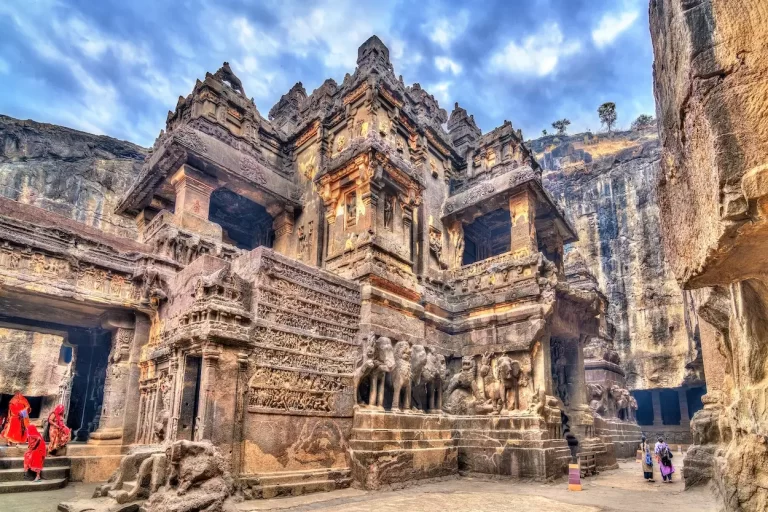
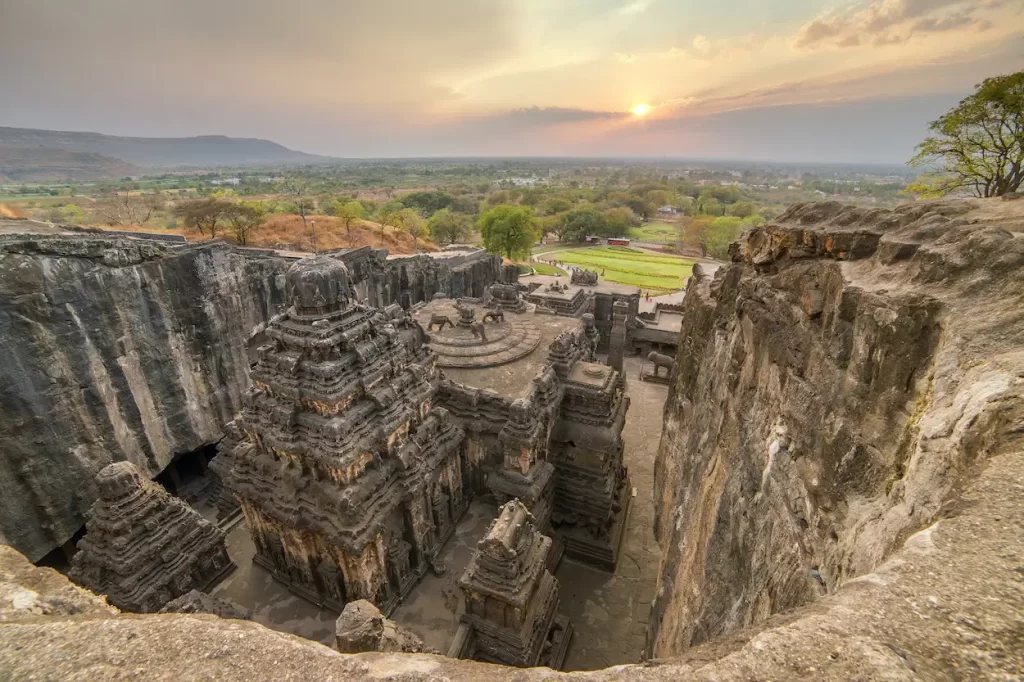
Among the 34 caves, none is more celebrated than Cave 16, home to the Kailasa Temple — said to be carved in just a few years through divine help.
According to legend, King Krishna I of the Rashtrakuta dynasty commissioned the temple after his queen vowed to fast until she saw the top of a Shiva temple being built in his honor. The architect, Kokasa from Paithan, promised to show her the top within a week.
To fulfill that vow, Kokasa began carving from the top downward, removing over 200,000 tons of rock. Within days, the spire was complete — allowing the queen to break her fast. Even today, no one fully understands how such precision and scale were achieved.
💡 Tip: Stand near the Nandi Pavilion and look up — the vertical cut lines are faintly visible, evidence of the top-down carving miracle.
📍 View on Google Maps
2. Ravana Shaking Mount Kailasa – The Power of Faith
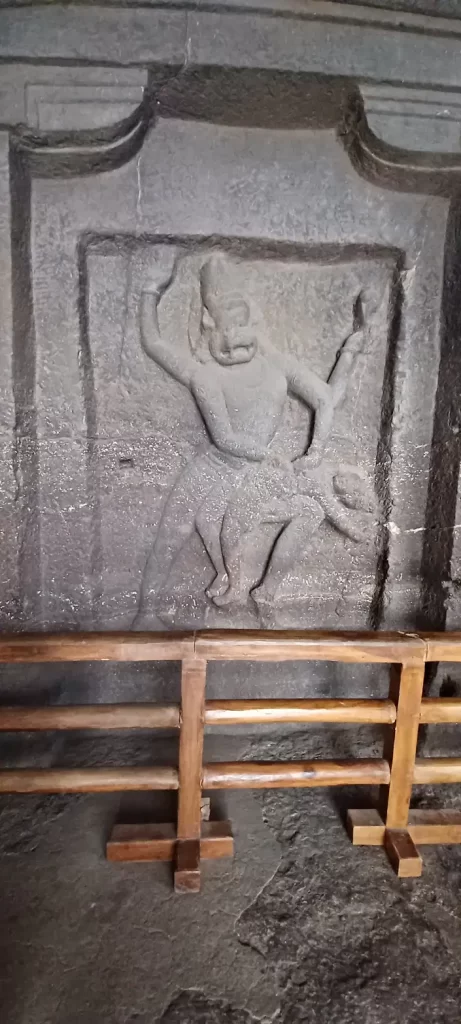
Deep inside the Kailasa Temple, there’s a monumental carving of Ravana, the demon king of Lanka, attempting to lift Mount Kailasa to prove his devotion to Lord Shiva.
The story goes that Ravana’s devotion was so powerful it made the earth tremble. To calm him, Shiva pressed his toe against the mountain — pinning Ravana beneath it, but blessing him for his devotion.
The sculpture captures this moment of divine tension perfectly: Ravana’s muscles straining, Shiva serene above.
💡 Tip: Visit mid-morning when sunlight enters the corridor — the sculpture’s depth becomes dramatically visible.
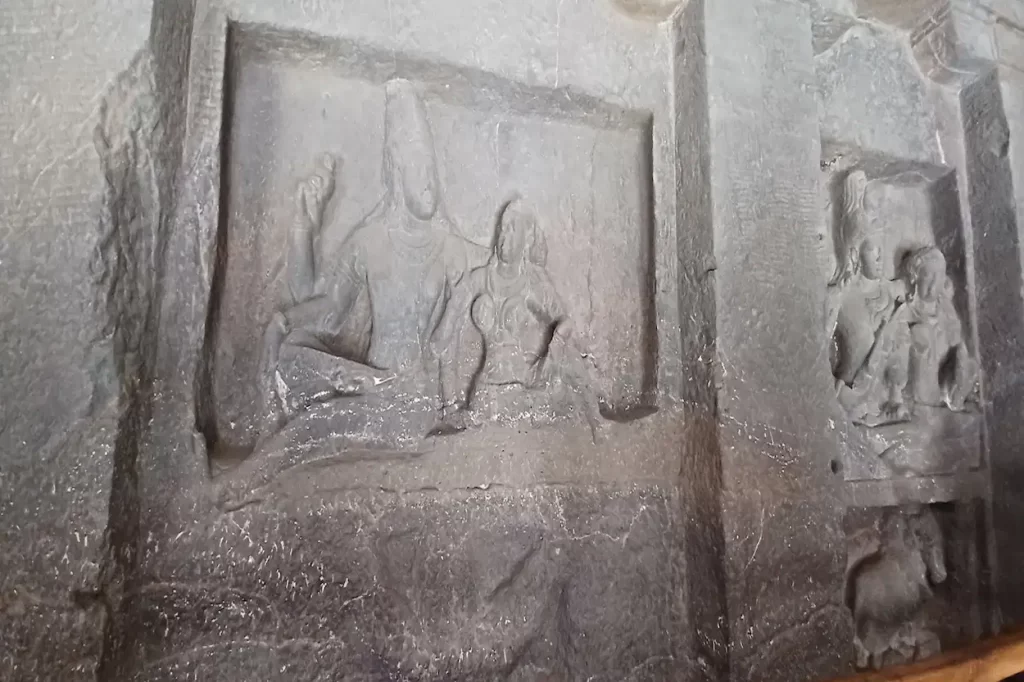
3. The Mysterious Architect – Kokasa’s Divine Vision
Local folklore says that Kokasa, the master architect, didn’t design the Kailasa Temple alone. One night, as he meditated on the banks of the Godavari River, Lord Shiva appeared in a dream and revealed the structure’s design.
When Kokasa woke, he drew the plan on the riverbank sand — a design so perfect, it’s said even modern architects marvel at its symmetry.
💡 Tip: Ask local guides about Kokasa — most have their own versions of this tale, each adding a different divine twist.
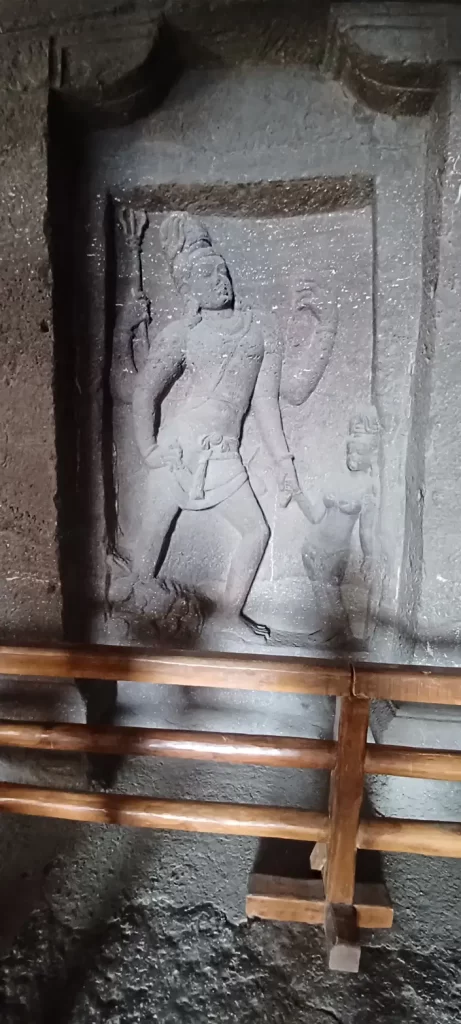
4. The Echo of the Monks – The Chanting Caves
In the Buddhist Caves (1–12), especially Cave 10, a phenomenon still amazes visitors — perfect acoustics. The slightest sound echoes evenly, amplifying chants and mantras.
Legend says monks didn’t need instruments during prayers; the caves themselves became their musical companions. The rhythmic echo was believed to represent the universe vibrating in harmony — “Om” carved into space.
💡 Tip: Step into Cave 10 and clap softly — you’ll hear a clear echo circle back to you like a heartbeat.
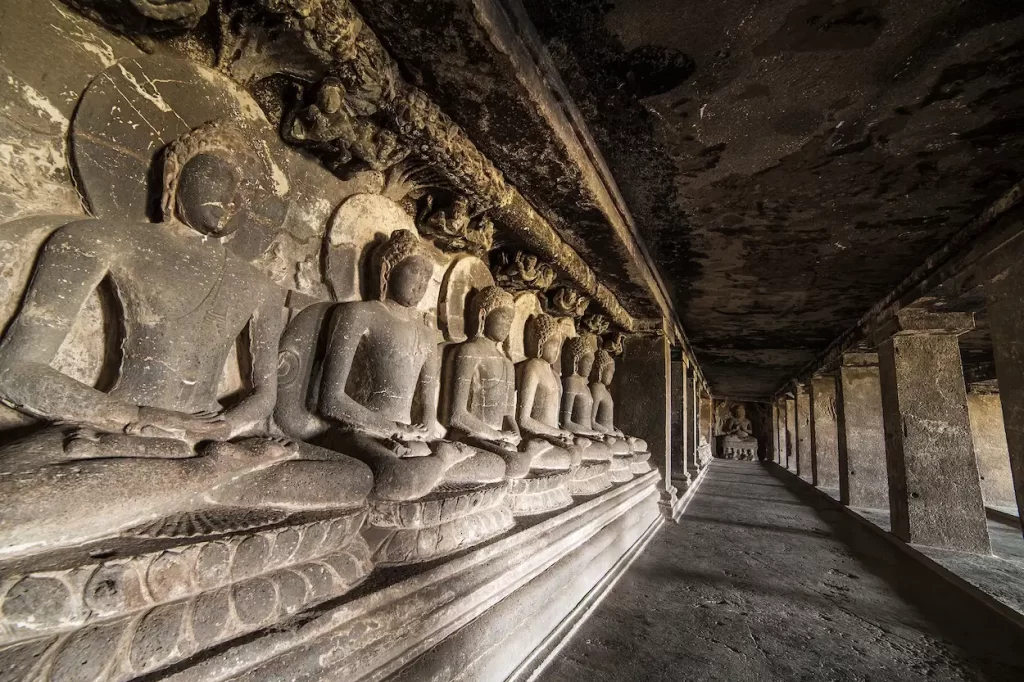
5. The Jain Mystics of Ellora – Silence in Stone
The Jain Caves (30–34) tell a different kind of legend — one not of miracles, but of meditation. It’s said that monks spent decades here in silence so deep they could hear the “sound of their soul.”
Cave 32, known as Indra Sabha, was believed to be a divine assembly hall where celestial beings descended to bless the monks. The upper floor carvings depict heavenly musicians frozen mid-dance — their beauty said to honor this divine visitation.
💡 Tip: Visit in the late afternoon — when sunlight filters through the pillars, the sculptures seem to glow softly, as if alive.
6. The Hidden Treasure Beneath the Caves
Old local tales whisper of hidden chambers beneath the Kailasa Temple, supposedly holding ancient scriptures, gold, and relics sealed away by monks.
Excavations have revealed subterranean passages beneath some caves, though their purpose remains debated. Some say they were meditation chambers, others believe they hid sacred scrolls — now lost to time.
💡 Tip: Ask your guide about the “secret passage of Cave 15” — it’s one of those stories every local swears by but no one has proof of.
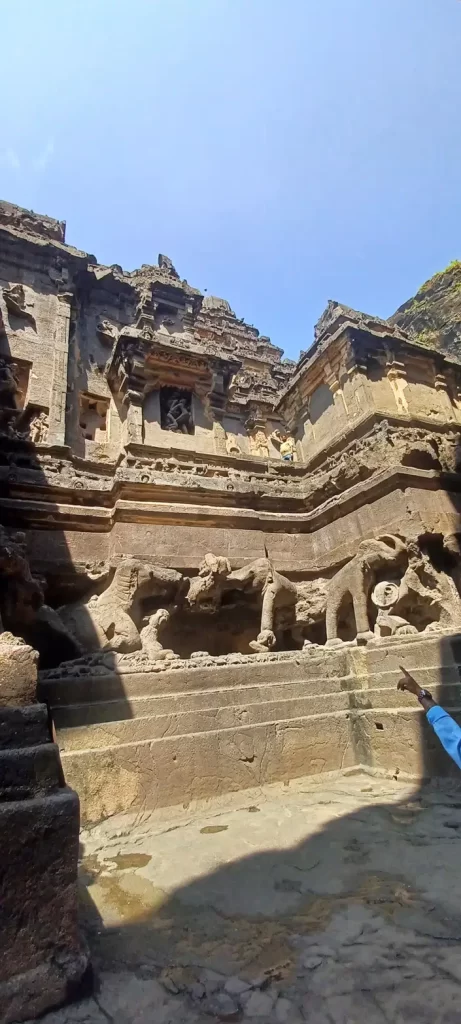
7. The Cave That Listens – Cave 10’s Whispering Wall
In Cave 10 (Vishvakarma), a phenomenon stuns visitors: whisper near the central stupa, and your voice travels across the hall to the far wall. Monks believed this cave was alive, responding to the sound of truth.
Even today, visitors test it by softly chanting or humming — and the cave “answers back.”
💡 Tip: Avoid loud talking inside — try whispering your name instead; you’ll feel it echo gently through the stone.
8. The Sacred Alignment of the Sun and Kailasa
On certain days each year, sunlight falls directly onto the Shiva Linga inside the Kailasa Temple at dawn — a phenomenon that has baffled historians. Some say it happens during Maha Shivratri, others during solstices.
Whether by divine design or mathematical precision, this alignment makes the temple seem like it’s breathing light.
💡 Tip: Early morning visits often reveal the first rays entering the sanctum — a sight that feels nothing short of sacred.
9. The Tale of the Three Faiths
Perhaps the most profound story of all — Hindus, Buddhists, and Jains built their monuments here side by side, over centuries, without conflict.
Local belief says Ellora itself is protected by three divine forces — Shiva (Hindu), Buddha (Buddhist), and Mahavira (Jain) — ensuring eternal balance and peace. That harmony, carved into stone, still defines the spirit of Ellora.
💡 Tip: Walk from Cave 1 to Cave 34 in order — it’s like walking through 500 years of faith coexisting peacefully.
10. The Unfinished Caves – Frozen Dreams
Not all caves were completed. In some, carvings stop abruptly — as if the artisans simply vanished. Some legends say work stopped due to war; others claim the sculptors achieved enlightenment and laid down their tools.
💡 Tip: Visit the unfinished Cave 15 and notice how rough stone transitions into smooth artistry — it’s like watching creation in progress.
11. What the Locals Still Believe
Even today, locals treat Ellora as sacred ground. During Mahashivratri, pilgrims climb the hills to pray at Kailasa Temple, while Jain followers light candles inside Indra Sabha. Some even believe the caves hum at night — the earth itself remembering its own making.
💡 Tip: Visit during festivals to see how Ellora still lives — it’s not just a monument; it’s a heartbeat from history.
Personally Tested Best GetYourGuide Tours
👉 Related Posts You Might Like:
- Kailasa Temple Ellora – History and Travel Tips
- Best Temples and Monasteries to See in Ellora Caves
- Ellora Caves Sculptures and Highlights
- Complete Visitor Guide to Ellora Caves
- Best Time to Visit Ellora Caves
Frequently Asked Questions (FAQ)
Q: What is the most famous legend of Ellora Caves?
A: The story of Kokasa, the divine architect who built the Kailasa Temple top-down in record time, is Ellora’s most enduring legend.
Q: Are there hidden tunnels beneath Ellora Caves?
A: Some caves do have subterranean chambers, but their purpose is uncertain — legends say they were meditation paths or secret storage areas.
Q: Why are there Hindu, Buddhist, and Jain caves at Ellora?
A: The caves were built over centuries, reflecting the peaceful coexistence of faiths in ancient India.
Q: Is there any myth about the echo inside Ellora Caves?
A: Yes, especially in Cave 10 — monks believed the echo symbolized the universe answering their chants.
Q: Can I book a mythology-focused tour at Ellora?
A: Yes, many guided tours and GetYourGuide experiences bring these legends to life.