Ellora Caves Sculptures and Highlights – A Traveler’s Guide
Ellora Caves Sculptures and Highlights ,The first time I explored the Ellora Caves, I wasn’t prepared for what I saw — not just temples, but an entire world sculpted out of living rock. Each cave felt like stepping into a time capsule: gods frozen in dance, monks lost in meditation, and stories carved with breathtaking precision.
In this guide, I’ll take you through the most fascinating sculptures and highlights of the Ellora Caves, sharing the artistic details, stories, and hidden gems that make this UNESCO World Heritage Site one of the greatest artistic achievements in the world.
1. The Artistic Soul of Ellora Caves
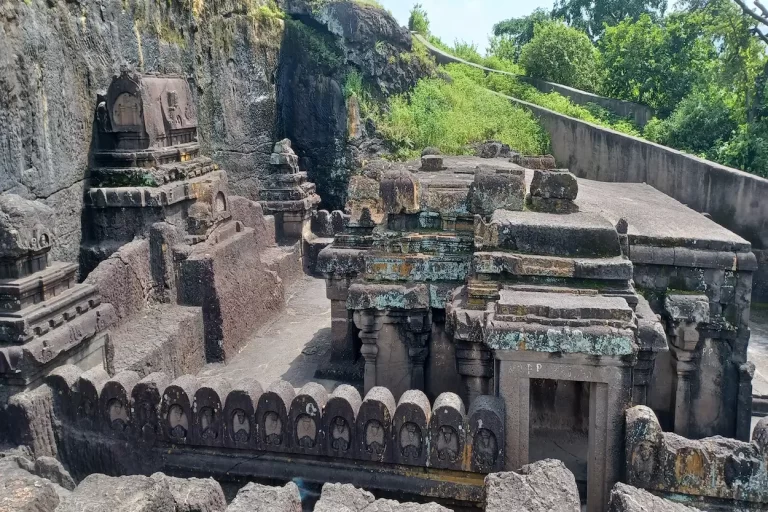
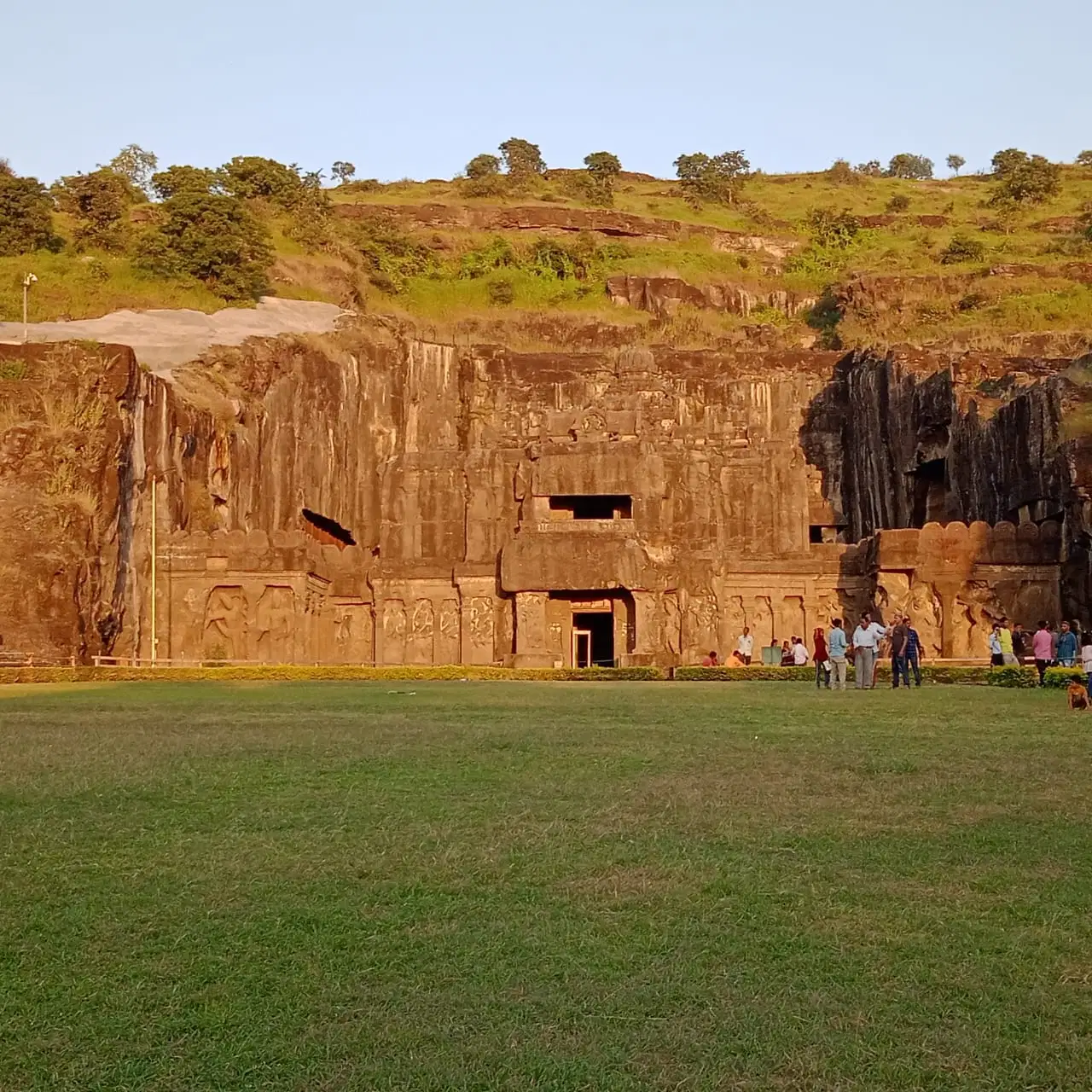
The Ellora Caves aren’t merely architecture — they’re emotion in stone. Built between the 6th and 10th centuries, they showcase three great faiths: Hinduism, Buddhism, and Jainism.
What makes them special is how seamlessly art, religion, and storytelling blend together. Whether it’s the fierce dance of Shiva or the calm face of Buddha, each carving here feels alive.
💡 Tip: Walk slowly through each cave. Let your eyes adjust to the light — you’ll start noticing new figures every minute.
2. The Grand Masterpiece – Kailasa Temple (Cave 16)
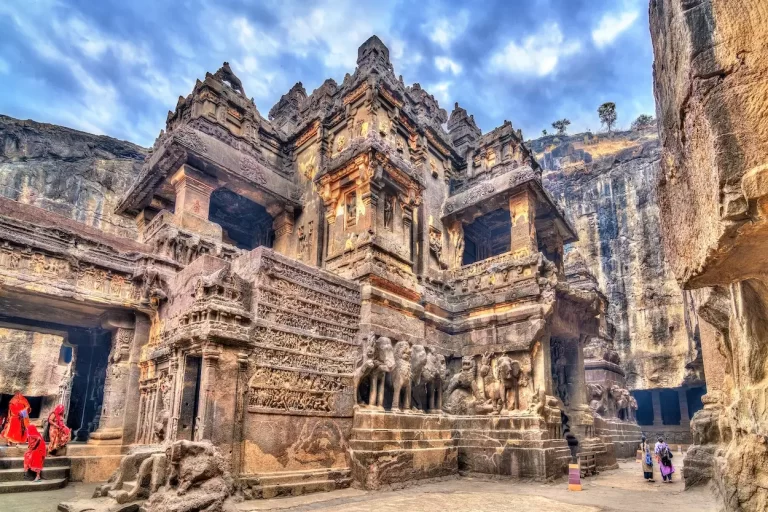
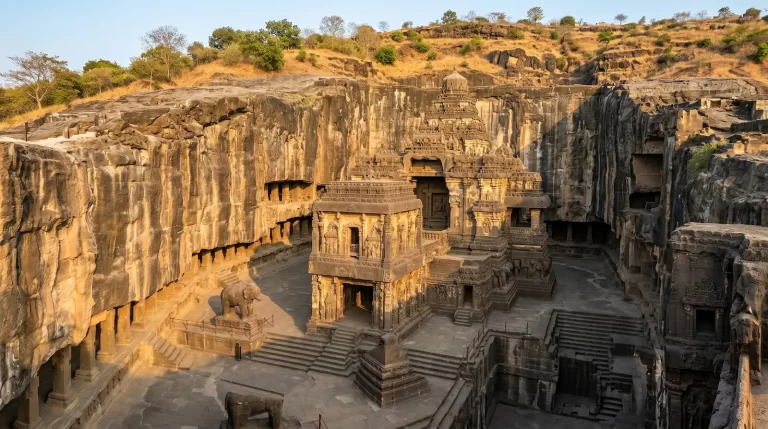
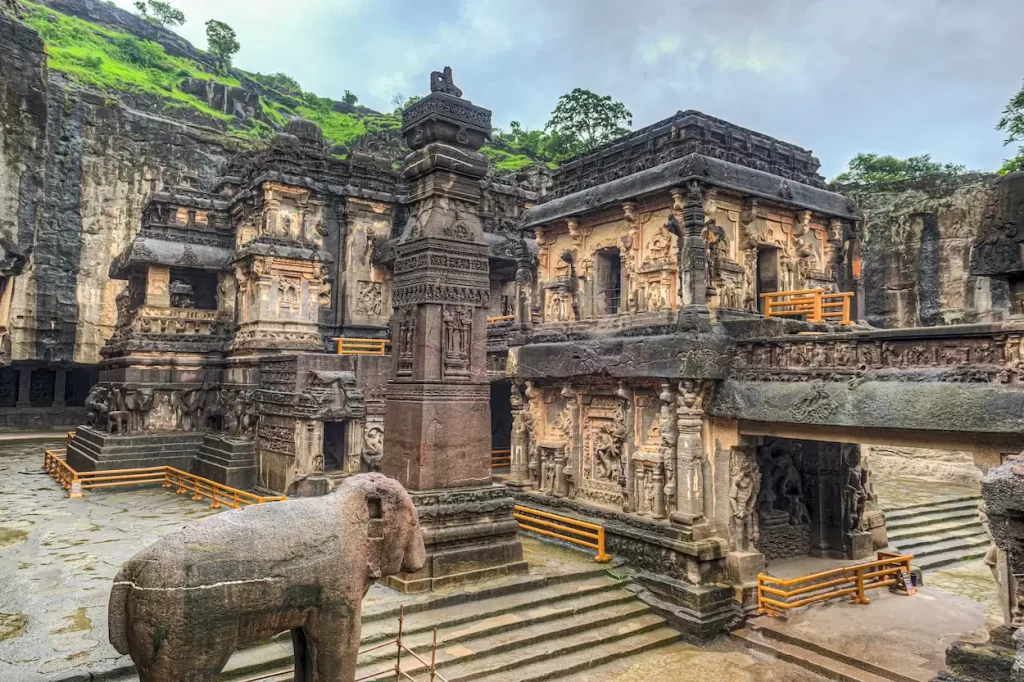
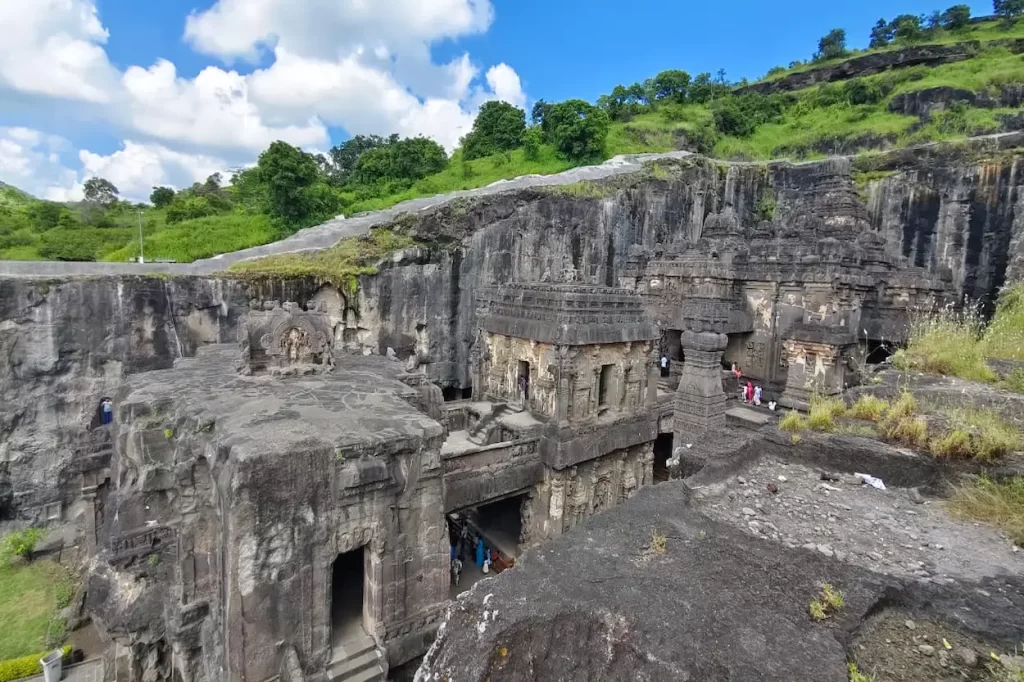
If Ellora were a crown, Kailasa Temple would be its diamond. Carved top-down from a single basalt mountain, this temple dedicated to Lord Shiva is the largest monolithic structure in the world.
Highlights:
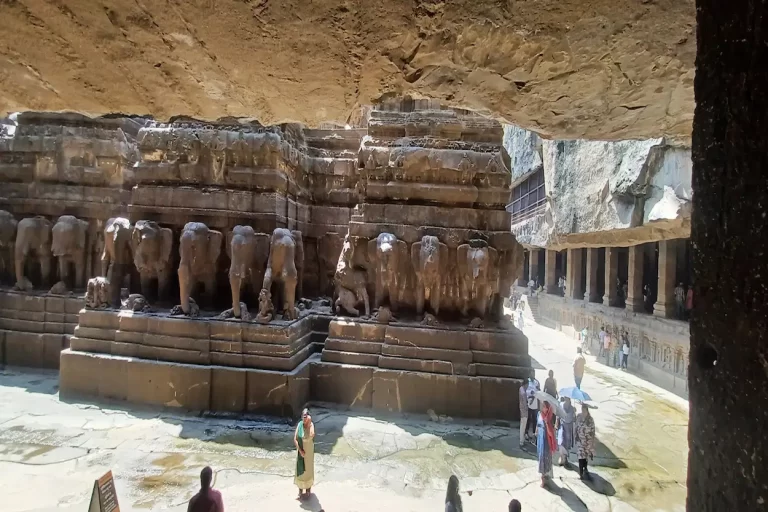
- Gigantic elephants at the base symbolizing strength.
- Life-sized carvings from the Ramayana and Mahabharata.
- A stunning sculpture of Shiva and Parvati’s wedding (Kalyanasundara).
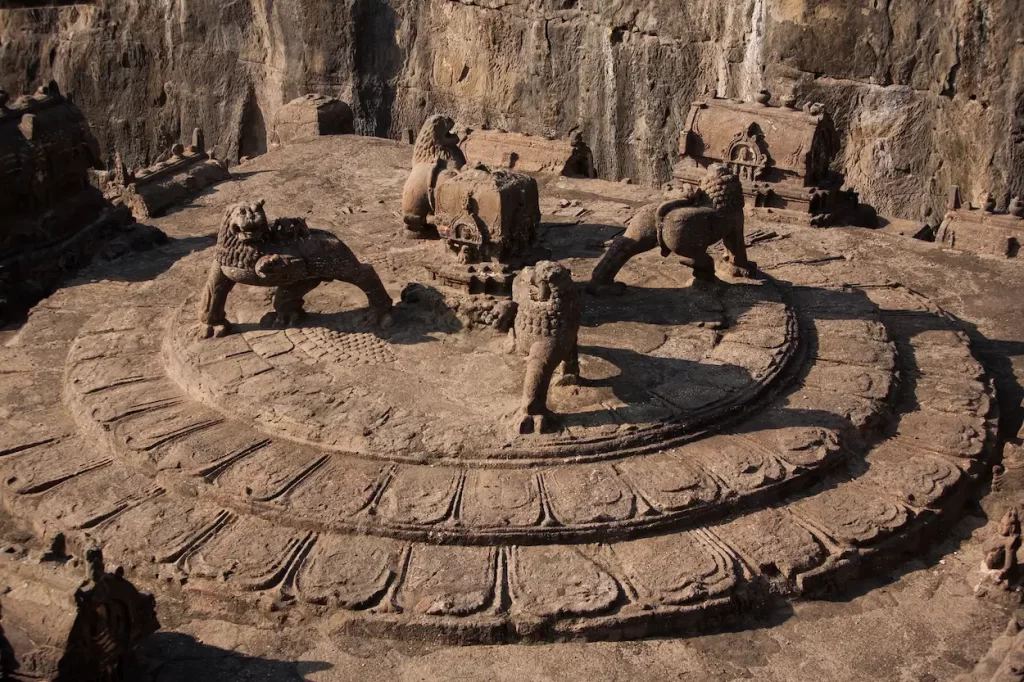
- The Nandi pavilion, connected by a stone bridge.
💡 Tip: For the most beautiful view, stand at the upper gallery behind the temple and look down at the courtyard — it’s breathtaking.
📍 View on Google Maps
3. The Dynamic Dance of Shiva – Nataraja Panel
Hidden inside the Kailasa Temple is one of Ellora’s most powerful sculptures — Shiva as Nataraja, the cosmic dancer. His flowing arms and swirling rhythm capture the energy of creation and destruction.
The balance and motion of this piece are so perfect that it feels like stone caught mid-dance.
💡 Tip: Visit this panel around mid-morning when sunlight touches the figure — the shadows make it come alive.
4. Ravana Shaking Mount Kailasa – The Power of Devotion
One of the most famous carvings at Ellora shows Ravana, the demon king, shaking Mount Kailasa in an act of devotion to Lord Shiva. Shiva, calmly seated above, presses the mountain down with one toe, restoring peace.
This sculpture is massive — and the detail in Ravana’s multiple arms and faces is pure artistry.
💡 Tip: Look closely at Ravana’s expression — it’s fierce yet respectful. That’s what makes this carving so human.
[Add image of Ravana shaking Mount Kailasa sculpture]
5. Vishnu and Lakshmi – The Eternal Balance
Many Hindu caves at Ellora celebrate Vishnu and Lakshmi — the divine couple representing preservation and grace. Look for carvings showing Vishnu reclining on the serpent Ananta, with Lakshmi at his feet.
The folds of their garments and the fine jewelry details are unbelievably precise.
💡 Tip: This panel is easy to miss — it’s tucked on the right wall of Cave 15 (Dashavatara Cave).
6. The Buddha of Light – Cave 10 (Vishvakarma)
Moving into the Buddhist section, Cave 10 — also called the Carpenter’s Cave — houses a grand seated Buddha under a stupa, framed by an arched ribbed ceiling carved entirely from stone.
When sunlight streams in through the horseshoe window, it feels as if the Buddha himself is glowing. The serenity of this sculpture is unmatched.
💡 Tip: Visit around 9:00 AM when sunlight falls directly on the Buddha’s face.
7. Avalokiteshvara – The Compassionate One
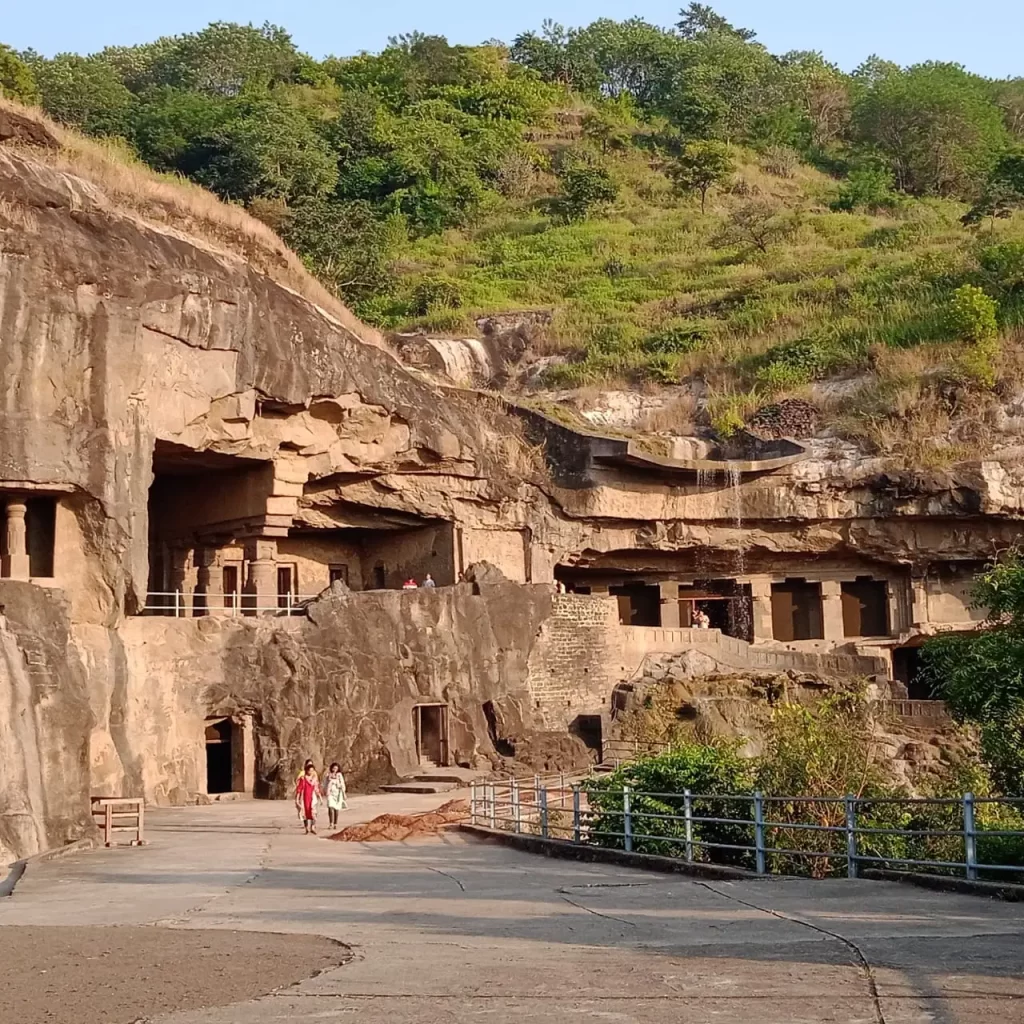
Inside Cave 6, you’ll find a stunning sculpture of Avalokiteshvara, the Bodhisattva of Compassion. His peaceful expression, holding the lotus, embodies Buddhist ideals of mercy and wisdom.
💡 Tip: The carving glows beautifully under soft light — avoid using flash to preserve its natural tones.
8. The Jain Caves – Perfection in Stillness
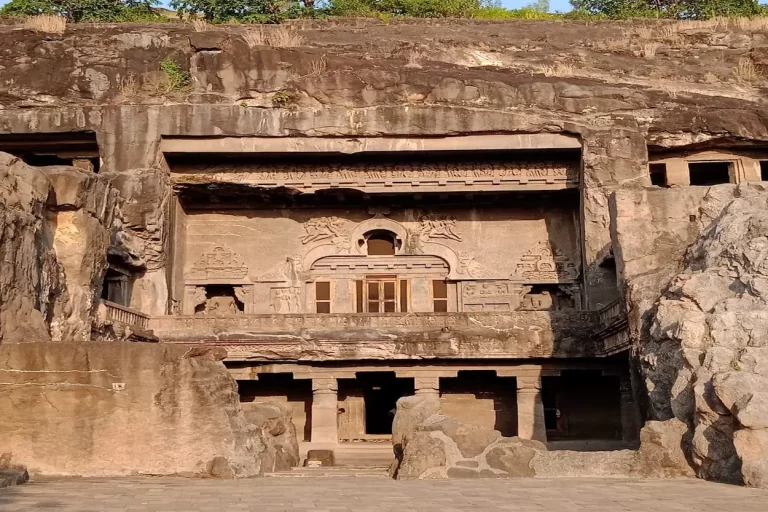
The Jain caves (30–34) showcase a completely different energy — quiet, precise, and deeply meditative.
Highlights:
- Cave 32 (Indra Sabha): Two levels of intricate Tirthankara statues.
- Cave 33 (Jagannatha Sabha): Sculptures of meditating monks surrounded by divine attendants.
Here, the beauty lies in balance — symmetry, silence, and subtlety.
💡 Tip: Visit these caves after 3 PM when soft sunlight adds golden outlines to the carvings.
📍 View on Google Maps
9. Guardian Elephants and Divine Gatekeepers
At the entrances of several caves, you’ll see massive guardian elephants and dvarapalas (gatekeepers). These sculptures aren’t just ornamental — they symbolize protection, wisdom, and strength.
Each pair is slightly different — some smiling, some fierce, depending on which deity they guard.
💡 Tip: Notice the footprints carved at entrances — they mark sacred entryways, often missed by visitors.
10. The Ceiling Art and Lotus Motifs
Look up — the ceilings are just as stunning as the walls. You’ll see carved lotuses, geometric mandalas, and floral scrolls. The lotus, in particular, symbolizes enlightenment, purity, and divine beauty.
The ceilings in Caves 10, 12, and 32 are especially remarkable.
💡 Tip: Use your phone’s wide-angle camera to capture the full symmetry of the ceiling design.
11. Hidden Highlights You Shouldn’t Miss
- The unfinished carvings in Cave 15, showing the sculpting process.
- A faint mural trace in Cave 11 (Do Tal) — one of the few painted surfaces left.
- The echo inside Cave 10, used by monks for chanting.
💡 Tip: Tap gently on the walls in Cave 10 — the acoustics are surprisingly resonant.
12. My Personal Reflection
Every sculpture at Ellora feels alive — not just as stone, but as spirit. The artisans who built it never signed their names, but their devotion echoes in every curve and line.
When I sit beneath the towering Nandi pavilion and look up at the Kailasa Temple, I imagine those craftsmen carving day after day, decade after decade, just to create something that would outlast time.
💡 Tip: Visit early in the morning, when it’s quiet enough to hear your own footsteps — that’s when Ellora truly speaks.
Personally Tested Best GetYourGuide Tours
👉 Related Posts You Might Like:
- Best Temples and Monasteries to See in Ellora Caves
- Kailasa Temple Ellora – History and Travel Tips
- Complete Visitor Guide to Ellora Caves
- Ellora Caves Photography Guide
- Best Time to Visit Ellora Caves
Frequently Asked Questions (FAQ)
Q: Which sculptures are the most famous in Ellora Caves?
A: The Kailasa Temple carvings, Ravana shaking Mount Kailasa, Nataraja (Shiva’s dance), and Buddha in Cave 10 are among the most iconic.
Q: How old are the sculptures at Ellora Caves?
A: They date back roughly between the 6th and 10th centuries CE.
Q: Are Jain sculptures included in the Ellora complex?
A: Yes, the Jain Caves (30–34) are known for their refined carvings and symmetrical designs.
Q: Is photography allowed for Ellora sculptures?
A: Yes, photography is allowed without flash or tripods.
Q: Can I take a guided art tour at Ellora?
A: Absolutely — guided tours bring the sculptures’ stories to life.