Hidden Caves of Aurangabad – What Most Tourists Miss (2026)
hidden caves of Aurangabad, Aurangabad Caves is already, by any measure, an overlooked site — the entire region’s tourism attention goes to Ajanta and Ellora, leaving this hillside as a kind of hidden site within a hidden site. But even among the small number of visitors who do make it here, I find there are specific details, angles, and moments that almost everyone misses. This is my list of what I always make sure people actually see.
The City Viewpoint Almost Nobody Stops For
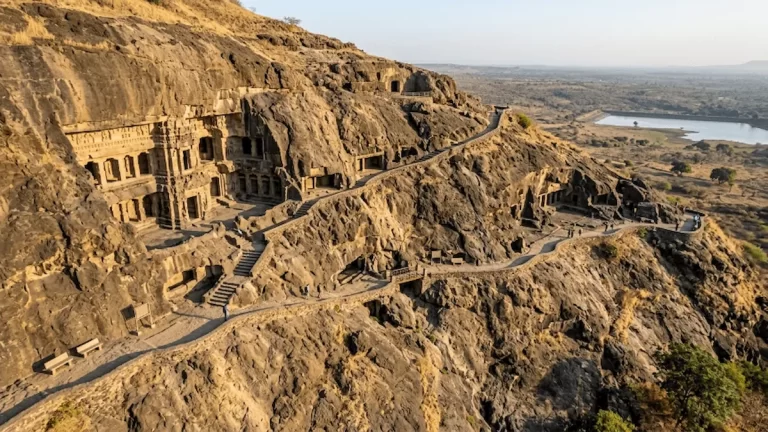
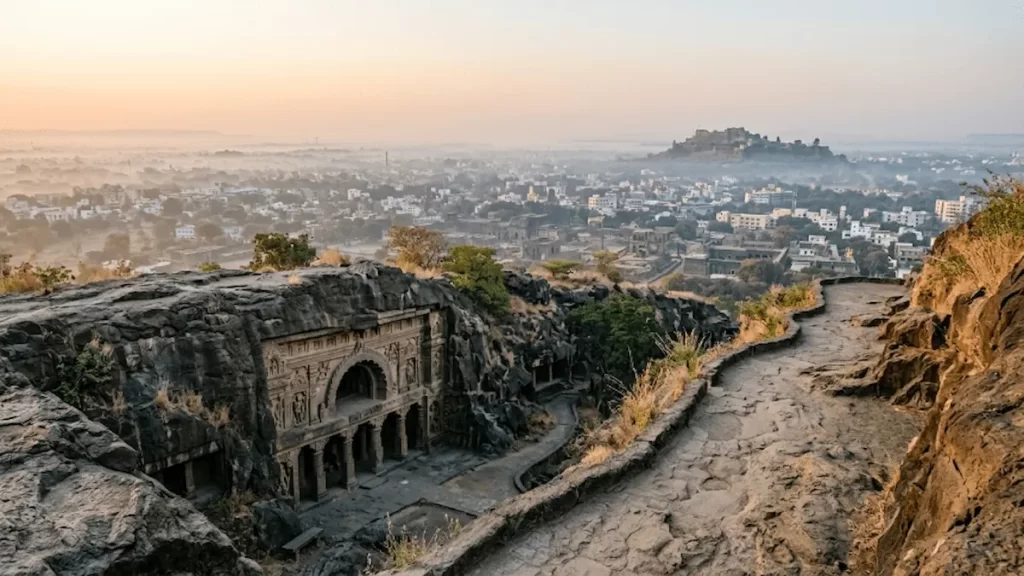
The path connecting the Western and Eastern Groups runs along an elevated section of the hillside, and at a few specific points, an unobstructed view opens up back toward Chhatrapati Sambhajinagar (Aurangabad).
Why people miss it: Most visitors treat this connecting walk purely as transit between the two “real” destinations — Cave 3 and Cave 7 — and move through it quickly without looking around.
What I tell people to do instead: Stop at the highest point along this path, ideally in the soft light of an early morning visit, and actually take in the view. It is a genuinely pleasant few minutes, and it gives you a tangible sense of this hillside’s historical position overlooking the trade routes that justified the monastery’s existence here in the first place.
💡 Tip: This is also, in my experience, the best spot on the entire site for a contemplative pause — somewhere to actually sit for a few minutes rather than continuously moving from cave to cave.
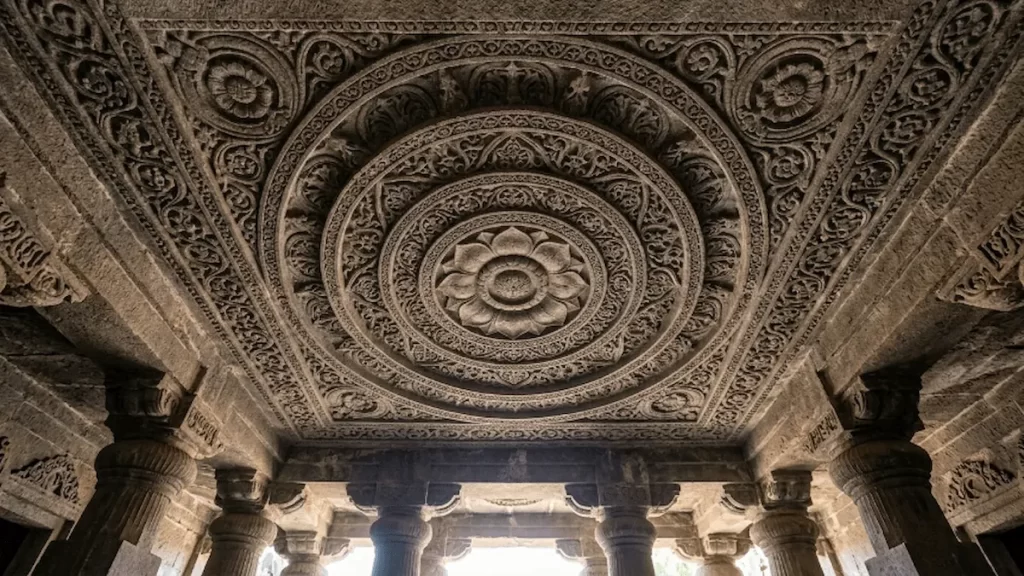
Cave 3’s Ceiling — Everyone Looks at the Facade, Nobody Looks Up
Cave 3 gets correctly identified as the highlight of the Western Group, but most visitors’ attention stops entirely at the facade sculpture and the main shrine figure.
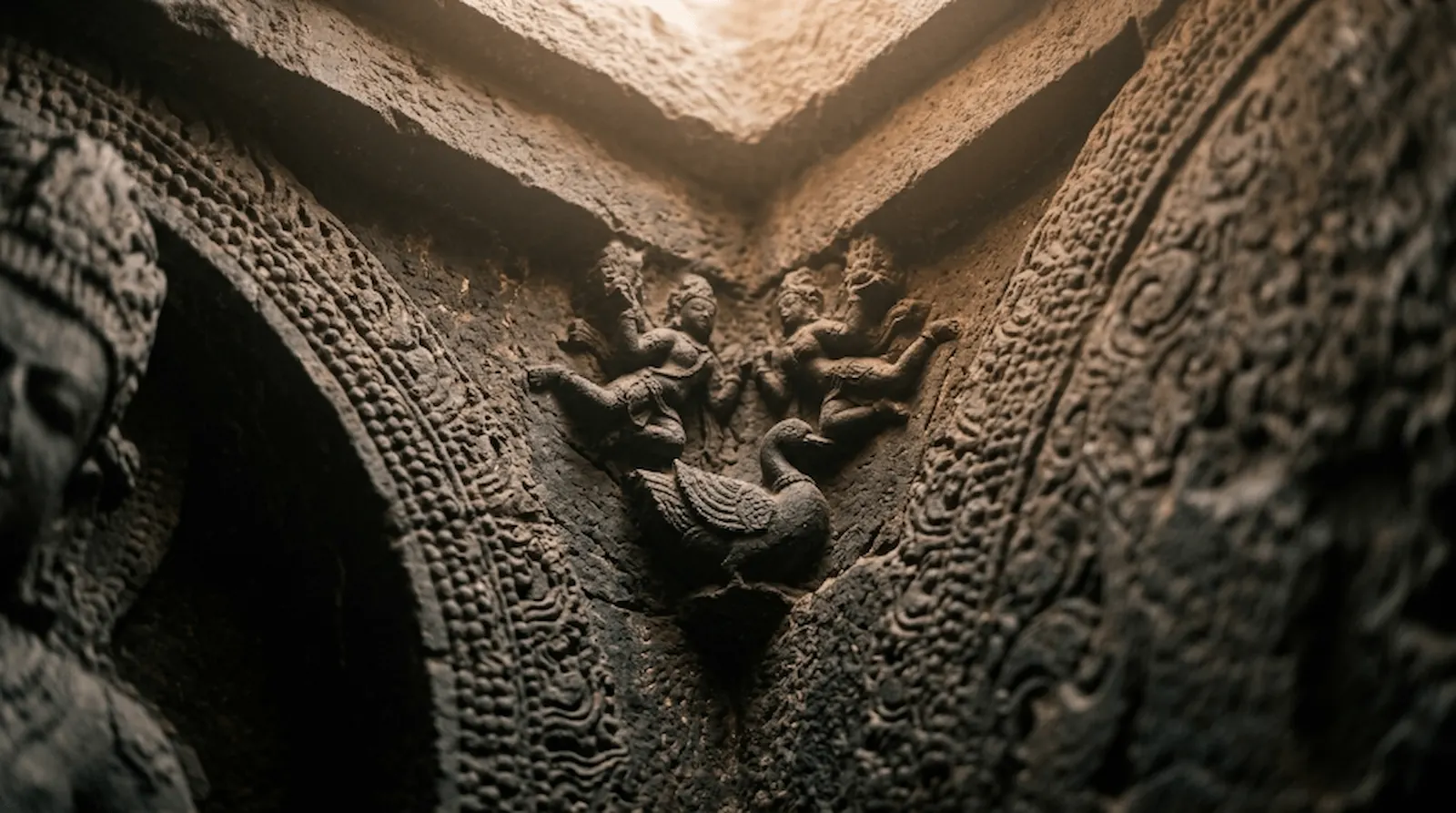
What gets missed: The ceiling treatment inside Cave 3’s interior carries its own decorative carving program, considerably less elaborate than Ajanta’s painted ceilings but genuinely worth a deliberate look rather than the cursory glance it usually receives.
Why this matters: I find it tells visitors something useful about the relationship between Aurangabad Caves and its more famous neighbors — even at a smaller, more modest scale, the same impulse toward fully decorated interior spaces that defines Ajanta’s ceilings and Ellora’s mandapas is present here too, just executed with less elaborate ambition.
💡 Tip: After examining Cave 3’s facade and shrine figure, deliberately pause and look up before moving on. It takes thirty seconds and almost nobody does it.
The Second Sculpture in Cave 7 That People Walk Past
This is the detail I mentioned in my self-guided tour post, but it deserves repeating here because I genuinely consider it the single most commonly missed thing at this entire site.
What happens: Visitors enter Cave 7, see the Tara figure near the entrance, and — particularly if they are moving quickly or did not know to look further — leave without finding the Dancing Panel deeper in the cave.
Why this is a significant miss: The Dancing Panel is not a secondary detail. It is, in my assessment, the single most remarkable individual sculpture at Aurangabad Caves — a seven-figure composition recording ancient Indian classical dance with a level of choreographic detail that has genuine art-historical significance well beyond this region.
💡 Tip: If you remember nothing else from this guide, remember this: inside Cave 7, do not stop at the first sculpture you see. Walk further in. The Dancing Panel is the reason this cave matters.
The Smaller, Unnumbered Excavations
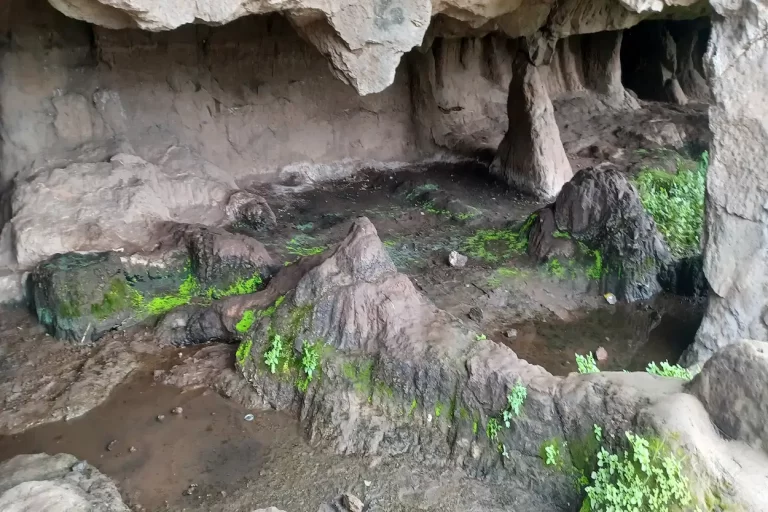
Beyond the nine principal numbered caves typically discussed, the hillside contains a handful of smaller, less developed excavations and cell-like spaces that do not receive individual numbering or attention in most descriptions of the site.
What they are: Generally smaller monk cells or incomplete excavation attempts, less artistically significant than the main numbered caves, but genuinely interesting as evidence of the broader scale of monastic activity that once existed across this hillside, beyond just the caves that survive in their most complete form.
Why I mention them: Not because they demand significant time, but because noticing them changes how you understand the site’s scale — Aurangabad Caves was not just 9 or 12 discrete monuments, but part of a more extensive monastic community whose full footprint is larger and less tidy than the numbered tour suggests.
💡 Tip: As you walk the connecting path, keep an eye on the hillside itself, not just the marked cave entrances — you will likely notice smaller carved openings and cell-like spaces that are not part of the standard numbered circuit but add genuine texture to understanding the site’s full historical scope.
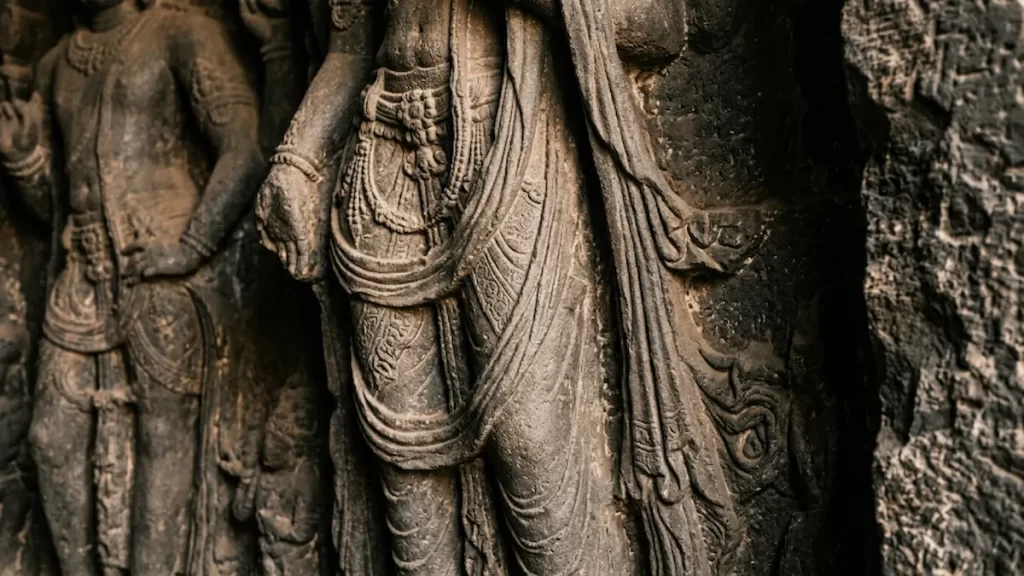
The Drapery Detail on Cave 3’s Bodhisattva Figures
This is a specific, close-looking detail rather than a separate location, but it is one I find rewards deliberate attention more than almost anything else at the site.
What to look for: The carved drapery on the Bodhisattva figures flanking Cave 3’s entrance — the way the stone is worked to suggest the weight and fall of cloth, distinct from the rendering of skin and ornament elsewhere on the same figures.
Why this matters: This is precisely the kind of detail that connects Cave 3 stylistically to Ajanta’s contemporary Vakataka-era work — the same period’s approach to representing fabric in painting at Ajanta finds its sculptural equivalent here. Seeing this connection requires close looking, not a passing glance.
💡 Tip: If you have a guide with you, this is a good specific detail to ask them to point out directly — the drapery treatment is subtle enough that without deliberate attention drawn to it, most visitors’ eyes simply slide past it toward the more immediately striking facial features and overall composition.
Why So Much Goes Unnoticed Here Specifically
I think the reason these details get missed at Aurangabad Caves more than at, say, Ajanta, is a slightly paradoxical effect of how few visitors come here. At Ajanta, a guide is almost universally expected and used, which means a structured, attentive walkthrough is the default experience. At Aurangabad Caves, given its lower profile and shorter visit time, more people treat it as a quick, casual stop — exactly the visiting style under which small but significant details get missed.
💡 Tip: I would actually argue that Aurangabad Caves rewards careful, slow attention more than its reputation suggests — not because it is artistically equivalent to Ajanta, but because its compact scale means every detail you take the time to notice represents a meaningfully larger share of what the site actually offers.
The Alternative — Nothing Missed, Everything Pointed Out
Every detail in this guide — the viewpoint, Cave 3’s ceiling, the Dancing Panel, the drapery work — is something I make a point of physically directing guests toward, rather than assuming they will notice on their own.
👉 See Aurangabad Heritage Tour Details & Book — Aurangabad Caves with every detail in this guide pointed out directly, paired with Bibi ka Maqbara.
FAQ
Q1: What do most visitors miss at Aurangabad Caves?
The most commonly missed elements are the Dancing Panel deeper inside Cave 7 (many visitors stop at the first sculpture they see), Cave 3’s decorative ceiling carving, and the elevated city viewpoint along the path connecting the Western and Eastern Groups.
Q2: Is the Dancing Panel hard to find inside Cave 7?
It is not hidden or restricted, but it sits deeper inside the cave than the Tara figure most visitors encounter first near the entrance. Visitors who do not deliberately walk further into the cave can leave without finding it, despite it being the cave’s most significant individual sculpture.
Q3: Are there caves at the site beyond the main numbered ones?
Yes — beyond the principal numbered caves typically discussed, the hillside contains smaller, less developed excavations and monk cells that are not individually numbered or commonly described, offering a sense of the broader scale of historical monastic activity across the site.
Q4: What should I look for on Cave 3’s Bodhisattva figures specifically?
The carved drapery treatment — how the stone suggests the weight and fall of cloth, distinct from the figures’ skin and ornament. This detail stylistically connects Cave 3 to Ajanta’s contemporary Vakataka-era work and rewards close, deliberate looking rather than a passing glance.
Q5: Why do visitors miss so much at a site this small?
Aurangabad Caves’ lower profile and shorter typical visit time mean many visitors treat it as a quick, casual stop rather than a structured, attentive walkthrough — the opposite of how most people approach Ajanta, where a guide and a full day are the norm. This casual approach is exactly the visiting style under which small but significant details get overlooked.
👉 Related Posts You Might Like:
- Aurangabad Caves – Complete Guide 2026
- Aurangabad Caves Self-Guided Tour – Cave by Cave
- Aurangabad Caves History – 1,500 Year Old Buddhist Secret
- Aurangabad Caves Photography Guide
- Why Aurangabad Caves Are Worth Visiting (Even After Ajanta)