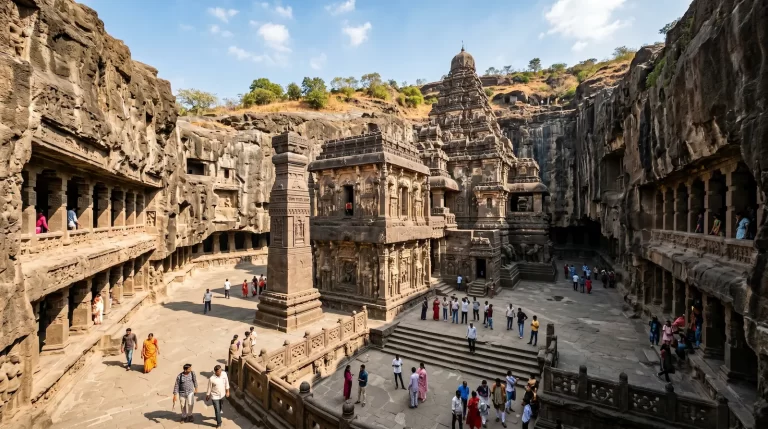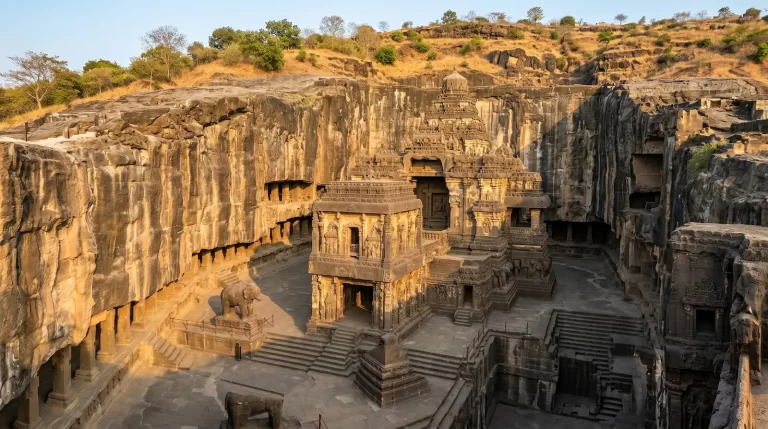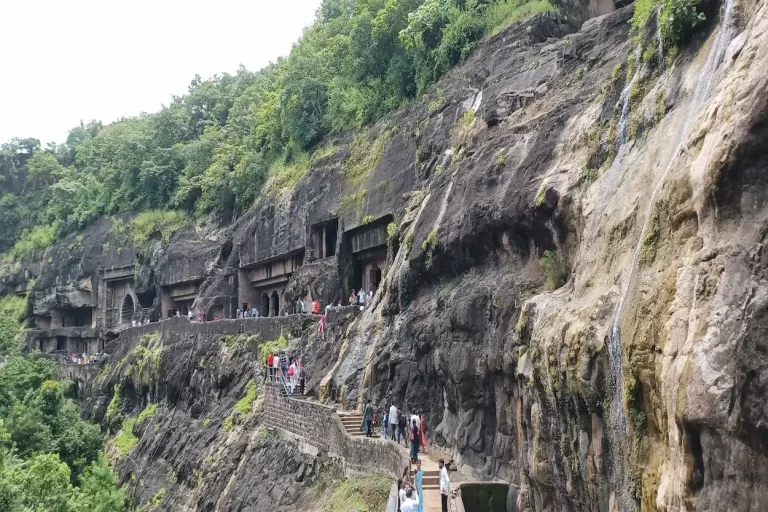
Why Aurangabad Caves Are Worth Visiting – Even After Ajanta (2026)
“Haven’t I already seen this?” is the reaction I hear more often at Aurangabad Caves than at any other site I guide people through. It usually comes from someone who has just spent a full day at Ajanta, feels satisfied and a little overwhelmed by what they saw, and assumes a smaller Buddhist cave site nearby must be redundant. I understand the instinct completely. I also think it is wrong, and this is my honest case for why.
You Have Not Actually Seen This Before
This is the most direct response to the “haven’t I already seen this” instinct, and it is also simply true.
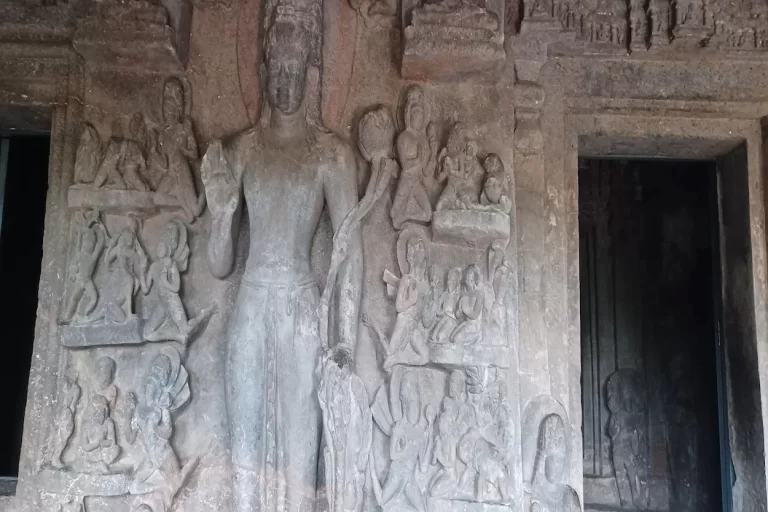
Ajanta’s defining achievement is painting — mineral pigment on prepared lime plaster, the Bodhisattva Padmapani, the Jataka narrative cycles. Aurangabad Caves has no comparable painted program. What you encounter here is carved relief sculpture — Cave 3’s facade figures, Cave 7’s Tara and the Dancing Panel. These are fundamentally different artistic media, engaging your attention in genuinely different ways.
💡 Tip: I sometimes ask guests directly: “Did Ajanta have a dance composition like the one we are about to see?” The answer is no, and that single fact usually does more to reset expectations than any amount of explaining the abstract painting-versus-sculpture distinction.
The Dancing Panel Does Not Exist Anywhere Else
I want to be specific rather than just gesturing at “different sculpture,” because I think the Dancing Panel deserves to be argued for directly.
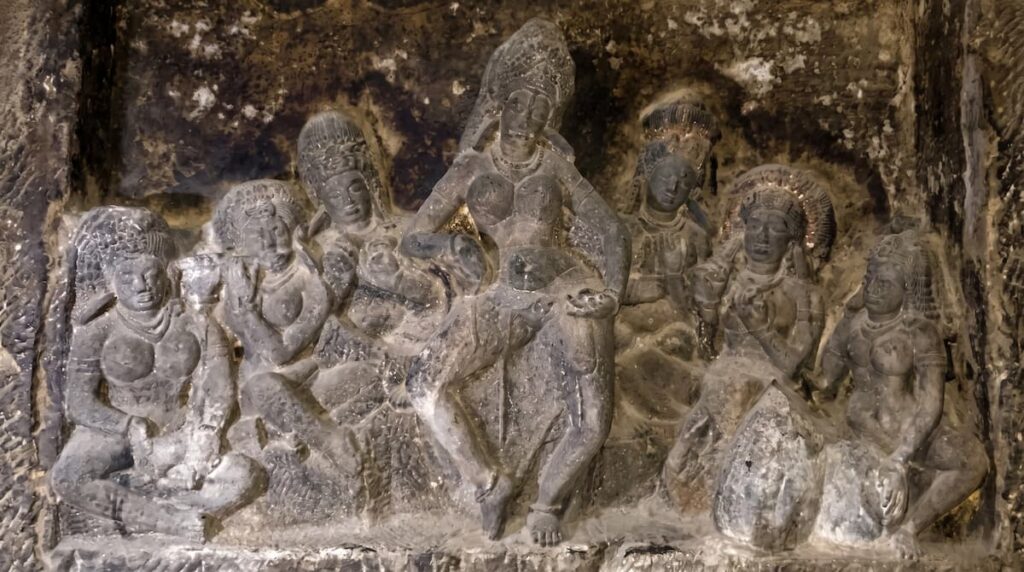
Cave 7’s seven-figure composition — a central dancer surrounded by six musicians, each playing a distinct instrument — is considered one of the most important architectural records of ancient Indian classical dance anywhere in the country. Nothing comparable exists at Ajanta. Ellora’s sculptural program, extraordinary as it is, does not include anything depicting this specific subject with this level of choreographic detail either.
💡 Tip: If someone tells me they are deciding whether to skip Aurangabad Caves, I tell them about the Dancing Panel specifically, by name, rather than speaking generally about “more sculpture to see.” It is the single concrete thing I have found actually changes people’s minds.
It Completes the Historical Story You Already Started
This is the argument I find resonates most with visitors who are genuinely engaged with what they learned at Ajanta, rather than simply ticking off a checklist.
Cave 3 at Aurangabad Caves is dated to the same Vakataka period that produced Ajanta’s finest 5th-century painted caves, with stylistic connections — and possibly even overlapping patronage circles connected to King Harishena’s court — that link the two sites directly. Cave 7, carved later under Kalachuri and early Chalukya patronage, connects forward to Ellora’s earliest Hindu caves.
This means Aurangabad Caves is not a separate story from Ajanta — it is a continuation and a bridge, carved by people working in directly related artistic and political traditions. Skipping it means leaving the story you started at Ajanta genuinely incomplete.
💡 Tip: I find this argument lands best with visitors who asked good questions at Ajanta — about the Vakataka dynasty, about who funded the caves, about how the artistic style developed. If that was you, Aurangabad Caves is where some of those threads continue.
The Experience Itself Is the Opposite of Ajanta
Beyond the specific artistic and historical content, the actual experience of visiting feels fundamentally different in a way I think is valuable in its own right.
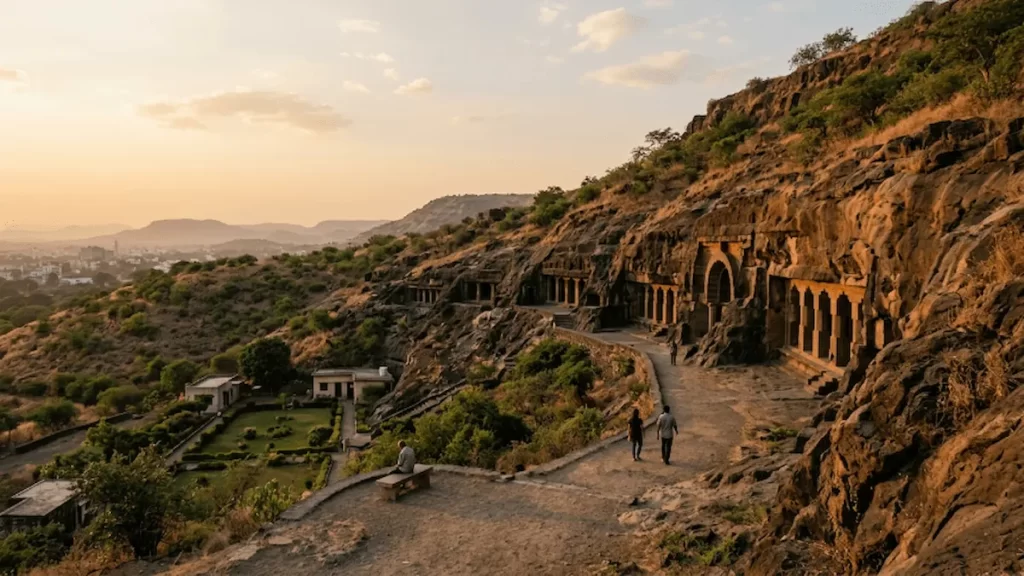
Ajanta, for all its extraordinary content, involves significant crowds, a mandatory Eco-Bus, careful timing to beat tour groups, and a real sense of managing logistics throughout your visit. Aurangabad Caves involves almost none of this — I have visited dozens of times and rarely seen more than a handful of other people, at any time of day.
💡 Tip: I sometimes frame this directly to guests as a kind of palate cleanser — after the genuine intensity and crowd-management of a full Ajanta day, Aurangabad Caves offers a quieter, more personal encounter with art of genuinely comparable historical seriousness, without any of the logistical pressure.
The Investment Required Is Genuinely Small
I think part of why people hesitate is an unspoken assumption that visiting will cost them as much time and effort as Ajanta did. It will not.
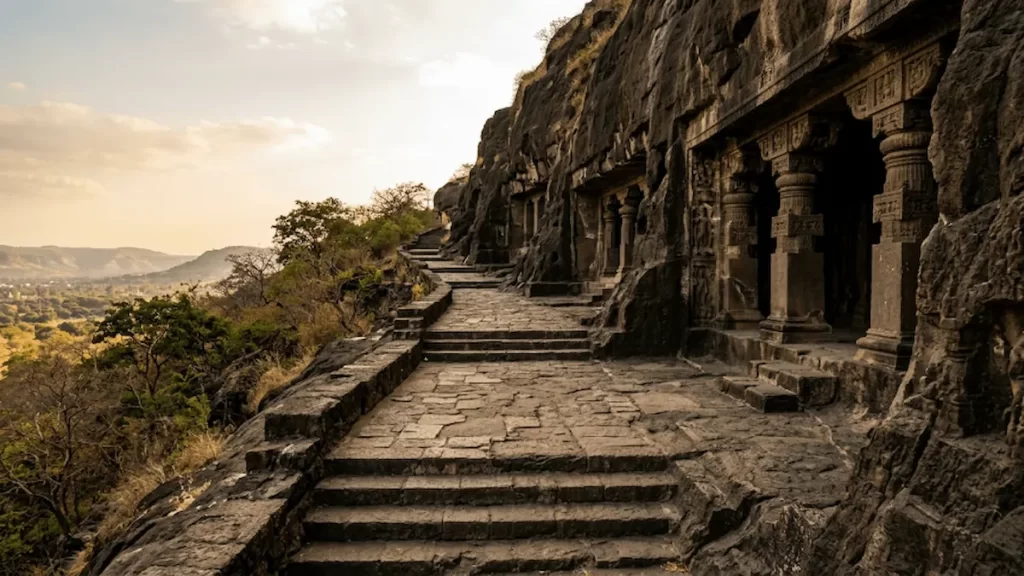
5 km from the city center. 1.5 to 2 hours total. No mandatory shuttle transfer, no early 6:00 AM departure requirement, no full-day commitment. The entire visit, including transport, fits comfortably into a single morning alongside Bibi ka Maqbara, without disrupting the rest of your itinerary at all.
💡 Tip: I always point this out explicitly, because I think the mental cost most people assign to “one more heritage site” is calibrated to Ajanta or Ellora’s actual demands, not to what Aurangabad Caves genuinely requires. Once people understand the real time cost, the hesitation usually disappears.
My Honest Bottom Line
I am not going to claim Aurangabad Caves matches Ajanta’s significance — it does not, and I would not want any guest leaving this guide thinking otherwise. But “is it as significant as Ajanta” is the wrong question. The right question is “does it offer something genuinely worthwhile that Ajanta did not give me,” and on that question, my honest answer is yes, consistently, for a small fraction of the time investment.
I have guided enough visitors through this exact decision to know what the regret pattern looks like. I have had guests tell me, after skipping Aurangabad Caves to save time, that they wished they had made the trip. I have never had a guest who visited tell me it was a waste of their morning.
💡 Tip: If you remember one thing from this entire guide, let it be this: the Dancing Panel inside Cave 7 is unlike anything you will have seen at Ajanta or Ellora, it takes under two hours to reach and experience, and I have not yet met a visitor who regretted making the trip.
The Alternative — Making the Case in Person, on Site
The arguments in this guide are exactly what I make directly to guests, standing in front of the Dancing Panel or Cave 3’s facade, rather than as an abstract case made in advance. Seeing it argued for in person, with the actual sculpture in front of you, tends to be considerably more convincing than reading about it.
👉 See Aurangabad Heritage Tour Details & Book — Aurangabad Caves and Bibi ka Maqbara, the case made on site.
FAQ
Q1: Is Aurangabad Caves worth visiting if I have already seen Ajanta?
Yes — Aurangabad Caves offers fundamentally different content (carved sculpture rather than painting), including the Dancing Panel in Cave 7, which has no equivalent at Ajanta or Ellora. It also requires a genuinely small time investment (1.5-2 hours, 5 km from the city center) compared to Ajanta’s full-day commitment.
Q2: What does Aurangabad Caves offer that Ajanta does not?
Most notably, the Dancing Panel — a seven-figure sculptural composition depicting ancient Indian classical dance, considered one of the most important architectural records of its kind in India. Ajanta’s significance rests on painting; Aurangabad Caves’ significance rests on sculpture, making them genuinely complementary rather than redundant
Q3: How is Aurangabad Caves historically connected to Ajanta?
Cave 3 is dated to the same Vakataka dynasty period that produced Ajanta’s finest 5th-century painted caves, with stylistic similarities suggesting connected artistic traditions or overlapping patronage circles. This makes Aurangabad Caves a continuation of Ajanta’s historical story rather than a separate, unrelated site.
Q4: How much time does visiting Aurangabad Caves actually require?
Significantly less than most visitors assume — 1.5 to 2 hours total, with the site only 5 km from the Chhatrapati Sambhajinagar (Aurangabad) city center. It comfortably fits into a single morning alongside another city site like Bibi ka Maqbara, without requiring a dedicated full day.
Q5: Do visitors regret skipping Aurangabad Caves?
In my experience guiding this region, visitors who skip it more often express regret afterward than those who visit. I have not encountered a guest who made the trip and considered it a waste of time, given how little time it genuinely requires relative to what it offers.
👉 Related Posts You Might Like:
- Aurangabad Caves – Complete Guide 2026
- Aurangabad Caves vs Ajanta Caves – What’s the Difference?
- Aurangabad Caves History – 1,500 Year Old Buddhist Secret
- Hidden Caves of Aurangabad – What Most Tourists Miss
- Aurangabad Caves + Bibi ka Maqbara Half-Day Route