Aurangabad Caves Photography Guide 2026 – Best Light & Shots
Aurangabad Caves photography is, in my honest opinion, one of the most underrated opportunities in this entire region — an east-facing hillside with genuinely dramatic carved relief, almost no crowds to work around, and a sunrise window that most visitors do not even know exists. This is exactly how I would shoot it.
Why This Site Rewards Photographers Specifically
Two things make Aurangabad Caves unusually good for photography compared to its more famous neighbors.
Almost nobody is here. At Ajanta and Ellora, getting an uncrowded frame requires careful timing and still often means working around other visitors in the background. At Aurangabad Caves, I have shot here repeatedly without another person in sight, at almost any hour within opening times.
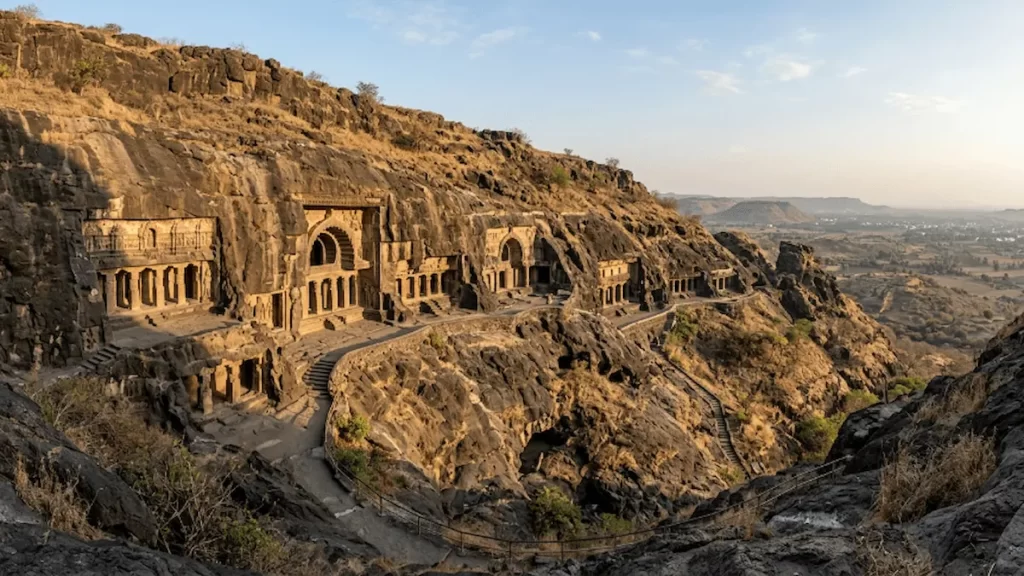
The hillside faces directly east. This is the detail most generic guides miss entirely. Between roughly 6:30 and 8:00 AM, the rising sun hits the carved facades of Cave 3 and Cave 7 directly, raking light across the relief sculpture and creating shadow definition that simply does not exist under flat midday light.
💡 Tip: If you are only going to photograph one heritage site in this region during the golden hour, and Ajanta’s early-morning logistics feel like too much to coordinate, Aurangabad Caves is a genuinely excellent and far simpler alternative — 15 minutes from your hotel rather than a 6:00 AM departure for a 100 km drive.
📍 Aurangabad Caves on Google Maps
Photography Rules — What’s Allowed
Allowed: Mobile phones and still cameras without flash, no additional fee.
Prohibited: Flash photography inside the caves, given the same conservation logic applied at Ajanta and Ellora — protecting carved and any surviving painted surfaces from cumulative light damage. Tripods are generally discouraged inside the cave interiors, though the more relaxed visitor volume here sometimes makes ASI staff more flexible than at Ajanta — always ask on-site rather than assuming.
💡 Tip: Given how quiet this site usually is, you can often get away with a brief handheld pause to brace against a pillar or doorway for stability on a slower shutter speed — something that would be far harder to manage amid Ajanta’s crowds.
Exterior Photography — The Sunrise Window
Cave 3 facade (Western Group):
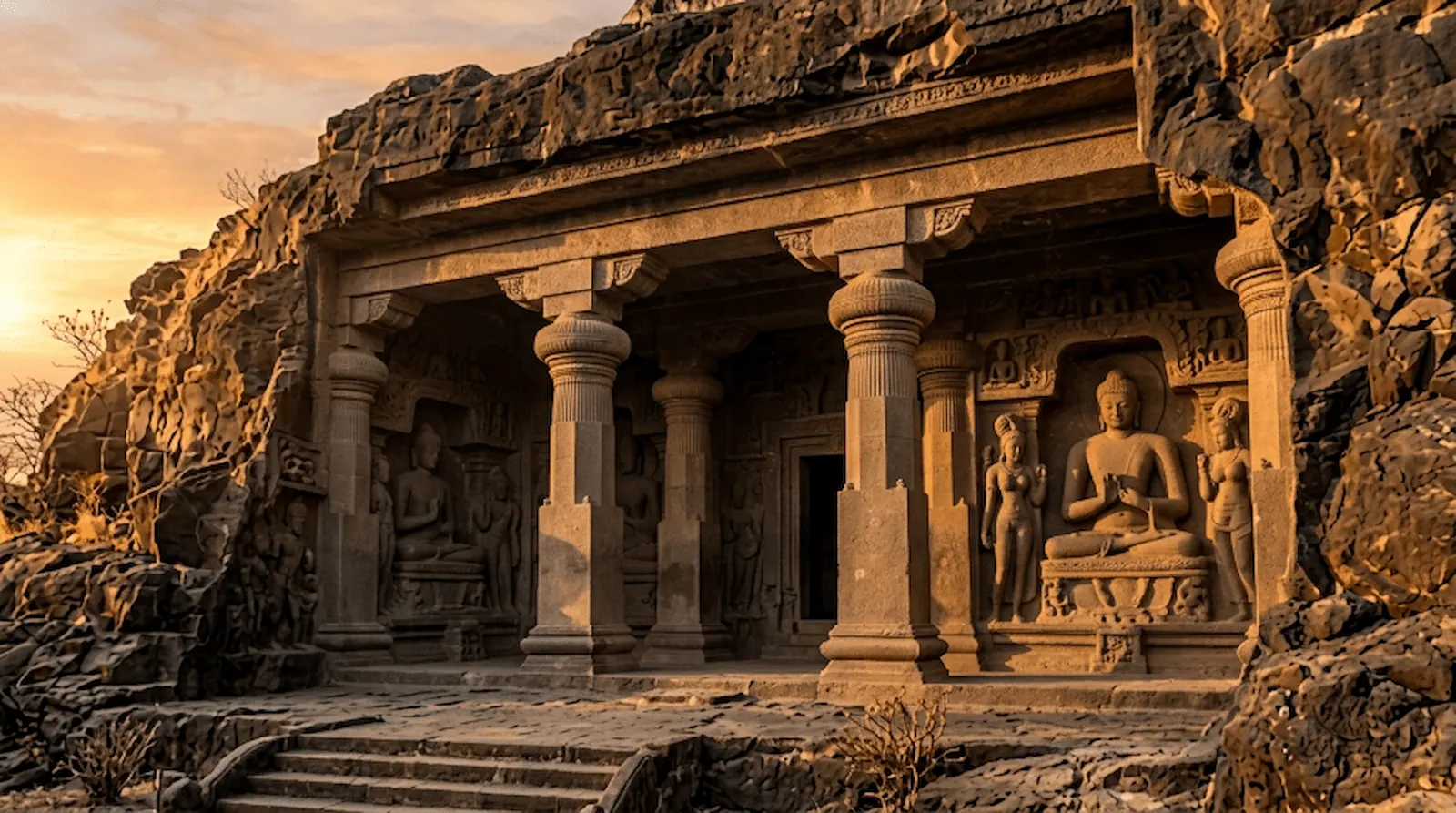
This is the single best exterior subject at the site. Arrive between 6:30 and 7:30 AM and position yourself to capture the rising sun raking across the facade at a low angle — this is when the carved Bodhisattva and celestial figures show the most three-dimensional depth, with shadows pooling in the deeper recesses of the relief work.
The hillside wide shot:
Step back and frame the broader cliff face showing multiple cave entrances in sequence. The same early morning light that works for Cave 3’s close-up detail also works beautifully for this wider establishing shot, with long shadows adding depth to the composition.
The view back toward the city:
From various points along the hillside, particularly the path connecting the Western and Eastern Groups, you get an elevated view back over Chhatrapati Sambhajinagar (Aurangabad). Worth a few frames, especially in the soft light of early morning before haze builds up later in the day.
💡 Tip: Get to Cave 3 by 6:45 AM if you want the most dramatic raking light — I have found the window where the light is low enough to create real shadow depth but high enough to fully illuminate the upper portions of the facade lasts only about 45 minutes to an hour before the sun climbs too high.
Interior Photography — Cave 7’s Dancing Panel
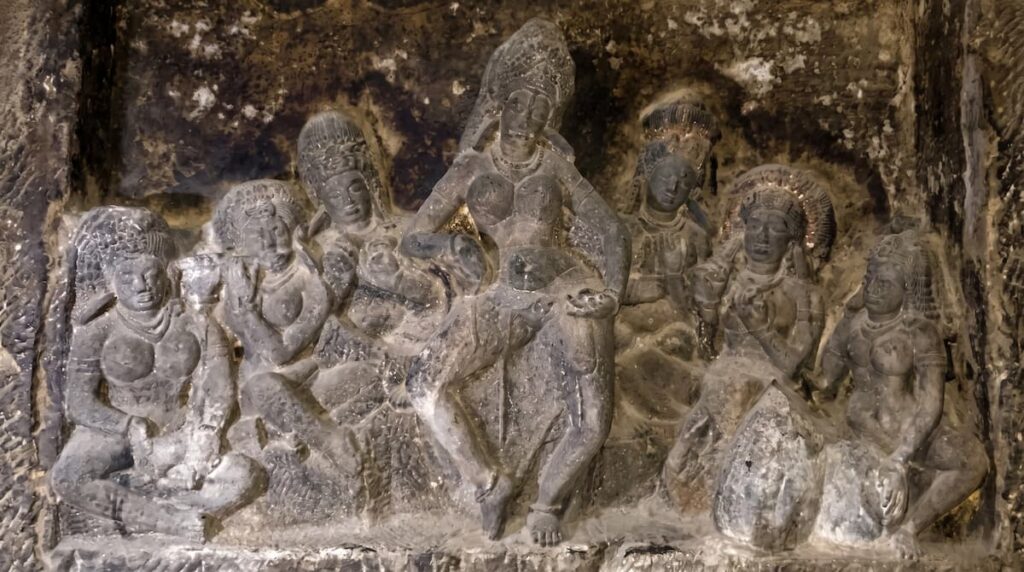
The Dancing Panel inside Cave 7 is the photographic centerpiece of the Eastern Group, and it deserves a specific approach.
Light conditions: Cave interiors here rely on natural light filtering in from the entrance rather than the fiber-optic installations you would find at Ajanta. This means light quality inside Cave 7 shifts noticeably depending on the time of day and how directly the entrance is catching outside light — another reason morning visits work in your favor.
Composition approach: The panel’s full value is in its choreography — the central dancer surrounded by six musicians, each in a distinct pose with a distinct instrument. I recommend one wide frame capturing the entire seven-figure composition, followed by closer detail shots of individual musicians where the carving is sharp enough to reward it.
Patience matters: Given the natural lighting, you may need to wait a few minutes for your eyes — and your camera’s exposure reading — to properly adjust to the interior light level after coming from the bright exterior.
💡 Tip: I always tell visitors to physically trace the composition with their eyes before raising the camera — follow the dancer’s central pose out to each of the six musicians in turn. Understanding the choreography first means your photographs end up reflecting that same compositional logic rather than just capturing a flat wall of relief carving.
A Quieter Subject — The Tara Figure
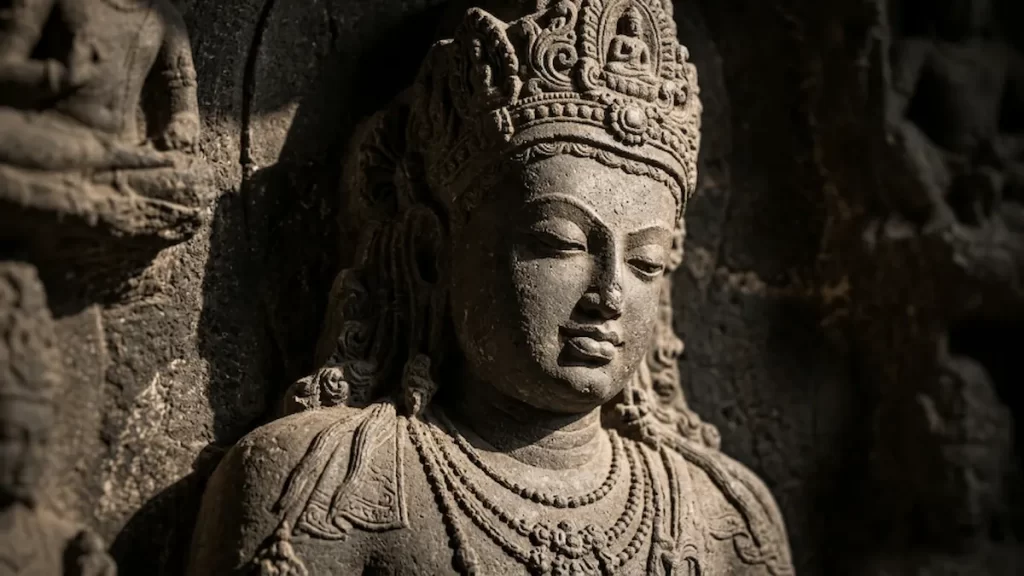
Cave 7’s Tara sculpture, positioned near the main sanctum, offers a different photographic opportunity from the Dancing Panel’s energetic composition — a single serene figure that rewards a tighter, more contemplative frame.
💡 Tip: Where the Dancing Panel benefits from a wide establishing shot, the Tara figure works best as a closer, more deliberate portrait-style frame — let the carved serenity of the expression be the entire subject, without competing background elements.
A Simple Shot List for a Single Visit
If you have one morning at Aurangabad Caves and want to leave with a complete photographic record:
- Cave 3 facade — wide shot, raking morning light
- Cave 3 — close detail of the finest Bodhisattva figure
- Hillside wide shot — multiple cave entrances in sequence
- The walk between groups — elevated view back toward the city
- Cave 7 — Dancing Panel, full wide composition
- Cave 7 — Dancing Panel, closer detail of 2-3 individual musicians
- Cave 7 — Tara figure, contemplative close portrait
💡 Tip: This entire list is comfortably achievable in under two hours if you arrive by 6:45 AM, which also means you are done and back in the city well before the heat of the day builds — a genuinely efficient morning by any measure.
The Alternative — Photography Timed and Guided Properly
Getting the sunrise window right, knowing exactly where to stand for Cave 3’s best light, and understanding the Dancing Panel’s composition before you start shooting are all things that come faster with someone who has photographed this site repeatedly.
👉 See Aurangabad Heritage Tour Details & Book — Aurangabad Caves timed for the best light, paired with Bibi ka Maqbara.
FAQ
Q1: Is photography allowed at Aurangabad Caves?
Yes — mobile phones and still cameras without flash are permitted with no additional fee. Flash photography is prohibited inside the caves for conservation reasons, and tripods are generally discouraged inside cave interiors, though this is worth confirming on-site given the lower visitor volume here.
Q2: What is the best time for photography at Aurangabad Caves?
Between 6:30 and 8:00 AM. The hillside faces directly east, and the rising sun creates dramatic raking light across the carved facades of Cave 3 and Cave 7, with the best shadow definition lasting roughly 45 minutes to an hour before the light becomes too high and flat.
Q3: What is the most photogenic spot at Aurangabad Caves?
Cave 3’s facade for exterior photography, given its elaborate carved relief and east-facing position. Cave 7’s Dancing Panel for interior photography, given its unique seven-figure composition depicting ancient Indian classical dance.
Q4: Do I need a tripod for Aurangabad Caves interior shots?
Not necessarily — tripods are generally discouraged inside the caves, but the site’s low visitor volume often allows brief handheld stabilization against pillars or doorways for slower shutter speeds, something far harder to manage at busier sites like Ajanta.
Q5: How long do I need for a photography-focused visit?
Under two hours is sufficient for a complete shot list covering both the Western and Eastern Groups, if you arrive by approximately 6:45 AM to catch the best morning light window.
👉 Related Posts You Might Like:
- Aurangabad Caves – Complete Guide 2026
- Aurangabad Caves Timings and Entry Fees
- Aurangabad Caves History – 1,500 Year Old Buddhist Secret
- Best Time to Visit Aurangabad Caves
- Ajanta Caves for Photography Lovers – Best Light & Timing